

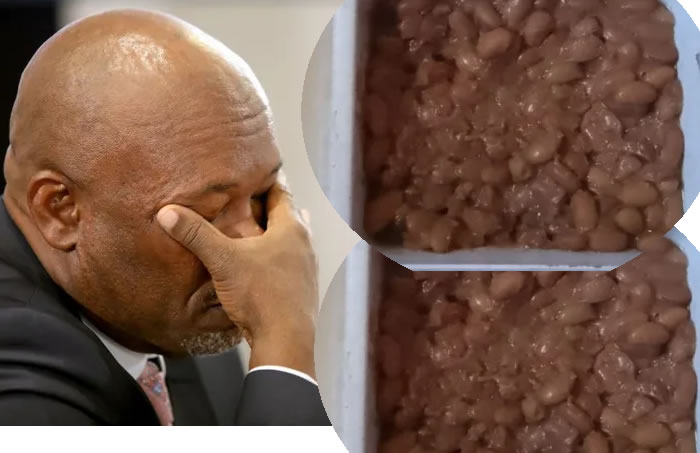
Former deputy national police commissioner Shadrack Sibiya is now being held in solitary confinement at the notorious C-Max section of Kgosi Mampuru II Correctional Centre in Pretoria, after being denied bail in a case involving allegations of rape and sexual grooming.
The 59-year-old former police boss, who once lived in a luxury Centurion mansion and held senior positions in the fight against organised crime, is being held as an awaiting-trial prisoner in one of the country’s highest-security correctional facilities.
His defence advocate, Estelle Kilian, previously told the Randburg Magistrate’s Court that Sibiya was being kept in solitary confinement at C-Max.
Investigating officer Sergeant Nokukhanya Ndlovu told the court that the arrangement was for safety and security reasons.
The Department of Correctional Services has not provided details about Sibiya’s personal conditions. However, accounts from current and former inmates describe a harsh routine in which prisoners spend up to 23 hours a day locked inside cells measuring approximately six square metres.
The information provides a glimpse into the conditions facing Sibiya, as well as other high-profile accused men held at the facility.
A cell the size of a closet
According to a former C-Max prisoner who spent two years in the section, Sibiya’s cell has a cream-white interior, a window positioned too high to reach, a steel toilet and a basin with cold water.
The bed is reportedly a cement-and-brick slab built into the wall, covered by a thin sponge.
The former inmate described the beds as “graveyards”.
“We call them graveyards. It’s more like a grave… that thing, the bed. You get these blankets that we call furniture blankets, one sheet and a pillow.”
Ventilation is reportedly provided through an air-conditioning system, although the former prisoner said the air supply was not always opened.
“The only air that comes into your cell is through the ventilation aircon, which sometimes they don’t open,” he said.
The cell door has no handle on the inside. Instead, there is a narrow opening through which food, clothing, bedding and laundry are passed.
The arrangement means that prisoners have little physical contact with officials during the ordinary course of the day.
Meals are served through a slot
The prison diet is reportedly basic, with little or no meat included in most meals.
Breakfast is generally served between 07:00 and 07:30. It consists of soft porridge or oats without milk, tea with two spoons of sugar and two slices of bread with either peanut butter or jam.

Lunch is served at midday.
“They will give you five slices of bread with a cup of coffee or tea or maybe juice,” a former inmate said.
Supper is served at about 15:00 and must last prisoners until the following day.
“These days we eat pap and beans, or pap and something. There is this thing they call soya as well, or it will be pap and lentils. Maybe there will be some vegetable, maybe spinach or cabbage, and that is your dinner until the following day,” the prisoner said.

Awaiting-trial prisoners are allowed to receive food from their families. Their lawyers and relatives may visit three times a week, and money deposited at the prison can be used to buy additional items from the prison shop.
“You can buy mayonnaise, biscuits, canned goods, coffee, Cremora, cigarettes, tobacco, shoe polish, and toiletries like toothpaste,” another former inmate said.
He added: “You find a lot of people who are on drugs in prison and so they eat a lot of sugar.”
The former inmate said high-profile prisoners do not receive a separate menu, despite their public standing.
“Today (Friday), the meal was pork and beans. For those who don’t eat pork, they are getting beans. That is the same meal that [C-Max] prisoners got today. They eat the same food.”
He claimed Sibiya does not eat pork and was therefore given beans when pork and beans were served.
“The food handlers from C-Max said that Shadrack Sibiya apparently doesn’t eat pork, so he ate beans today,” he added.
Two-minute showers under escort
Personal hygiene is also controlled under strict security procedures.
The former C-Max inmate said prisoners are called to shower by officials and must place their hands through the opening in the cell door to be handcuffed before leaving.
“The official will be screaming, ‘Shower, shower,’ then you put your hands through the pigeonhole. When they are finished cuffing you, they then open the door for you. You don’t go out like you are normally going out of the door; you go out in reverse. You don’t face the official in the face,” he said.
Prisoners are reportedly given approximately two minutes to shower.
When the time is over, officials shout in Zulu: “Vala amanzi (turn off the water).”
The former inmate said awaiting-trial prisoners and sentenced prisoners were treated differently in some respects. He also said a prisoner’s high-profile status could result in limited privileges, although he insisted there was no special treatment in the food or basic conditions.
“There is a difference, because these guys are high-profile, they are unsentenced. So they treat them at least a little bit better compared to the sentenced inmates who are there. They give them that little privileges… because of their high profiles,” he said.
Loneliness and relentless boredom
A former inmate who is now out on parole said solitary confinement could be safer than the general prison population, but the isolation could also become overwhelming.
The C-Max routine reportedly leaves prisoners alone for most of the day, with only limited opportunities to interact with others.
“You stay there 23 hours in a cell, you don’t listen to a radio, and you don’t have anything. You are just locked up for 23 hours,” the parolee said.
When cell doors are opened, prisoners may use the limited time to speak, wash clothes, play games or smoke cannabis, according to the former inmate.
“They play chess, and they gamble and play cards. They also do their washing and smoke weed… they try to keep themselves busy, sit and talk and play Ludo or something, or they sleep… So boredom is like the biggest thing there,” he said.
He said prison life was largely “centred on eating”.
The noise from other sections can also make sleep difficult.
“The hardest part of life in jail is the constant noise, particularly at night. You can hear people screaming and crying all through the night. It seems like it never stops,” he said.
A library trolley reportedly visits the C-Max section only once every three or four months.
“You are allowed to take three books, then you will read them. When you are done, then you can exchange with other prisoners, but you don’t do that yourselves,” the former inmate said.
Prisoners must ask passing officials to facilitate the exchange of books.
Limited clothing and possessions
Inmates are permitted to keep only a small number of personal items, including a few pairs of underwear, socks and vests.
Private clothing is reportedly not allowed.
“You only wear overalls and no private clothes. You wear red overalls in C-Max. That is basically the life in C-Max,” the former inmate said.
The only regular opportunities to leave the section are reportedly trips to the clinic or hospital area.
The inmate said emergency support teams were closely monitoring Sibiya and fellow high-profile accused Vusimuzi “Cat” Matlala.
“The emergency support teams are standing guard outside his door every day. It is the same thing with Cat Matlala as well,” he said.
He claimed officials were reluctant to give favours to either man because of the public attention surrounding their cases.
“It is difficult to do them any favours because they are high profile and in the spotlight. There are no favours. They are eating the very same food we are eating. There is no special treatment for them, and they are treated like any other inmate,” the prisoner said.
Sibiya’s case and fellow accused
Kgosi Mampuru II houses more than 7,000 inmates, including sentenced prisoners and people awaiting trial.
Among Sibiya’s fellow awaiting-trial inmates are Matlala, who withdrew from a proposed plea arrangement that would have involved him giving evidence in a corruption investigation, and suspended police sergeant Fannie Nkosi, who allegedly acted as a conduit in bribery allegations involving Matlala and Sibiya.
Sibiya was previously the head of the Hawks in Gauteng and served as deputy national police commissioner. However, he was dishonourably discharged from the police service and now faces trial for allegedly raping an 18-year-old and sexually grooming a 16-year-old.
Sibiya maintains that his interactions with the teenagers were consensual.
The Randburg Magistrate’s Court nevertheless described the State’s case as strong when it refused him bail.
Magistrate Hleziphi Mkhasibe found that Sibiya’s alleged attempts to conceal evidence, including wiping his phone, and alleged threats to the father of his 16-year-old accuser indicated that he might attempt to contact the vulnerable school pupil.
He will remain at Kgosi Mampuru II until the trial is finalised, unless he successfully challenges the bail decision in the Gauteng High Court.
The charges against him remain allegations until tested in court.
‘Justice has been served’, inmate says
The arrival of Sibiya and Matlala at Kgosi Mampuru II has reportedly been met with quiet approval by some sentenced inmates who have long complained about prison conditions.
One former C-Max inmate said prisoners believed that powerful figures who had once appeared untouchable were now experiencing the same system they were accused of controlling.
“We feel that life is a karma and justice has been served, because these guys were capturing the state. They [thought] that they were immune to justice and the laws. They were not respecting the laws of the country,” he said.
The prisoner added: “We feel that let these guys come to prison as well and let them come and feel the conditions that we are facing.”
For now, Sibiya remains an awaiting-trial prisoner in the tightly controlled C-Max section, where the days are marked by narrow food slots, brief showers, limited movement and long periods of isolation.