

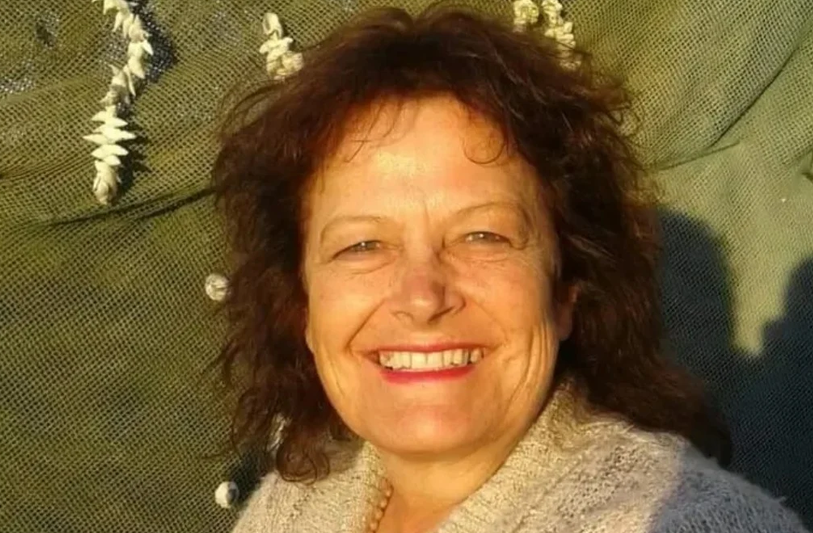
A 71-year-old great-grandmother has been sentenced to 20 years’ direct imprisonment for the premeditated murders of her three great-grandchildren, whom she drove off Bainskloof Pass near Worcester in the Western Cape in 2021.
The Worcester Regional Court convicted Susara Johanna De Villiers of murdering Caleb, eight, Gradwell, five, and Joshua, two. The court heard that she told the children to say goodbye to their great-grandfather, assured them that no one would hurt them again and then drove through a gap in the barriers at the mountain pass.
The three children died in the crash from multiple blunt-force injuries.
De Villiers received 20 years’ imprisonment on each murder count. The sentences will run concurrently, meaning her effective sentence is 20 years in prison.
The court rejected a claim of diminished responsibility after a psychiatric assessment found that De Villiers was mentally fit, understood that her actions were wrong and was able to act in accordance with that understanding.
Court rejects diminished-responsibility claim
According to the National Prosecuting Authority, De Villiers initially pleaded guilty but relied on diminished responsibility in her plea explanation. Regional Court Prosecutor Cornelius Prinsloo did not accept that aspect of the plea, and the court entered a not-guilty plea on her behalf.
The remainder of De Villiers’s statement was accepted as formal admissions. In those admissions, she said her motive had been to spare both herself and the children from further suffering.
During testimony in November 2025, De Villiers said she “did not feel like herself” and that “something switched off”. She also said she was uncertain about when she had made the decision to drive to the mountain pass.
National Prosecuting Authority regional spokesperson Eric Ntabazalila said De Villiers had been referred to Valkenberg Psychiatric Hospital for a 30-day mental observation.
“In a report compiled in June 2024, the psychiatric panel found she was mentally fit, capable of appreciating the wrongfulness of her actions, and able to act in accordance with that appreciation,” he explained.
The psychiatric panel found no evidence of psychosis and described her conduct as “goal-directed but impulsive”. De Villiers did not contest the findings.
Children were in her care for the day
The court heard that the children had previously been removed from their parents because of neglect and substance abuse. They initially lived with De Villiers and her husband for approximately three months before being placed with a maternal relative.
About a week before the incident, the children’s mother and her partner were arrested on child-neglect charges.
Ntabazalila said De Villiers collected the children for the day while their caregiver attended a wedding. The children spent the day swimming and playing at De Villiers’s home.
“De Villiers collected the children for the day while their caregiver attended a wedding. The children spent the day swimming and playing at her home,” said Ntabazalila.
He said that between approximately 4.30pm and 5pm, De Villiers placed the children in her vehicle, ostensibly to return them to their caregiver. The children cried and begged to stay with her.
The prosecution argued that De Villiers then drove away from the children’s home in the opposite direction and travelled approximately 23km to Bainskloof Pass. She passed several traffic-control points on the way.
Prinsloo submitted that she intended to kill herself and the children by driving off a cliff.
Vehicle plunged into riverbed
The court heard that when De Villiers reached the summit, she considered stopping and telephoning her husband or continuing through to Ceres.
Instead, she drove through a gap in the barriers. The vehicle plunged down the mountainside before coming to rest in a riverbed below.
De Villiers was wearing a seatbelt, but the children were unrestrained.
“All three children died from multiple blunt force injuries,” Ntabazalila said, adding that evidence established that De Villiers was sober at the time.
The prosecution also presented evidence that the vehicle was mechanically sound and that visibility was good.
“[Evidence established that] the vehicle was mechanically sound, and visibility conditions were good.”
“The prosecution submitted documentary evidence, including post-mortem reports, an accident reconstruction report, and a mechanical analysis of the vehicle.”
The evidence was used to support the prosecution’s argument that the deaths resulted from a deliberate act rather than a mechanical failure or an unavoidable road accident.
Personal hardships considered in sentencing
In mitigation of sentence, De Villiers testified about a difficult childhood, poverty and three suicide attempts during her adolescence. She also described the emotional effects of a motor vehicle accident in January 2020 involving her and her stepdaughter, who later died from burn injuries.
De Villiers said she suffered from depression after the accident and received limited treatment.
In aggravation, Prinsloo argued that a lengthy prison sentence was necessary. He acknowledged the personal hardships and depression experienced by De Villiers but said they could not outweigh the deliberate and premeditated killing of three young children who had been entrusted to her care.
“Children are entitled to protection from the very adults entrusted with their well-being,” he said.
The court’s effective 20-year sentence brings the criminal proceedings to an end, subject to any appeal rights available to De Villiers. The case has left three families mourning Caleb, Gradwell and Joshua, whose lives ended during what had begun as a day in the care of a trusted family member.