

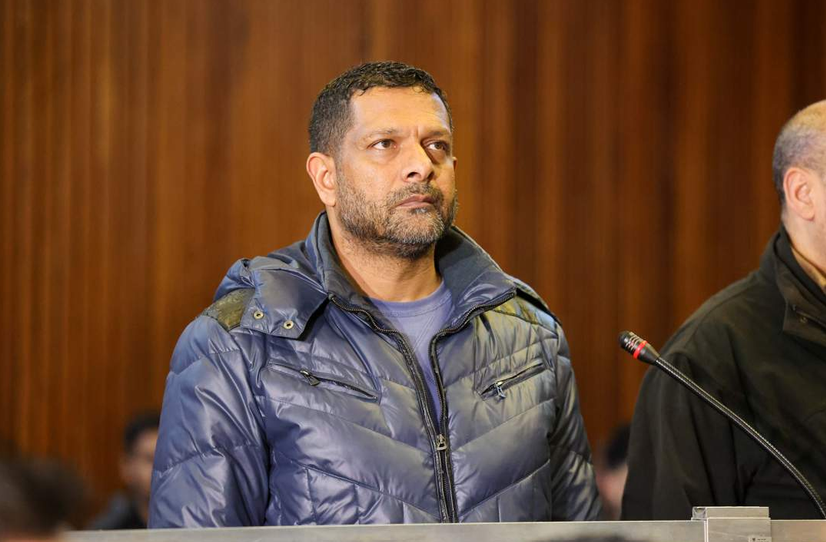
Suspended Crime Intelligence deputy head Major-General Feroz Khan has been dismissed from the South African Police Service after failing to appear before the senior officer overseeing an expedited disciplinary process.
SAPS confirmed the dismissal on Wednesday, saying Khan was deemed dismissed in terms of the organisation’s discipline regulations.
The decision came a day after Khan suffered a setback in the Labour Court, where his urgent application to stop the internal disciplinary proceedings was struck off the roll.
The developments have ended Khan’s career in the police service while leaving his legal challenge, his appearance before the Madlanga Commission and a separate criminal case still hanging over him.
SAPS said Khan failed to attend proceedings before the designated senior officer responsible for the disciplinary matter.
“The South African Police Service confirms the dismissal of Major General Feroz Khan from the Service,” the organisation said.
The police service said the dismissal was made in terms of Regulation 9(7)(b) of the SAPS Discipline Regulations.
SAPS also used the announcement to stress that seniority would not shield members from disciplinary action.
“SAPS reiterates its commitment to accountability, discipline and professional conduct within the organisation. No member, regardless of rank or position, is above the law or the applicable disciplinary framework,” the statement read.
The police service added that the matter had been the subject of legal proceedings and that it would continue to respect court processes.
It said further information would be released only where legally permissible.
Labour Court Application Fails
Khan’s dismissal followed the Labour Court’s refusal to hear his urgent application to halt the disciplinary process.
Judge Connie Prinsloo found that the court lacked jurisdiction to deal with the matter and that Khan had failed to establish the urgency required for the application.
The case was struck off the roll rather than decided on the merits of Khan’s complaints.
That distinction is important because the ruling did not determine whether the allegations underlying the disciplinary process were true or whether Khan should ultimately have faced a particular sanction.
Instead, the judgment dealt with whether the Labour Court could hear the urgent application and whether Khan had shown sufficient grounds for the matter to be treated as urgent.
The outcome allowed SAPS to continue with the internal process.
Khan’s legal team had argued that the disciplinary proceedings continued in his absence while he was receiving medical treatment after being shot in Johannesburg in June.
His lawyers said he had been unable to defend himself properly and that they had stepped in to challenge the process on his behalf.
Khan’s attorney, Muhammed Valley, said the legal team believed the Labour Court decision had been based on a technical issue and that there was still scope to pursue the matter.
“Difficult circumstances, given our client’s personal condition. We believe that there’s still merit that can be argued before a future court because the Labour Court decided the matter on a legal technicality or legal technical point,” Valley said.
He said the merits of the case had not been finally determined.
“Our client was unable to defend himself. And because of that, we felt obliged to step into the position where we protect him as his lawyers. We simply couldn’t allow the process to proceed unchallenged. And the outcome is as the outcome is, but there’s, like I said, scope for taking the matter further,” he said.
The planned legal challenge does not suspend the dismissal announced by SAPS.
Any future application or appeal would have to deal with the legal effect of the dismissal and the process followed before the senior officer.
Medical Concerns And Commission Appearance
Khan’s health has also affected the work of the Madlanga Commission of Inquiry, which is investigating allegations of corruption, criminal infiltration and political interference in law enforcement.
The commission has indicated that Khan remains under subpoena.
His appearance has been delayed because of medical concerns following the shooting in Johannesburg.
The commission previously ordered Khan either to testify or to undergo an independent medical evaluation to establish whether he was able to give evidence.
The timing of the dismissal means Khan is no longer a serving police officer, but that does not automatically remove him from the commission’s process.
The inquiry is examining allegations involving policing structures, intelligence operations and the alleged influence of criminal networks within law enforcement.
Khan has been named in that broader investigation, but the commission has not completed its work and no final findings have been made.
His evidence could be relevant to questions about the way Crime Intelligence operated, the handling of information and allegations of interference involving senior police officials.
The commission has not indicated when Khan will appear or whether his medical condition will prevent him from giving evidence in person.
Separate Criminal Case
Khan is also facing criminal charges alongside Gauteng Hawks head Major-General Ebrahim Kadwa and businessman Tariq Downes.
The three men are accused of defeating the ends of justice and contravening the Precious Metals Act.
The case relates to allegations surrounding the release of a businessman who was found with an unwrought gold bar in 2021.
Downes was allegedly found in possession of the gold bar, and investigators allege that Khan and Kadwa helped facilitate his release.
The details of the police operation and the circumstances surrounding the alleged intervention form part of the criminal case against the three accused.
Khan, Kadwa and Downes have denied wrongdoing and are out on bail.
The criminal charges remain separate from Khan’s internal disciplinary proceedings.
His dismissal from SAPS does not determine whether he is guilty or innocent in the criminal matter.
That case will continue through the criminal courts, where the State will be required to present evidence against the accused.
The outcome of the Labour Court application also does not amount to a conviction or finding of criminal conduct.
A Senior Officer At The Centre Of The Policing Crisis
Khan served as deputy national head of SAPS Crime Intelligence, a position that placed him at the centre of one of the country’s most sensitive law enforcement structures.
Crime Intelligence is responsible for gathering and assessing information about threats, organised crime and criminal networks.
Its work often involves confidential sources, covert operations and information shared with other police units.
The position of deputy head therefore carries significant responsibility and access to sensitive information.
Khan’s suspension and subsequent legal disputes have taken place against the backdrop of a wider crisis in South African policing.
The Madlanga Commission is examining claims that criminal interests infiltrated police structures and that some senior officials used their positions to influence investigations or protect individuals.
Khan has been linked to several of those claims through evidence presented before the inquiry.
The allegations remain part of an ongoing investigation and have not yet resulted in final commission findings.
SAPS has now drawn a clear line under his employment by confirming that he has been dismissed.
What Happens Next
The immediate consequences of the dismissal include the end of Khan’s employment and the loss of his position within SAPS.
The legal consequences are less settled.
His lawyers have indicated that they may challenge the Labour Court ruling or pursue other legal remedies.
The commission still has to determine whether Khan will testify or undergo an independent assessment before giving evidence.
The criminal case involving Kadwa and Downes also remains before court.
These processes will run separately from the employment decision.
SAPS said it would not comment beyond what was legally permissible because court proceedings remained relevant to the matter.
The organisation’s public position is that Khan’s failure to attend the expedited disciplinary process triggered his dismissal under the applicable regulations.
His legal team’s position is that he was unable to defend himself properly because of his medical condition and that the Labour Court ruling did not decide the merits of his challenge.
Those competing positions are now likely to be tested through any further legal action.
For the police service, the dismissal removes a suspended senior general from its ranks at a time when public scrutiny of senior policing officials is intense.
For Khan, the decision marks the end of his police career but not the end of the legal and investigative questions linked to his name.
His possible appearance before the Madlanga Commission, the criminal case involving the gold bar and any future challenge to the disciplinary process will determine what comes next.
For now, SAPS has confirmed that Major-General Feroz Khan is no longer a member of the service.