

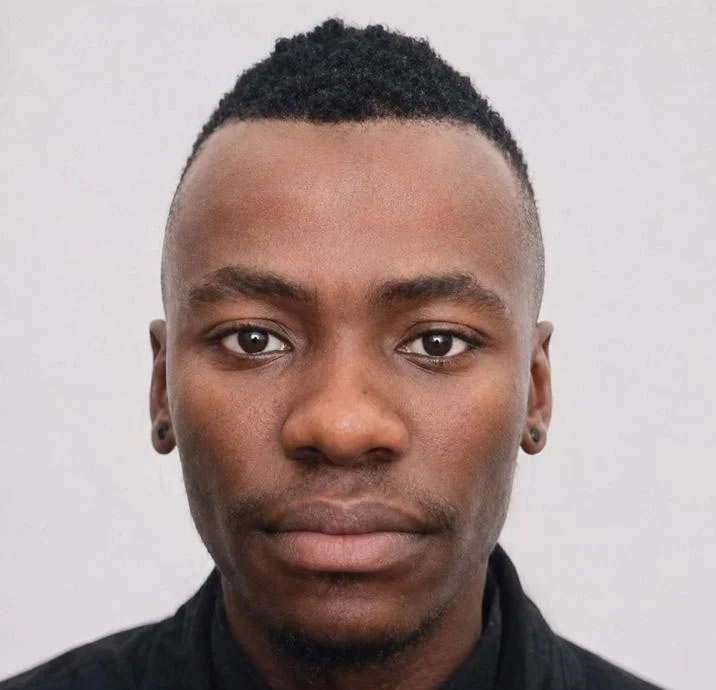
A 26-year-old Johannesburg man who used Facebook and Instagram to lure young women with fake promises of modelling and photoshoot opportunities before raping, assaulting and robbing them has been sentenced to four life terms in the Gauteng High Court in Johannesburg.
Victor Mokoena was convicted on a string of serious charges after the court found he had targeted four young women over a period of more than three years — between March 2021 and October 2024 — using social media as a hunting ground and then turning agreed “work” meetings into violent attacks.
He was convicted of four counts of rape, attempted murder, robbery with aggravating circumstances, assault with intent to do grievous bodily harm, and pointing of an object resembling a firearm. The sentences handed down reflect both the gravity of the crimes and the court’s acceptance of the State’s argument that Mokoena’s actions were deliberate, planned and persistent.
The National Prosecuting Authority said Mokoena’s method was consistent and calculated. He approached women online, presented himself as someone with access to opportunities in the modelling and promotional world, and arranged meetings that seemed legitimate on the surface.
“He presented himself as a photographer or promoter and lured his victims with offers of modelling, promotional and photoshoot opportunities,” said NPA spokesperson Magaboke Mohlatlole.
“Once the victims arrived at the agreed locations, Mokoena took them to secluded areas where he raped and assaulted them.”
The pattern, the NPA said, was not opportunistic. It was repeated with different victims and refined over time. Once victims reached the meeting points, Mokoena allegedly moved them away from public spaces to isolated areas, where they were subjected to sexual violence and physical assault.
In some cases, prosecutors said he escalated the violence to strangling his victims and threatening them with what appeared to be a firearm. He also allegedly robbed victims of their belongings, compounding the trauma by stripping them of their phones and personal items — and then, investigators said, he tried to erase his tracks.
“He also deleted conversations and contact details from the victims’ cellphones in an apparent attempt to conceal his identity and frustrate the investigation,” Mohlatlole said.
That detail became central to understanding how he operated: he not only used social media to make contact, he relied on digital control to reduce the chance of being identified later. Deleting messages and contact details, the NPA said, was part of an apparent strategy to frustrate investigations and make it harder for victims to trace him.
The case also highlights the way investigators increasingly rely on digital evidence to link crimes that might otherwise remain disconnected. The attacks were initially treated as separate incidents, with different victims reporting crimes at different times. It was only later that investigators began to see a common thread — similarities in how the women were approached, where they were taken, what was done to them, and how their devices were handled.
The NPA said the cases were eventually linked through similarities in Mokoena’s modus operandi, as well as digital evidence extracted from the victims’ phones and accounts. Investigators also established that he used different names when communicating with victims, complicating early efforts to identify him.
For prosecutors, the length of time over which Mokoena operated — from 2021 to 2024 — was significant. It suggested a predator who did not stop after one incident and who continued to seek out victims, showing persistence and an ability to adapt by changing names and deleting evidence.
State advocate Hope Zwane, arguing in aggravation of sentence, told the court that the pattern showed careful planning and a sustained effort to find new victims. Zwane argued that the way Mokoena identified women online, persuaded them to meet, and then lured them to isolated places demonstrated a clear danger to society.
The court agreed with the State’s submissions. In its findings, it accepted the argument that the crimes were not impulsive or accidental but reflected contempt and brutality. The court also found that Mokoena treated his victims with disdain and used derogatory language towards them — a detail that spoke to the power and humiliation that often forms part of sexual violence.
In sentencing, the court imposed life imprisonment on each of the four rape counts. It also sentenced Mokoena to 15 years’ imprisonment for robbery with aggravating circumstances, two years for assault with intent to do grievous bodily harm, and one year for pointing an object resembling a firearm.
The sentences on the remaining counts will run concurrently with the life sentences, meaning the effective sentence is the four life terms.
While the case is now finalised at sentencing stage, it raises broader questions about how young women navigate social media spaces that can offer genuine opportunities but also expose them to exploitation. Modelling and promotional work are often marketed online, and many legitimate photographers and agencies use social platforms to recruit talent. But as this case shows, the same tools can be weaponised by predators who understand how to mimic the language of opportunity, trust and “business” to lure victims into danger.
The matter also underscores the importance of digital forensics in modern sexual offence investigations. The NPA’s description of deleted conversations and the use of different names highlights how offenders can attempt to hide, while investigators increasingly rely on patterns and digital traces to connect reports and build strong cases.
For victims, such prosecutions can be long and emotionally draining, and the sentencing outcome represents the legal system’s recognition of the violence they endured. For the broader public, the case serves as a stark reminder that online platforms can be used not only for social connection, but also as a gateway to serious harm — and that claims of “photoshoots” and “modelling opportunities” should be approached with caution, verification and safety planning.
Ultimately, the court’s decision to impose four life sentences reflects the seriousness with which it viewed the crimes and the risk posed by an offender who, the State argued and the court accepted, carefully planned his attacks, persisted over years, and treated victims with contempt.