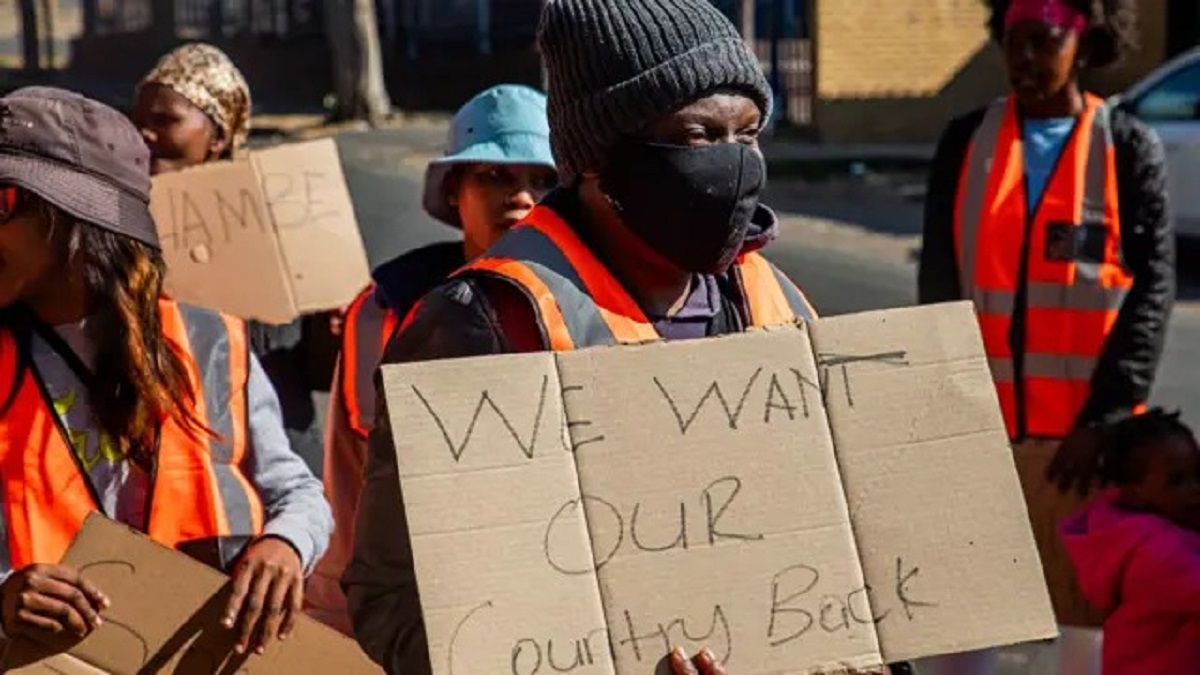
DURBAN – The controversial March and March movement has dramatically escalated its political agenda, with key leaders now openly calling for KwaZulu-Natal (KZN) to break away from South Africa and become an independent state. The proposal marks a significant shift for a movement that initially gained prominence for its aggressive anti-illegal immigration campaign.
The call for secession was spearheaded by Nkosikhona Ndabandaba, popularly known as Phakela'umthakathi, a prominent leader within the March and March structures. In a series of provocative statements and videos that have gone viral on social media, Phakela argued that the province of KwaZulu-Natal is being "neglected and abused" by the national government and should govern itself as a sovereign nation.
"KZN will be a different country from South Africa," Phakela declared in a widely circulated video. "We are tired of being treated like stepchildren in our own land. The time has come for us to take back our identity and our resources. We want KZN independence."
The proposal has found support among some sections of the movement’s base, particularly those who feel that the province’s unique cultural and economic interests are not being adequately represented in Pretoria. Supporters of the "KZN Exit" or "KZN-Indep" movement argue that as an independent state, the province could better manage its own borders, enforce its own laws, and ensure that its wealth—driven by the busy ports of Durban and Richards Bay—benefits its own people first.
However, the move has also exposed deep rifts within the anti-migrant movement. Ngizwe Mchunu, the former Ukhozi FM presenter who was recently suspended from March and March, has been quick to distance himself from the secessionist talk. Mchunu, who has positioned himself as a "visionary" who knows when to stop, described the calls for independence as "dangerous and ill-informed."
"These juniors know nothing about leading a country," Mchunu remarked, referring to Phakela and March and March founder Jacinta Ngobese-Zuma. "They are excited by the limelight and are now making reckless statements that could lead to violence and chaos. South Africa is one country, and KZN is an integral part of it."
The South African government and major political parties have also reacted with concern to the secessionist rhetoric. Constitutional experts have pointed out that there is no legal framework for a province to unilaterally secede from the Republic, and any attempt to do so would be met with the full might of the law.
"This is nothing more than ethnic mobilisation and a desperate attempt to stay relevant," said a spokesperson for a major political party. "The unity of South Africa is non-negotiable. We cannot allow populist leaders to tear the country apart for their own selfish gains."
Despite the backlash, March and March leaders appear undeterred. Jacinta Ngobese-Zuma, who has become the face of the movement’s "every Thursday" protest campaign, has previously alluded to the "Zuma surname" being a factor in why the government refuses to engage with them. While she has not been as vocal as Phakela on the issue of independence, her leadership of a movement that is increasingly at odds with the national state has created a fertile ground for secessionist ideas to take root.
The call for KZN independence comes at a time of heightened social and economic tension in South Africa. With high unemployment, a struggling economy, and growing frustration over service delivery, populist movements like March and March have found a receptive audience for their "South Africa First" message. By adding secession to their platform, they are tapping into a deeper vein of regionalism and Zulu nationalism that has long been a complex factor in the country’s politics.
As the movement continues its weekly marches against undocumented immigration, the added demand for independence is likely to make their interactions with law enforcement and the state even more volatile.
For now, the "KZN Independence" proposal remains a highly controversial and legally impossible demand. However, the fact that it is being openly discussed by leaders of a mass movement highlights the deepening divisions within the country and the challenges facing the government in maintaining national unity.
As the debate rages on social media and in the streets of Durban, one thing is clear: the March and March movement has moved far beyond its original mandate, and its latest "war" is not just against illegal immigration, but against the very structure of the South African state itself.