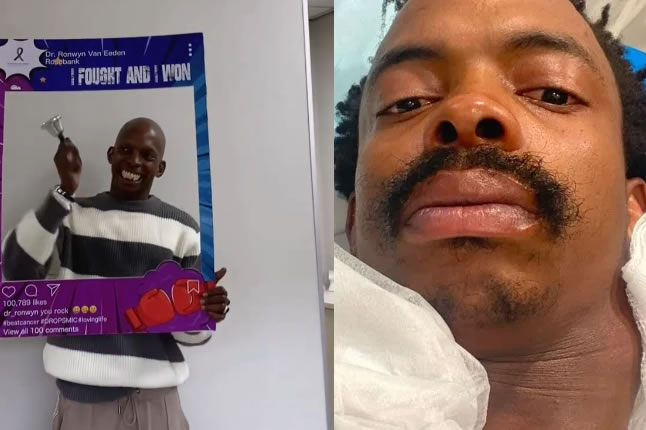
JOHANNESBURG – For South African actor and comedian Sabelo Gumede, ringing the brass bell at a Johannesburg oncology ward was supposed to be the ultimate victory. After a gruelling year-long battle with a rare and aggressive form of cancer, the 31-year-old was declared 98% cancer-free. However, as the physical pain subsided, a new, crushing burden emerged: a mountain of medical debt totalling nearly R500,000.
Gumede, a familiar face on South African screens with over 30 commercials to his name—including high-profile spots for Chicken Licken and Uber Eats—found his life turned upside down in July last year. What started as a persistent toothache eventually led to a shocking diagnosis: stage 3 choriocarcinoma, a rare testicular cancer that had already spread throughout his body.
The diagnosis was a devastating blow for the vibrant performer. "I wondered many a day how the cookie would crumble," Gumede shared, reflecting on the dark days spent in the waiting room, staring at the bell he feared he would never ring. "On other days I’d look at that bell and think, ‘yoh, I don’t think I’ll ever ring it’."
After nearly a year of intensive chemotherapy, Gumede finally reached the milestone he had dreamed of. Supported by his siblings, Njabulo and Charity, his girlfriend Sindi Khumalo, and his dedicated oncology team, he rang the bell in May 2026, marking the end of his treatment.
But the relief was short-lived. As he began to regain his strength, Gumede was confronted by the staggering cost of his survival. Despite having medical aid and a successful career as a freelance actor, the financial drain was relentless. He reportedly burnt through R250,000 in just three months, with the final bill approaching the half-million-rand mark—an amount far exceeding his freelance income.
"People talk about the nausea, the exhaustion and the hair loss that come with cancer treatment," Gumede observed. "What they don’t talk about is how expensive it is just to survive.
The actor’s plight has highlighted the precarious nature of the South African entertainment industry, where freelance artists often work without unions, royalties, or a safety net. "Everyone knows this, and there have been no meaningful efforts to help artists," he remarked, noting the "systemic void" that leaves performers vulnerable during health crises.
View this post on Instagram
In his darkest hour, however, Gumede found hope in the kindness of strangers. Crowdfunding campaigns launched on platforms like BackaBuddy raised nearly R200,000, with donations pouring in from former schoolmates and people he had never met. One particularly moving message came from a former schoolmate who remembered Gumede helping her sister onto a school bus on a rainy day years ago in Empangeni.
"It made me feel like my small acts of kindness mattered," he said. "I was like, damn. You don’t even know me. Why do I deserve your help?"
The financial strain has been compounded by family challenges. Gumede’s mother was forced to quit her job to care for his sister, who is also facing health issues, leaving the family in a precarious financial position. "There’s no merit for being a supermom in a system that doesn’t support you," Gumede added.
Despite the daunting road ahead, Gumede remains determined to reclaim his life and career. He is currently focusing on his organic nutrition brand, Sabz Organics, and is eager to return to the gym and film sets. However, he remains wary of the industry's "rubbish" stigma against actors with a history of illness, which sometimes discourages directors from hiring them.
"What does one physical setback have to do with something that’s already been in my system and is now being dealt with?" he questioned.
For now, Gumede is taking it day by day, offering words of encouragement to others still fighting their own battles in oncology waiting rooms. "It’s gonna be okay, dude. You have to physically tap in and remind yourself that you’re at war here. The cancer is an uninvited intruder in your body."
As he navigates the complex path of recovery and debt repayment, Sabelo Gumede’s story serves as a stark reminder of the hidden costs of cancer and the resilience required to survive not just the disease, but the system itself. "Even on the horrible days you need to realise, it’s a bad day, not a bad life," he concluded.