

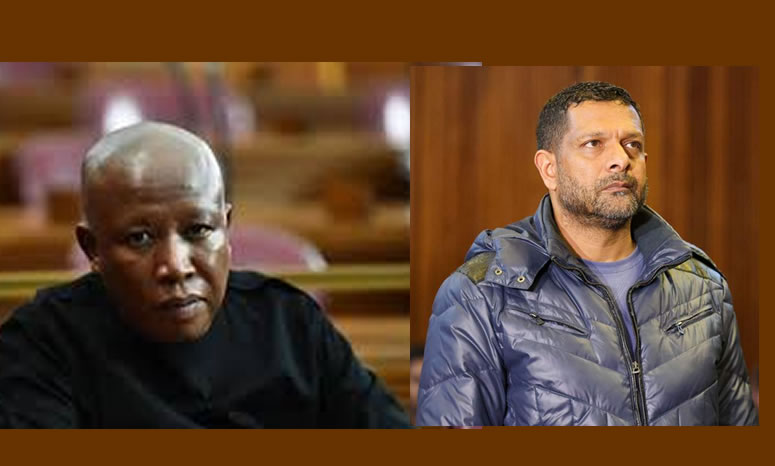
Pretoria, Gauteng – The Madlanga Commission of Inquiry, tasked with unearthing criminality, political interference, and corruption within the Criminal Justice System, has been rocked by explosive allegations. At the heart of the scandal are claims that Economic Freedom Fighters (EFF) leader Julius Malema allegedly received confidential police information and utilised Crime Intelligence resources, purportedly supplied by none other than the suspended Crime Intelligence head, Major-General Feroz Khan. These revelations, emerging from the Commission’s recent hearings, have ignited a political firestorm, casting a long shadow over the integrity of both law enforcement and high-profile political figures.
Evidence presented before the Commission, including alleged WhatsApp communications between Malema and Khan, paints a disturbing picture of a clandestine relationship. These exchanges reportedly detail not only the sharing of sensitive information but also suggest a deeper, more sinister plot. Allegations have surfaced of a concerted effort to coerce the then-Inspector-General of Intelligence, Setlhomamaru Dintwe, out of office, raising serious questions about the manipulation of state intelligence apparatus for political ends.
Major-General Feroz Khan, a figure once at the helm of the nation’s Crime Intelligence unit, has found himself at the centre of these damning accusations. His alleged involvement with Malema has drawn intense scrutiny, particularly given his suspended status. The Commission has heard how Khan was ordered to appear before it, with his testimony expected to shed light on the extent of his alleged dealings with the EFF leader.
Julius Malema, a vocal and often controversial political figure, has vehemently denied these allegations. In an affidavit filed with the Madlanga Commission, Malema has rejected any involvement in a plot to oust Dintwe, asserting his innocence amidst the swirling accusations. However, the revelations of direct communication with a high-ranking intelligence official, especially concerning sensitive state matters, have placed him under immense pressure.
The alleged plot to remove Setlhomamaru Dintwe from his position as Inspector-General of Intelligence is particularly alarming. Dintwe’s role is crucial in overseeing the country’s intelligence services, ensuring accountability and preventing abuse of power. If proven true, the allegations suggest a deliberate attempt to compromise this vital oversight mechanism, potentially undermining national security and democratic processes.
Further complicating the narrative is the alleged involvement of businessman Mohammed “Mo” Sayed. Evidence suggests that Sayed may have acted as an intermediary, reportedly receiving a list of questions from Malema before appearing before the Commission. This intricate web of alleged connections between politicians, intelligence officials, and private individuals points to a sophisticated network operating outside the bounds of legitimate governance.
The timing of these revelations could not be more critical. With the 2026 local elections on the horizon, the scandal has already begun to reshape the political landscape. The EFF, a significant opposition party, now faces intense public and media scrutiny regarding the conduct of its leader. The allegations threaten to erode public trust in political institutions and further fuel cynicism about the pervasive nature of corruption within the state.
Questions have also been raised about Malema’s alleged efforts to prevent Khan from appearing before parliament. Such actions, if substantiated, would suggest a deliberate attempt to obstruct justice and shield a key figure from accountability. The Madlanga Commission’s mandate is to expose such impropriety, and its findings will undoubtedly have far-reaching consequences for all involved.
The Commission’s hearings continue to unfold, promising further revelations as witnesses testify and evidence is meticulously examined. The public, weary of persistent corruption scandals, watches closely, hoping for transparency and accountability. The integrity of South Africa’s criminal justice system and its political landscape hangs in the balance as the Madlanga Commission delves deeper into these explosive claims.
This ongoing inquiry serves as a stark reminder of the constant vigilance required to safeguard democratic institutions from undue influence and corruption. The alleged collusion between a political leader and a top intelligence official, if proven, represents a profound breach of public trust and a dangerous precedent for the nation’s future. The ultimate outcome of the Madlanga Commission’s investigation will undoubtedly shape public perception of justice and accountability in South Africa for years to come.