

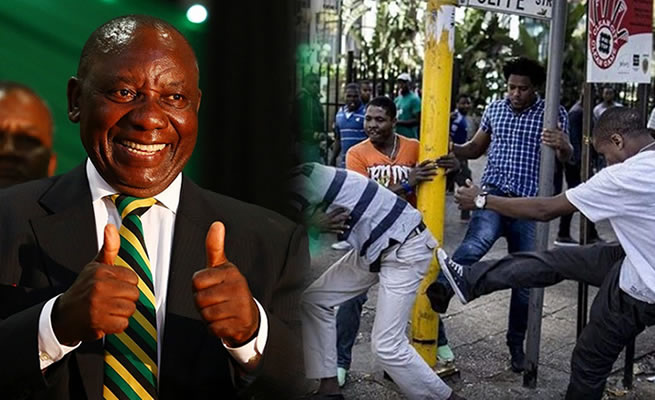
Civil Society Slams Government Over Anti-Migrant Hostility and Forced Evictions
Civil society organisations have accused the South African government of failing to protect refugees and migrants from escalating hostility, forced evictions, and xenophobic violence. Groups including Kopanang Africa Against Xenophobia (KAAX) and the Siyafana Sonke Action Campaign say the state’s response has been inadequate and inhumane, leaving vulnerable communities displaced and exposed to further abuse.
Mounting Criticism
In a joint statement, the organisations condemned what they described as government indifference to the plight of migrants. They argued that authorities have not done enough to prevent violent attacks or to provide humanitarian support to those forced from their homes.
“Government has failed to act decisively against xenophobic violence and forced evictions,” a KAAX spokesperson said. “Instead of protecting refugees and migrants, officials have allowed hostility to fester, creating a humanitarian crisis.”
The criticism comes amid rising tensions in several provinces, where migrants have reported being targeted by vigilante groups and forcibly removed from informal settlements.
Organisations Unite
The campaign has drawn support from a broad coalition of advocacy groups, including Abahlali BaseMjondolo, the African Diaspora Forum, the Treatment Action Campaign, and the Equal Education Law Centre. Together, they argue that the government’s failure to intervene has emboldened perpetrators and deepened the suffering of displaced families.
Representatives from the African Diaspora Forum noted that migrants often face violence without recourse to justice. “We see repeated patterns of abuse, yet prosecutions are rare. This sends a message that migrants’ lives are expendable,” one member said.
Government Response
Officials have defended their position, insisting that measures are being taken to address xenophobic violence and forced evictions. A government spokesperson said: “We are committed to protecting all who live in South Africa, regardless of nationality. Law enforcement agencies are working to ensure that perpetrators are brought to justice.”
However, civil society groups argue that these assurances ring hollow in the face of ongoing displacement and violence. They point to recent incidents where migrants were evicted without warning, left homeless, and denied access to basic services.
Humanitarian Crisis
The forced evictions have created a growing humanitarian emergency. Families displaced from informal settlements often find themselves without shelter, food, or medical care. Aid organisations have stepped in to provide limited support, but resources remain stretched.
The Treatment Action Campaign warned that the crisis could have severe public health consequences. “When people are displaced, they lose access to healthcare and medication. This is particularly dangerous for those living with chronic conditions such as HIV,” the group said.
Calls for Accountability
Civil society leaders are demanding that the government take immediate steps to halt forced evictions and provide meaningful protection for migrants. They have called for stronger oversight of law enforcement, improved access to legal remedies, and greater investment in humanitarian assistance.
The Equal Education Law Centre emphasised that children are among the hardest hit. “Displacement disrupts schooling and denies young people the stability they need to thrive. The government must act to safeguard their rights,” a representative said.
Broader Context
South Africa has long grappled with tensions over migration, with periodic outbreaks of xenophobic violence leaving communities divided. Analysts argue that economic hardship, unemployment, and political rhetoric have fuelled resentment against migrants, often scapegoated for broader social problems.
Advocacy groups warn that unless the government takes decisive action, hostility will continue to escalate. “We cannot allow xenophobia to become normalised,” KAAX said. “South Africa’s Constitution guarantees dignity and equality for all. It is time for government to uphold those principles.”
Looking Ahead
Civil society organisations plan to intensify their campaign, staging protests and engaging with international bodies to draw attention to the crisis. They insist that the government must be held accountable for failing to protect vulnerable communities.
For migrants and refugees, the immediate concern remains survival. With forced evictions continuing and hostility rising, many face an uncertain future. The question now is whether authorities will respond with meaningful action or allow the crisis to deepen further.