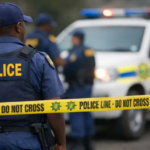
The tranquil atmosphere of Mpumalanga township in Hammarsdale, south of Durban, was shattered on Tuesday, 16 June, by a tragedy that has once again cast a dark shadow over the South African Police Service (SAPS). What was meant to be a restful period of leave for Constable Mbali Msomi ended in a fatal confrontation when she was gunned down, allegedly by her own partner, a sergeant within the elite Crime Intelligence division.
Constable Msomi, a dedicated officer described by those who knew her as a woman who performed her duties with exceptional diligence, had decided to spend her time off visiting her boyfriend at his residence. However, the visit, which had reportedly lasted for a day or two, took a violent turn when an uninvited guest arrived at the doorstep. Local residents suggest that the unexpected arrival of another woman, believed to be a romantic rival or "side chick," sparked a heated altercation that rapidly escalated beyond control.
"That was when things changed," a resident, who requested anonymity for fear of repercussions, explained. "They fought over the woman and things ended in bloodshed. I think Constable Msomi had spent a day or two before the other woman arrived and caused chaos."
The chaos described by witnesses culminated in the sergeant allegedly drawing his firearm and shooting Msomi. Shortly after the fatal shots were fired, the sergeant reportedly turned the weapon on himself in an attempt to take his own life. While Msomi was pronounced dead at the scene, her partner survived the self-inflicted wound and was rushed to a nearby hospital, where he remains under heavy police guard.
KwaZulu-Natal police spokesman, Colonel Robert Netshiunda, confirmed the grim details of the incident. "The incident happened at the boyfriend's place," Netshiunda stated. "The boyfriend was taken to hospital under police guard after he allegedly turned the gun on himself." He further noted that while the precise motive remains under investigation, the authorities cannot ignore the signs of a domestic dispute gone wrong. "Although the actual cause of the shooting is unknown at this stage, domestic-related violence couldn't be ruled out. The deceased was on leave at the time of her death," he added.
This latest incident is not an isolated case of "umjolo"—a colloquial term for romantic relationships—ending in tears and violence within the ranks of law enforcement. Instead, it serves as a harrowing reminder of a systemic issue where the very individuals entrusted with protecting the public and upholding the law are increasingly turning their service weapons against their loved ones.
The tragedy in Hammarsdale mirrors a devastating event that occurred just a year prior in Protea Glen, Soweto. On 26 July 2025, a police captain turned what was supposed to be an intimate birthday celebration for his ex-girlfriend into a bloodbath. The ex-girlfriend, who was also a police officer, was celebrating her birthday with her family when the captain arrived. Despite having been separated for eighteen months and maintaining a co-parenting relationship for their two children, aged fifteen and eight, the captain opened fire.
The children were present in the house when their father shot their mother and her brother dead. Three other individuals were wounded in the hail of bullets before the captain, realizing that his colleagues had surrounded the house, turned the gun on himself. Those who knew the captain described him as a "very shy" man, making the brutality of his final actions even more difficult for the community to comprehend.
The recurring theme of police officers using their service pistols to settle domestic grievances is a matter of grave concern for civil society and the SAPS leadership. In December 2024, the community of Eldorado Park was left reeling after the murder of 22-year-old Chesnay Keppler, a Gauteng traffic warden. Keppler was allegedly shot and killed by her 42-year-old police officer boyfriend, Mandla Buthelezi, following a domestic dispute on Boxing Day. Buthelezi, who allegedly used his service pistol in the attack, was subsequently arrested and faced charges of murder, highlighting the lethal combination of domestic volatility and easy access to firearms.
The statistics surrounding this phenomenon are equally alarming. A report presented by the Civilian Secretariat for Police Service in November 2024 revealed that 191 police officers had been identified as perpetrators of domestic violence within a single reporting period. This figure underscores the reality that the stresses of policing, combined with personal relationship struggles, often manifest in extreme violence.
Historically, the halls of justice have not been immune to such outbursts. In November 2018, the Durban Magistrate’s Court became a crime scene when an off-duty police officer, who worked for the Protection and Security Services unit, opened fire during a tea break in his own divorce proceedings. He shot and killed his estranged wife and her brother inside the courtroom before attempting suicide. The incident exposed the vulnerability of even the most secure environments when an officer decides to bypass the law they are sworn to serve.
The Hammarsdale shooting has left a void in the lives of those who knew Constable Msomi. "She was a well-known cop who did her job very well," remarked a neighbour, reflecting the sentiment of a community that has lost a protector to the very hands that should have cherished her. As the sergeant recovers in hospital, the legal system prepares to process yet another case of intimate partner femicide within the police force.
The question that remains for many South Africans is how to address the underlying causes of such violence. Experts point to the psychological toll of police work, which often involves exposure to trauma and high-pressure situations, as a contributing factor. When this pressure is brought home, the results can be catastrophic. Furthermore, the availability of a service weapon means that a moment of heated passion or jealousy can instantly turn into a permanent tragedy.
The SAPS has frequently spoken about the importance of wellness programmes and psychological support for its members. However, the frequency of these incidents suggests that more needs to be done to identify at-risk officers before they reach a breaking point. The loss of Constable Mbali Msomi is not just a personal tragedy for her family and friends; it is a failure of a system that allowed a domestic dispute to escalate into a murder-suicide attempt involving two of its own members.
As the investigation into the Hammarsdale incident continues, the focus remains on the sergeant who survived. Once he is deemed fit to stand trial, he will face the full weight of the law. For the family of Constable Msomi, however, no court verdict will bring back the woman who dedicated her life to serving her country, only to have that life cut short in a kasi house where she should have been safe.
The pattern of violence is clear, and the consequences are final. From the courtrooms of Durban to the streets of Soweto and the homes of Hammarsdale, the sound of police-issued gunfire in domestic settings continues to claim lives, leaving behind broken families and a public left questioning who will protect the protectors.
|
Incident Date
|
Location
|
Perpetrator Rank
|
Victim(s)
|
Outcome
|
|
16 June 2026
|
Hammarsdale, KZN
|
Sergeant (Crime Intelligence)
|
Constable Mbali Msomi
|
Victim deceased; Perpetrator hospitalised
|
|
26 July 2025
|
Protea Glen, Soweto
|
Police Captain
|
Ex-girlfriend (Cop) & her brother
|
3 dead (including perpetrator); 3 injured
|
|
26 Dec 2024
|
Eldorado Park, Gauteng
|
Police Officer
|
Chesnay Keppler (Traffic Warden)
|
Victim deceased; Perpetrator arrested
|
|
26 Nov 2018
|
Durban Magistrate's Court
|
Police Officer (PSS)
|
Wife & her brother-in-law
|
2 dead; Perpetrator attempted suicide
|
The table above illustrates a grim timeline of events that have plagued the South African Police Service over the years. Each entry represents a failure to intervene, a life lost, and a community left to pick up the pieces. As the nation mourns Constable Msomi, the call for a deeper look into the mental health and domestic conduct of those in uniform grows louder, demanding more than just words of condolences from the authorities.