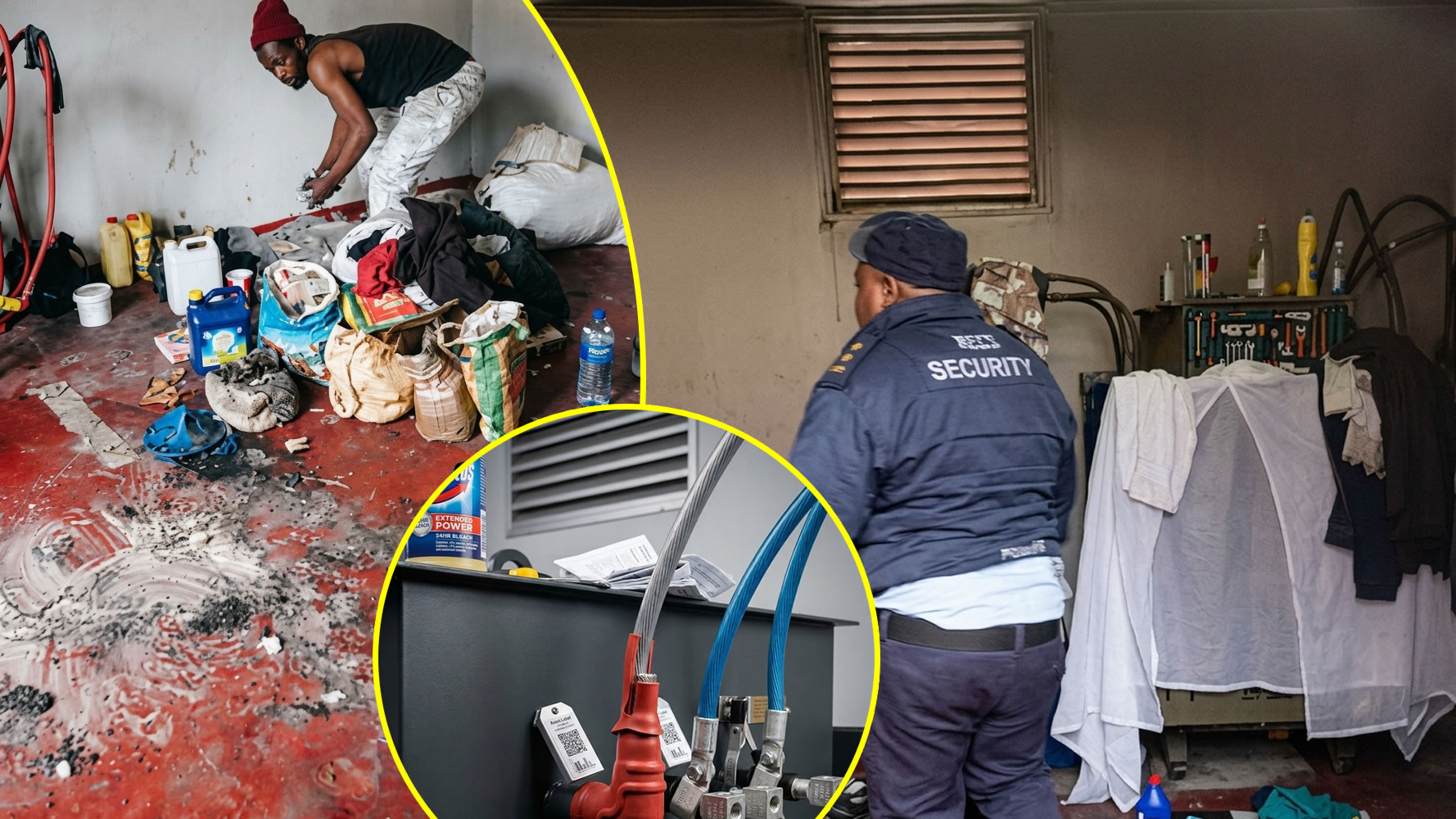
Johannesburg – A deeply unsettling discovery in Melville, Johannesburg, has brought into sharp focus the severe socio-economic pressures driving individuals to unimaginable extremes. On or around 9th June 2026, a Zimbabwean national was found to have established a makeshift home within a live high-voltage electrical substation, a location fraught with peril. The incident, captured in viral videos and widely reported, has ignited widespread concern and prompted urgent questions about homelessness, irregular migration, and the human cost of desperation in South Africa.
The Main Road East Substation, operated by City Power, is a critical piece of infrastructure, housing transformers and associated equipment that supplies electricity to the surrounding residential and commercial areas of Melville. It is an environment where safety protocols strictly prohibit human presence due to the immediate and severe threat of electrocution, arc flashes, and other catastrophic electrical hazards. Yet, within this deadly enclosure, a man had carved out a space for survival.
Eyewitness accounts and video footage from inside the substation paint a stark picture of his precarious existence. Personal belongings were observed placed directly on and around live electrical components. Items such as clothing hung on structures, bedding arranged for sleeping, plastic bags, bottles, containers, and various household goods were scattered across the floor and surfaces. The interior, with its red-painted floor, was cluttered with debris, electrical cables, junction boxes, and equipment panels, illustrating the sheer audacity and desperation of his living arrangements. One segment of the footage showed an individual in uniform moving through the enclosed area, inspecting the hazardous conditions, underscoring the gravity of the situation.
The identity of the man, his background, and the exact duration of his occupancy remain officially unconfirmed by City Power or the Johannesburg police. Similarly, details on how he gained unauthorised entry and managed to remain undetected within such a dangerous facility have not been publicly disclosed. This lack of official information only deepens the mystery surrounding an incident that serves as a potent symbol of a broader societal crisis.
City Power spokesperson Isaac Mangena has confirmed the utility's awareness of the incident, describing it as a "dangerous and worrying situation" that underscores the vulnerabilities of the city's critical infrastructure. Mangena noted that "unauthorised access to our substations is not only a crime but a severe threat to life, as these facilities are not designed for human occupancy." He further explained that the utility is investigating how the security breach occurred and what measures can be taken to prevent a recurrence. The Melville discovery is symptomatic of a broader crisis, where City Power substations have increasingly become targets for vandalism, theft of components, and, in this extreme case, a desperate refuge for the homeless.
Political figures have also weighed in on the discovery, with ActionSA’s Zandile Dabula, the Member of the Mayoral Committee (MMC) for Human Settlements, calling for an urgent review of security at all high-voltage sites. "This incident is a stark reminder of the lived realities of our residents and the lengths to which desperation can push individuals," Dabula stated. She emphasised that while the safety of the individual is paramount, the potential for a catastrophic failure of the power supply to thousands of residents cannot be ignored. The party has integrated such infrastructure security concerns into its broader "Operation Fix Joburg" campaign, highlighting the intersection of service delivery, safety, and the humanitarian crisis of homelessness.
The man's nationality as a Zimbabwean national and his status as an undocumented foreigner add another layer of complexity to this already tragic narrative. Zimbabwe has been grappling with a protracted economic and political crisis for years, leading to rampant poverty and high unemployment rates. This has compelled many Zimbabweans to seek refuge or economic opportunities in neighbouring countries, with South Africa being a primary destination. The journey is often fraught with peril, and once in South Africa, many face immense challenges, including xenophobia, exploitation, and extreme vulnerability due to their undocumented status.
Organisations like Operation Dudula, an anti-migrant group in South Africa, have been vocal in their campaigns against undocumented foreigners, often targeting businesses and individuals believed to be foreign nationals. The group has even set deadlines for undocumented migrants to leave South Africa, contributing to a climate of fear and uncertainty for many. While the direct impact of such movements on this individual's decision to inhabit a substation is not known, the broader context of heightened anti-immigrant sentiment and the struggle for survival undoubtedly plays a role in the desperate choices made by vulnerable individuals.
The escalating homelessness crisis in South Africa further exacerbates such situations. Reports indicate that over 200,000 people are estimated to be homeless across the nation, with official figures often understating the true scale of the problem. Factors such as rising housing costs, low incomes, and high unemployment rates contribute to a growing number of individuals experiencing homelessness for the first time. For those without shelter, abandoned buildings, informal settlements, and, in extreme cases, dangerous infrastructure like power substations become desperate alternatives.
This incident in Melville serves as a poignant narrative that demands empathy and a deeper examination of the systemic issues pushing individuals to the brink. It is a stark reminder of the human cost of economic instability and the desperate search for survival. The man's choice to live in a high-voltage substation, despite the obvious and extreme danger, speaks volumes about the lack of safe and viable alternatives available to him. It highlights a critical failure in providing basic human needs and protection for the most vulnerable members of society.
The immediate priority remains the safety and well-being of individuals who find themselves in such perilous circumstances, alongside the security of vital public infrastructure. However, beyond immediate intervention, this incident calls for a comprehensive and compassionate approach to address the root causes of irregular migration, homelessness, and socio-economic hardship. It necessitates a collaborative effort from government bodies, humanitarian organisations, and communities to ensure that no individual is forced to choose between life-threatening conditions and the fundamental right to shelter and safety. The Melville substation discovery is a powerful metaphor for the invisible struggles faced by many, urging society to look beyond the shock and confront the underlying desperation that forces such extreme acts of survival. It is a call to action for more humane and sustainable solutions to protect those who are most vulnerable in our communities.