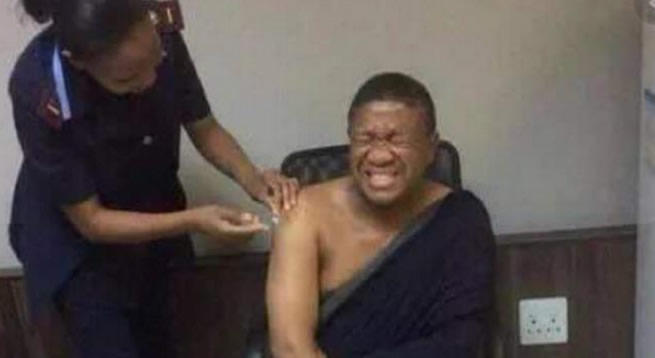
That is the warning from legal experts as South Africa experiences a troubling decline in childhood immunisation rates, particularly in Gauteng and the Western Cape.
Latest figures show that vaccination coverage has slowed significantly. In Gauteng, the health department reported that the rate for infants under 12 months now sits at roughly 75%, down from 83%. In the Western Cape, infant immunisation rates have dropped even further, to 67.4%.
Public health specialists say this decline leaves thousands of children exposed to preventable diseases such as measles — infections that can spread rapidly when vaccination coverage falls below protective levels.
Although South African law does not make routine childhood immunisation compulsory, legal scholars argue that parental autonomy has limits when harm to others can be demonstrated.
Liesl Hager from the University of Pretoria’s department of private law says parents do have the authority to make medical decisions on behalf of their children, including refusing vaccinations. However, she cautions that this choice is not without potential legal consequences.
“Parents have both the right and the responsibility to make medical decisions on behalf of their minor children,” said Hager. “That falls within the scope of parental autonomy, and parents are entitled to refuse certain or all vaccinations for their child.
“The issue only arises when that decision causes legally recognised harm to another person, whether that is another child or an adult.”
Hager’s research examines whether parents could be held liable under the law of delicts — the branch of law dealing with civil wrongs — if an unvaccinated child infects another person with a vaccine-preventable disease.
She offers a scenario that brings the legal question into sharp focus: an immunocompromised child who cannot receive vaccinations for medical reasons contracts a disease from a child whose parents chose not to vaccinate.
“In theory, if all the requirements for civil liability are present, there could be a civil claim against those parents,” she said.
However, Hager is quick to stress that translating theory into a successful lawsuit would be far from straightforward.
“A claimant would have to present scientific evidence showing that the unvaccinated child was the factual cause of the infection and the resulting harm. South African law is silent on whether childhood vaccination is mandatory, and that creates uncertainty,” she said.
Proving causation — that one specific child was responsible for transmitting the infection — would likely present one of the biggest legal hurdles. In infectious disease cases, transmission chains are often complex and difficult to establish conclusively.
To date, South African courts have not ruled on a case involving these specific facts, leaving the legal landscape largely untested.
“Ideally, we do not want these issues to reach the courts before we have legal certainty. It would be better to provide guidance rather than waiting for litigation to arise proactively,” Hager said.
Beyond the legal debate, health authorities are sounding the alarm over what declining vaccination rates could mean for public health.
Child health specialist Dr Lesley Bamford from the national health department says the downward trend in coverage is deeply concerning.
“In some parts of the country, we are certainly seeing a decline in the proportion of children who are vaccinated, and that is extremely concerning.”
She explains that vaccination is not only about individual protection but also about safeguarding the wider community, particularly those who are medically vulnerable.
She said unvaccinated children are vulnerable to infection and can also spread diseases to others, particularly babies and people who cannot be vaccinated for medical reasons.
“This is where herd immunity becomes critically important. When vaccination coverage is high, herd immunity helps prevent diseases from circulating.
“When children are not vaccinated, they are at risk of contracting diseases that could otherwise be prevented. As vaccination coverage declines, not only does the risk to individual children increase, but diseases are also more likely to spread throughout the community.
“Because we no longer see large outbreaks of diseases such as polio and other serious childhood illnesses, people become complacent. Vaccination programmes can become victims of their own success.”
Her comments underline a paradox facing modern public health systems: as vaccines reduce the visibility of once-devastating diseases, the urgency to vaccinate can fade in the public mind.
Despite the risks outlined by health professionals, the government has opted not to introduce mandatory childhood vaccination.
Bamford explained that enforcement would present practical and ethical challenges.
“Firstly, it can be difficult to enforce. Secondly, though every child should theoretically have access to vaccination, we know there are still barriers to access.
“Another concern is that making it mandatory can give rise to legal challenges and debates that may distract from the primary goal of delivering comprehensive and effective immunisation.”
For now, vaccination in South Africa remains voluntary. Yet the combination of declining coverage and emerging legal questions suggests that the issue is far from settled.
As immunisation rates fall in key provinces, the debate is shifting beyond clinics and classrooms into courtrooms and lecture halls. At its heart lies a difficult balancing act: protecting parental rights while safeguarding public health — and potentially determining where personal choice ends and legal responsibility begins.