

The Beitbridge Pipeline: How a Serial Car Thief’s Luck Ran Out in the Shadow of a National Crisis
LIMPOPO – In the sterile, echoing halls of the Mokopane Regional Court this week, a chapter closed on one of the many foot soldiers in South Africa’s relentless cross-border car smuggling trade. Lucky Msizi Tshabangu, a 35-year-old man whose name had become a recurring entry in police dockets over the past year, stood before a magistrate on Monday, 1 June, to hear his fate. The verdict was a stark reminder of the risks involved in the high-stakes game of vehicle trafficking: an effective eight years behind bars.
The sentencing of Tshabangu is more than just a local court matter; it is a window into a sophisticated criminal economy that has seen the Toyota Corolla Cross become the most hunted prize on South African roads. For months, Tshabangu had navigated the long, dusty stretches of the N1 highway, allegedly serving as a link in a chain that stretches from the leafy suburbs of Gauteng to the bustling markets of Zimbabwe and beyond.
The First Arrest: A High-Speed Gamble
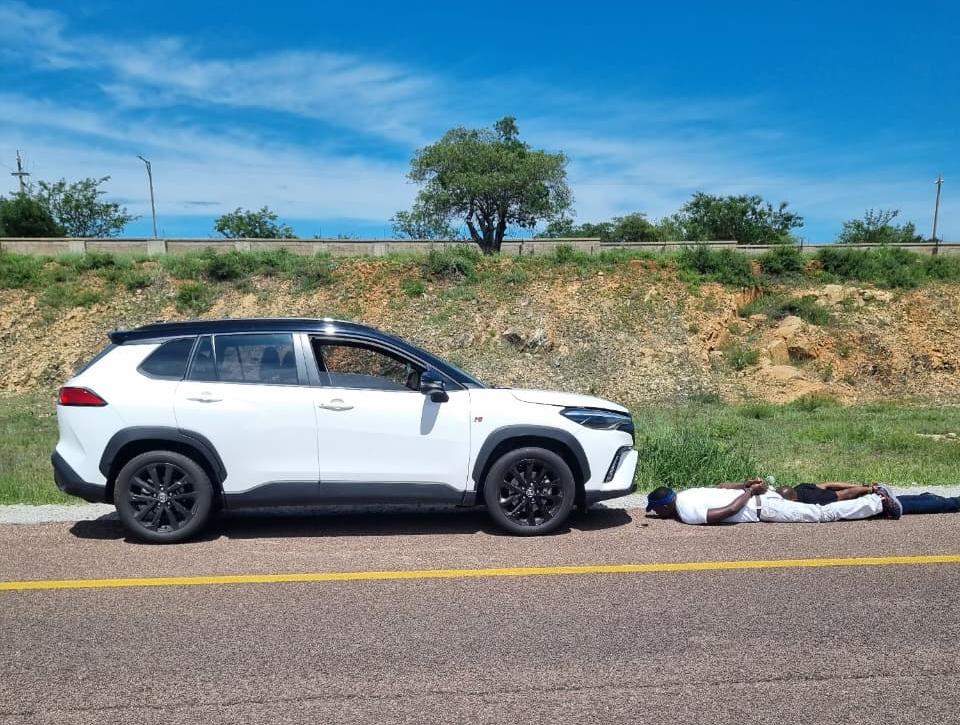
The downfall of Lucky Msizi Tshabangu began on 18 May 2025. It was a day that started like many others for the Provincial Tracking Team, an elite unit of the Limpopo police tasked with intercepting the flow of stolen goods. They had received intelligence regarding a white Toyota Corolla Cross moving through the Mokopane area. The vehicle, as later investigations would confirm, had been reported stolen in Gauteng only days prior.
When the tracking team spotted the vehicle and signaled for the driver to pull over, Tshabangu chose flight over surrender. What followed was a desperate high-speed chase through the streets of Mokopane. The Corolla Cross, designed for family comfort and urban efficiency, was pushed to its mechanical limits as Tshabangu attempted to weave through traffic and evade the blue lights behind him.
The pursuit ended not with a clean escape, but with Tshabangu in handcuffs. At the time, police investigations suggested he was on his way to smuggle the vehicle across the border through the Beitbridge Port of Entry. This gateway, the busiest border post in Southern Africa, serves as the primary artery for both legitimate trade and the illicit movement of stolen luxury goods.
Limpopo police spokesman Colonel Malesela Ledwaba, reflecting on the initial capture, noted the audacity of the attempt. However, the legal system offered Tshabangu a reprieve that would soon prove to be a costly mistake for the community. He was granted bail, a standard legal procedure that assumes the accused will remain within the bounds of the law while awaiting trial.
Defying the Law: The Beitbridge Encounter
Tshabangu’s freedom, however, did not lead to a change of heart. Instead, it appears he returned to the only trade he knew. In September 2025, while still out on bail for the Mokopane incident, Tshabangu was spotted again. This time, he was not in the heart of Limpopo, but at the very edge of the country: the Beitbridge Port of Entry.
In a display of remarkable brazenness, he was found behind the wheel of yet another Toyota Corolla Cross. Like the first, this vehicle had been reported stolen in Gauteng. The pattern was unmistakable. The "Beitbridge Pipeline" was active, and Tshabangu was one of its most persistent operators.
“While out on bail, Tshabangu was arrested again at the Beitbridge Port of Entry in September 2025 after he was found driving another Toyota Corolla Cross that had also been reported stolen in Gauteng,” said Colonel Ledwaba. “Following his second arrest, his bail was revoked and both matters were consolidated for prosecution before the Mokopane Regional Court.”
This second arrest was the final straw for the prosecution. The court consolidated the charges, ensuring that Tshabangu would face the full weight of his actions in a single trial. The evidence was overwhelming: two stolen vehicles of the same make and model, both taken from the same province, and both intercepted while heading toward the same international border.
The "Corolla Cross" Epidemic
To understand why a man like Tshabangu would risk his freedom twice in the same year, one must look at the broader trends of vehicle crime in South Africa. In late 2025 and early 2026, security analysts and insurance companies began sounding the alarm over a specific target: the Toyota Corolla Cross.
Recent data from the South African Police Service and private security firms indicates that the Corolla Cross has surged to the top of the "most-wanted" list for syndicates. Its popularity is its curse. Because the vehicle is ubiquitous on South African roads, it allows smugglers to blend into normal traffic with ease. Furthermore, its robust build and reliability make it highly sought after in neighbouring countries where road conditions can be challenging and spare parts for newer models are in high demand.
In Gauteng, the province where both of Tshabangu’s vehicles originated, the theft of these SUVs has reached crisis proportions. Syndicates often use "scout" vehicles—frequently innocuous-looking hatchbacks or even luxury sedans—to identify targets in shopping centre car parks or residential driveways. Once a vehicle is taken, often using sophisticated electronic jamming devices that bypass modern security systems, it is "cooled off" in a safe house before the long drive north begins.
The Mechanics of Smuggling
The journey from the streets of Johannesburg to the border at Beitbridge is approximately 550 kilometres. It is a route fraught with police checkpoints and toll plazas. Smugglers like Tshabangu often rely on speed, timing, and sometimes, the cover of night.
However, the official border post is not the only way across. Investigative reports have highlighted the use of the Limpopo River as a secondary route. During the dry season, vehicles are often driven across the sandy riverbed. In some extreme cases, syndicates have been known to use donkeys to pull cars across the water on makeshift rafts, or even build temporary bridges using ladders and planks.
The Beitbridge Port of Entry itself is a battleground. While the Border Management Authority (BMA) has stepped up its efforts, the sheer volume of traffic—thousands of trucks and cars daily—provides a haystack in which smugglers can hide their needles. The arrest of Tshabangu at the port in September suggests that some smugglers still believe they can talk or bribe their way through the official channels, or perhaps they rely on cloned number plates and forged registration documents that look legitimate to the naked eye.
Justice Served in Mokopane
When the Mokopane Regional Court delivered its judgment on Monday, the sentencing reflected the multiple layers of Tshabangu’s criminality. The court was not merely punishing a single theft, but a pattern of behaviour that showed a total disregard for the law and the safety of the public.
The breakdown of the sentence was as follows:
- Five years imprisonment for receiving a stolen motor vehicle (the first Corolla Cross).
- Two years for reckless and negligent driving (stemming from the high-speed chase in Mokopane).
- Six years for receiving another stolen motor vehicle (the second Corolla Cross at Beitbridge).
While the total years added up to thirteen, the court ordered that some of the sentences run concurrently. This resulted in an effective prison term of eight years. For the police teams who had chased him through the streets and waited for him at the border, the result was a hard-won victory.
Colonel Ledwaba stated that the sentence will send a strong warning to criminals involved in vehicle theft syndicates. “This sentence demonstrates that law enforcement agencies remain committed to disrupting cross-border vehicle crime and ensuring that offenders are brought to justice,” he said.
A Unified Front Against Organised Crime
The success of the case has been attributed to the seamless cooperation between various units of the South African Police Service (SAPS). The Provincial Tracking Team, the Provincial Investigation Unit, and the Polokwane Vehicle Crimes Unit all played a role in connecting the dots between the two arrests.
Limpopo police commissioner Lieutenant-General Thembi Hadebe welcomed the sentence and praised the Provincial Tracking Team and the investigating officer for their hard work in securing the conviction. “The removal of repeat offenders from our communities is critical in the fight against organised vehicle crime,” said Hadebe.
The commissioner’s words highlight a growing frustration within law enforcement: the "revolving door" of the justice system where suspects are arrested, granted bail, and then immediately return to their criminal activities. The Tshabangu case serves as a textbook example of why the police are increasingly opposing bail in cases involving organised vehicle syndicates.
The Road Ahead
While Lucky Msizi Tshabangu begins his eight-year sentence, the war on the N1 continues. Just weeks before his sentencing, other major breakthroughs were reported. In May 2026, a suspected vehicle smuggling route through Beitbridge was disrupted when two other men were sentenced to a combined 25 years in jail. In another incident, an anti-smuggling task team intercepted a luxury SUV valued at over R2.5 million just kilometres from the border.
These successes, however, are tempered by the reality of the market. As long as there is a high demand for South African vehicles in the broader African continent, there will be men willing to take the place of those who are sent to prison. The syndicates are adaptable, moving from one model to another as security features evolve and police tactics change.
For the residents of Limpopo and Gauteng, the sentencing of Tshabangu offers a brief moment of accountability. It is a story of a man who thought he could outrun the law, only to find that the road eventually runs out. The white Toyota Corolla Crosses he once drove are now evidence in a closed file, and the man who drove them has traded the open highway for the grey walls of a prison cell.
As the sun sets over the Beitbridge border, the lights of the trucks continue to flicker, a constant reminder of the flow of goods, both legal and illegal, that defines this frontier. The police remain on watch, knowing that while one "Lucky" man’s run has ended, the pipeline he served remains a formidable challenge for the nation.