Blood on the Pavement: The Silent War for Control in Salt River
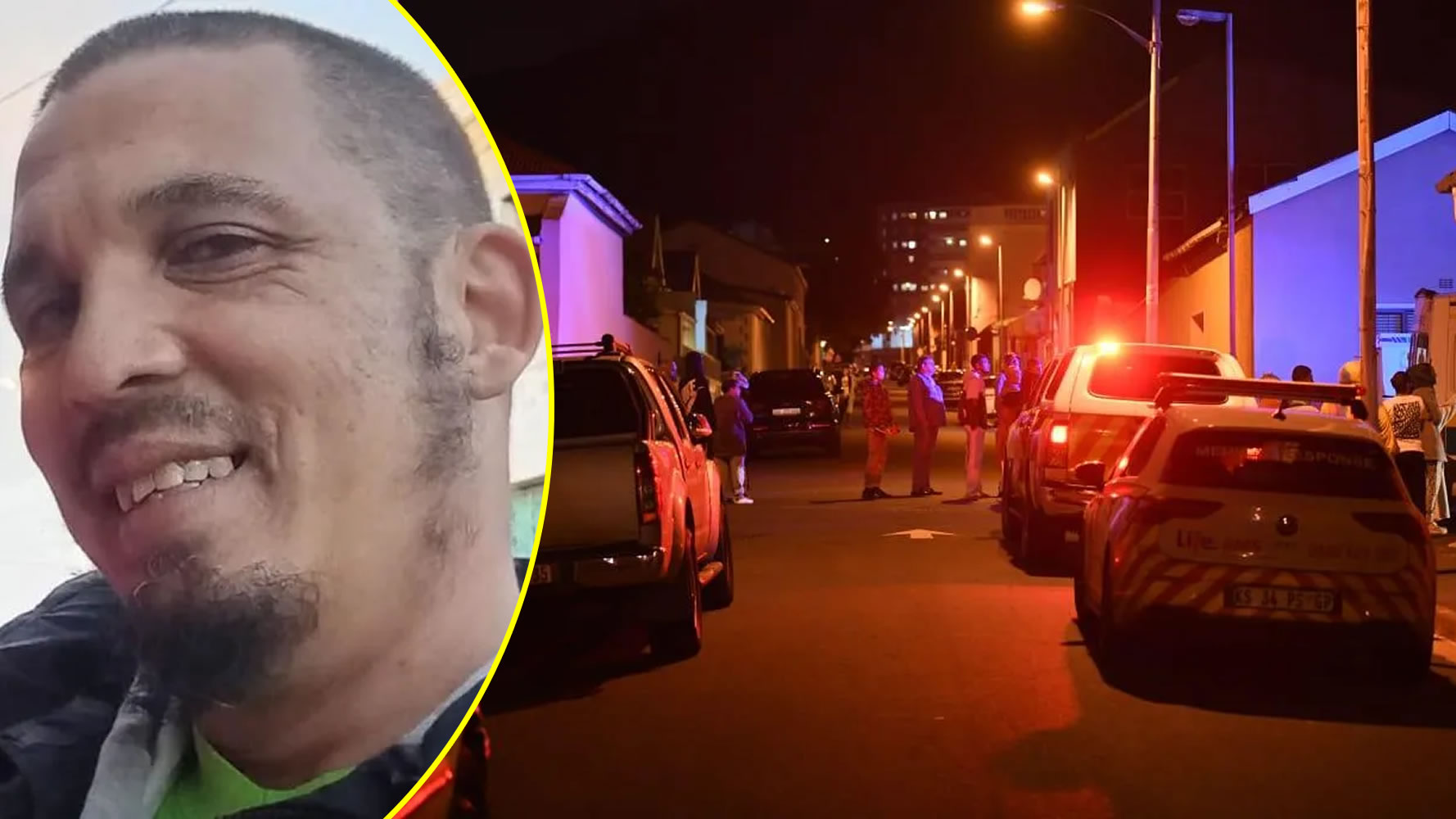
The sound of gunfire has become a grimly familiar rhythm in the narrow streets of Salt River, but the execution of Yusuf Bohardien on a Tuesday night felt different to those who know the geography of Cape Town's ganglands. At 43 years old, Bohardien, known to many in the neighborhood as "U-Boy," was a man whose violent past was supposed to be behind him. Instead, his life ended in a spray of bullets on the pavement of Tennyson Street, marking another bloody chapter in what investigators believe is a calculated campaign by the Junior Mafias to seize total control of the area.
It was approximately 8:40 pm on May 5, 2026, when the silence of the evening was shattered. According to witnesses and police reports, the attack was a masterclass in cold-blooded efficiency. Bohardien was first struck from behind, the initial bullets forcing him to the ground. But his attackers were not finished. In a move designed to send a message as much as to ensure death, they stood over his fallen body and delivered multiple shots directly to his face and head. By the time Woodstock police and medical personnel arrived, there was little they could do.
Police spokesperson Constable Ndakhe Gwala confirmed the grim details of the scene. "This office confirms that on Tuesday, 5 May 2026, Woodstock police responded to reports of a shooting at Tennyson Street, Salt River, at about 8.40pm. Upon arrival, they found a 43-year-old male lying on the pavement with multiple gunshot wounds on his head and face. Medical personnel on the scene tried to resuscitate him but he succumbed to his injuries."
The brutality of the killing has left the community of Salt River reeling. While the police officially state that the motive remains unknown, those on the ground speak of a much larger and more terrifying picture. For the past two years, a slow-burning conflict has been escalating between the established Nice Time Kids (NTK) and the rising Junior Mafias. The latter, an ambitious and increasingly violent group, is allegedly attempting to "take everyone out" to establish a monopoly over the lucrative territory of Salt River.
Bohardien's death is particularly troubling because, by all accounts, he had retired from the life of a gangster. He was a former member of the Nice Time Kids, but sources close to the family and the neighborhood insist he was no longer active in gang affairs. This raises a chilling question for the residents of Salt River: was he targeted because of his past, or was his execution a strategic move to eliminate anyone with even a historical connection to the rival group?
"He was shot a few times, first a few bullets in the back then he was shot a couple of times in the head and face," one local source, who spoke on the condition of anonymity for fear of retaliation, explained. "Yusuf used to be a Nice Time Kids (NTK) gang member. But the shootings have become scary, Salt River is becoming like a war zone and this is definitely gang related, because this has been coming on for the past year or two now in Salt River where the Junior Mafias gang want to take everyone out and have control of the area and targeting the Nice Times."
The source continued, highlighting the uncertainty that now grips the streets: "I can't say if Yusuf was at the wrong place at the wrong time, because he is retired and not even involved in these things or they could have targeted him because of the execution style on how they shot him."
This atmosphere of fear is not a new development. Salt River, once a quiet industrial and residential suburb, has seen a dramatic spike in violence over the last month. Just weeks before Bohardien was gunned down, the community witnessed a series of shootings that have left local crime fighters describing the area as "bleeding."
On April 9, 2026, a 34-year-old man was walking down Cecil Road when he was ambushed from behind. Much like the attack on Bohardien, the assailant approached quietly and opened fire, hitting the victim multiple times in the lower body. Fortunately, that victim survived and was rushed to a nearby hospital, though the shooter remains at large.
Only twenty-four hours earlier, on April 8, the violence had turned fatal. A 26-year-old man was killed and a 27-year-old wounded when a white pickup truck pulled up alongside a group of men gathered at the corner of Burns and Pope Street. Witnesses described a hail of bullets erupting from the vehicle before it sped away. In that instance, the police were able to act swiftly. Members of the Flying Squad followed up on intelligence and arrested three men believed to be linked to the shooting. One of the suspects was already wanted for a separate attempted murder case.
Despite these arrests, the violence has not subsided. Gary Adams, the acting chairperson of the Woodstock Community Policing Forum (CPF), has been vocal about the trauma being inflicted on the residents. "The community is traumatised and concerned. There is a cloud of fear hanging over them," Adams stated during a recent community briefing. He emphasized that a single prominent gang is believed to be responsible for the majority of these incidents, a sentiment that aligns with the reports of the Junior Mafias' aggressive expansion.
The history of these two gangs is deeply rooted in the Cape Flats and the surrounding suburbs. The Nice Time Kids have long been a presence in areas like Lentegeur and Salt River. Their former leader, Marwaan "Dinky" Desai, was himself a victim of a high-profile execution in 2017, when he was shot while sitting in his luxury vehicle at a shopping centre. His death left a power vacuum that many believe is still being fought over today.
On the other side of the conflict, the Junior Mafias have been growing in strength. Originally seen as a smaller group, they have expanded their reach through a combination of strategic alliances and ruthless violence. Their alleged goal of taking over Salt River is seen by many as a move to control the distribution routes and local markets that the suburb's proximity to the city centre provides.
For the people living in Tennyson Street, the technicalities of gang hierarchies matter less than the reality of the blood on their doorsteps. Salt River is a neighborhood of families, small businesses, and heritage buildings. Now, children are kept indoors after sunset, and the sound of a car backfiring is enough to send people diving for cover.
The investigation into Yusuf Bohardien's murder continues, with Woodstock police appealing to the public for any information. "Anyone with any information about this incident can contact Crime Stop on 08600 10111 or use the mobile application MySAPS anonymously," Constable Gwala urged. However, in a community where "snitching" can be a death sentence, the wall of silence is difficult to break.
As investigative journalists look deeper into the situation, it becomes clear that Salt River is at a crossroads. The transition from a former gangster's "retirement" to his public execution suggests that the rules of engagement have changed. There are no longer any safe zones, and even those who have walked away from the life are being pulled back into the line of fire.
The struggle for Salt River is a microcosm of the broader issues facing Cape Town's policing and social structures. With gangs becoming more sophisticated and their weaponry more lethal, the traditional methods of community policing are being pushed to their limits. The Junior Mafias' alleged strategy of total territorial dominance represents a new level of aggression that the authorities are struggling to contain.
For now, the streets of Salt River remain on edge. The flowers left on the pavement of Tennyson Street for Yusuf Bohardien are a small memorial in a landscape increasingly defined by loss. Whether the police can stop the Junior Mafias' advance, or if Salt River will continue to "bleed," remains to be seen. But for the family of Yusuf Bohardien, the cost of this silent war has already been too high.
The execution-style nature of the recent killings—shots to the back followed by shots to the head—points to a professionalization of gang violence in the area. These are not random acts of aggression or heat-of-the-moment disputes. They are calculated assassinations designed to eliminate rivals and intimidate the public. As one resident put it, "They didn't just want him dead; they wanted everyone to see what happens when they decide it's your time."
As the sun sets over the suburb, the police patrols increase, but the residents know that the shooters are often gone long before the blue lights appear. The war for Salt River is being fought in the shadows, in the brief moments between the pulling of a trigger and the screech of tires. And until the cycle of retaliation is broken, the list of victims will only continue to grow.
The case of Yusuf Bohardien serves as a stark reminder that in the world of Cape Town's gangs, there is rarely such a thing as a clean break. His past followed him to Tennyson Street, and in the end, it was the only thing the gunmen cared about. As Salt River prepares for the next inevitable flare-up, the memory of "U-Boy" remains a haunting testament to a community under siege, waiting for a peace that seems further away with every shot fired.
In the coming weeks, the Woodstock police and the CPF are expected to hold more meetings to address the rising tide of violence. But for many, words are no longer enough. They want to see the "prominent gang" dismantled and their streets returned to them. Until then, the people of Salt River will continue to live in the shadow of the gunmen, hoping that the next time the silence is broken, it isn't their name on the list.
The tragedy of Salt River is not just in the lives lost, but in the slow erosion of a community's soul. When a neighborhood becomes a "war zone," the first casualty is the sense of safety that every citizen deserves. Yusuf Bohardien's death is a symptom of a much deeper malady, one that requires more than just police reports and forensic investigations to heal. It requires a fundamental shift in how the city protects its most vulnerable areas from the predatory ambitions of those who would rule by the gun.
As we conclude this investigation, the questions far outweigh the answers. Why was a retired man targeted with such precision? How have the Junior Mafias been allowed to operate with such impunity? And most importantly, who will be next? The pavement on Tennyson Street may be clean now, but the stains of this conflict are etched into the very fabric of Salt River, a reminder of a night when the past and the present collided in a fatal burst of violence.