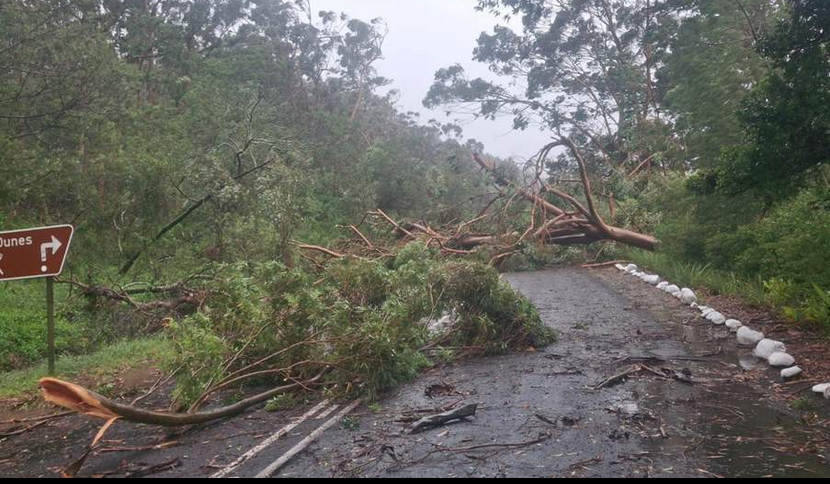
The full power of the South African military and elite police units has been unleashed along the Garden Route today. As a deadly storm continues to batter the coast, the South African National Defence Force (SANDF) and police divers have been sent in to rescue hundreds of residents who have been completely cut off from the outside world.
With roads washed away and bridges underwater, the situation has become a race against time to reach those trapped in flood-hit communities before the water rises any further.
A Region Divided by Water
The Garden Route, one of South Africa’s most beautiful coastal stretches, has been turned into a series of isolated islands. The severe weather has caused massive landslides and flooding, closing the famous Meiringspoort and Swartberg Passes. These closures have effectively cut off the Garden Route from the Central Karoo, making it impossible for normal emergency vehicles to get through.
In towns like Knysna, George, and Bitou, the damage is widespread. Small clinics, such as the Keurhoek and Wittedrift Clinics, have been forced to close their doors because staff and patients simply cannot reach them. For many families, the only way in or out is now by air or by boat.
SANDF Takes to the Skies
Recognising the scale of the disaster, the government called in the SANDF. Military helicopters have been spotted hovering over flooded valleys, dropping supplies and winching people to safety. These "angels of the sky" are often the only hope for residents whose homes have been surrounded by rushing water.
The helicopters are being used to reach the most remote areas where even the bravest drivers cannot go. They are also being used to transport critically ill patients to hospitals, as many ambulances are stuck behind mudslides and closed passes.
Police Divers
While the SANDF handles the air, the South African Police Service (SAPS) Search and Rescue divers are doing the dangerous work on the ground—and in the water. These elite divers are working around the clock, wading into fast-flowing rivers and flooded streets to find people who are trapped.
In many cases, the divers are using small rubber boats to navigate through residential areas that have been turned into lakes. They are checking house by house, making sure that no one—especially the elderly and the young—is left behind.
The work is incredibly dangerous. The floodwaters are often filled with hidden debris, like fallen trees and pieces of buildings, and the currents are strong enough to sweep away a heavy vehicle. Yet, the divers continue to dive, driven by the goal of bringing every single person home safely.
Communities Under Siege
For the residents who are waiting to be rescued, the experience is terrifying. Many have spent the night on their roofs or on the upper floors of their homes, watching as the water swallows their cars and gardens.
"We just heard a roar, and then the water was at the door," said one resident who was rescued by boat. "We couldn't get out. The road was just gone. We were so relieved when we saw the divers coming for us."
The Garden Route District Municipality has activated its Joint Operations Centre to manage the crisis. They are coordinating with the military, the police, and local fire departments to make sure that resources are sent to the areas that need them most.
The Impact on Daily Life
The storm has caused more than just physical damage. It has brought daily life to a standstill. Around 89,000 children are currently home from school because it is too dangerous for them to travel. Businesses have closed, and power outages are widespread as the wind and rain continue to hammer the region's infrastructure.
Authorities are also worried about the long-term impact on the region's economy. The Garden Route relies heavily on tourism and transport, both of which have been severely disrupted by the closure of major passes and the damage to the N2 highway.
Safety First: The Message from Authorities
As the rescue operations continue, the message from the authorities remains clear: do not try to be a hero.
"Please stay off the roads and away from flooded areas," a spokesperson for the disaster management team said. "The water is much more powerful than it looks. Let the professionals do their work. If you are trapped, stay calm and wait for help to arrive."
Residents are also being urged to keep their phones charged and to monitor local radio stations for updates. If they are in immediate danger, they should try to signal to the rescue helicopters or call the emergency numbers if they still have a signal.
Looking Ahead
The South African Weather Service says that while the worst of the rain may be passing, the danger is far from over. The ground is completely saturated, meaning that even a small amount of additional rain could cause more flooding or landslides.
As the SANDF and police divers continue their heroic work, the people of the Garden Route are showing incredible resilience. Neighbours are helping neighbours, and the spirit of "Ubuntu" is shining through the dark clouds.
The focus for now remains on saving lives. Once the water recedes, the long and difficult task of rebuilding the Garden Route will begin. But for today, the heroes in uniform are the only thing standing between hundreds of families and the rising tide.