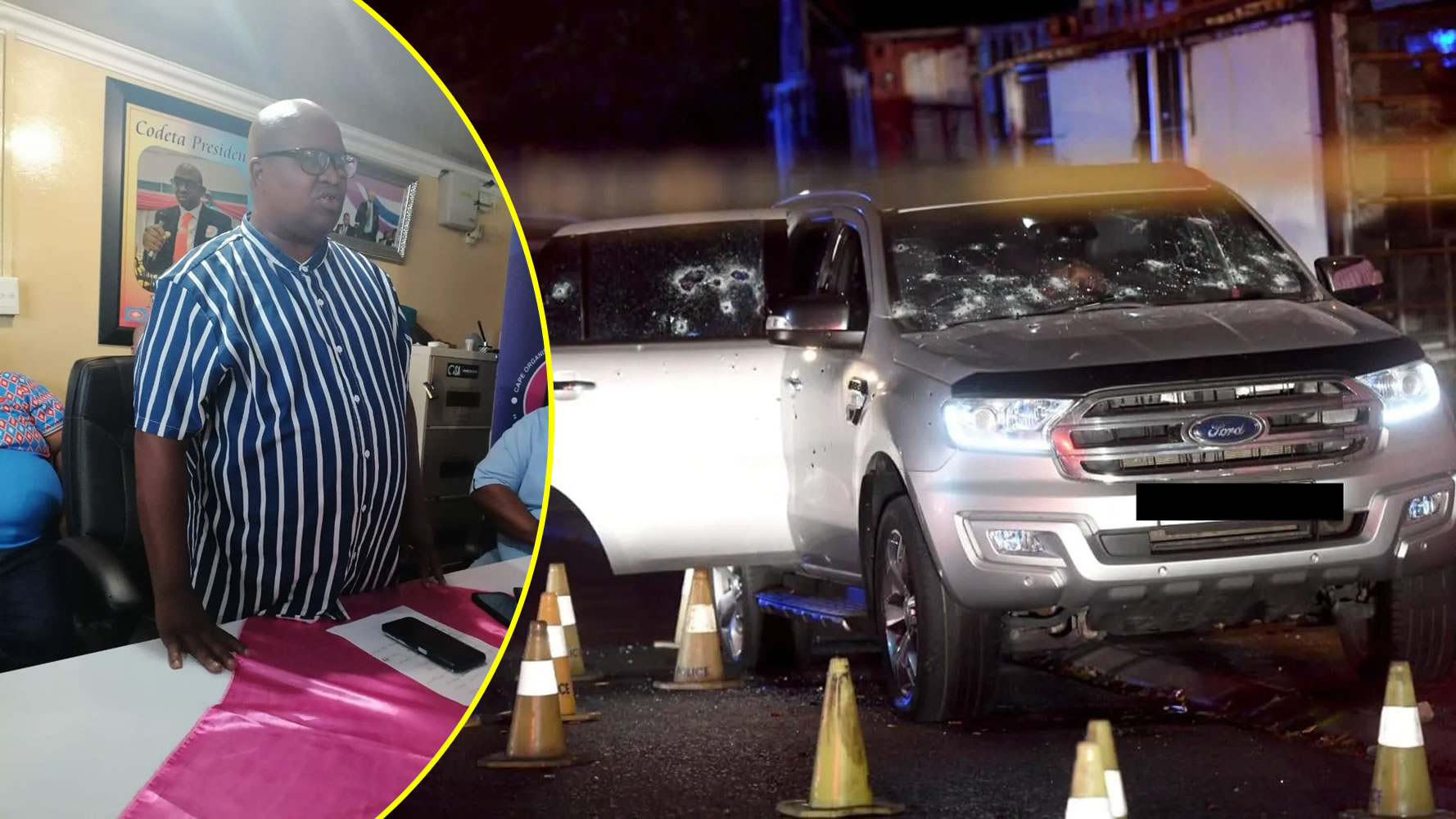
DELFT, WESTERN CAPE – The streets of Delft were once again stained with blood on Monday evening, 16th March 2026, as a prominent taxi rank manager and a female passenger who was said to be his girlfriend were brutally murdered in a suspected taxi-related hit. This latest incident adds to a grim tally of violence that has plagued the Western Cape's taxi industry, raising serious concerns about the safety of commuters and those involved in the sector.
The victim, identified as a 50-year-old male and a rank manager for the Cape Organisation for the Democratic Taxi Association (Codeta), was gunned down alongside an adult female passenger near the Palm taxi rank in Delft South. The attack, which occurred at approximately 20:15, is believed to have been a targeted assassination, executed with chilling precision.
Police spokesperson Sergeant Wesley Twigg confirmed the tragic events, stating: "Delft police responded to a complaint of a shooting on Monday evening, 16 March 2026, at about 20:15, near the Palm taxi rank, Delft South, and upon arrival on the scene, they found a 50-year-old male and an adult female who sustained multiple gunshot wounds to their bodies. Both victims were declared deceased on the scene by medical personnel. According to reports, the victims were driving in a silver Toyota Fortuner when they were approached by unknown suspects who shot them before fleeing the scene. The motive for the attack is believed to be taxi-related."
The deceased was driving a silver Ford Ranger near his office when the incident took place. The sheer brutality of the attack was evident from the scene, where investigators recovered a staggering 85 R5 cartridges and 13 9mm cartridges, indicating a hail of bullets was unleashed upon the victims. Both individuals sustained multiple gunshot wounds to their bodies and heads, leaving little doubt about the assailants' deadly intent.
Nceba Enge, spokesperson for Codeta, confirmed that the male victim, Lingani, was indeed a member of their association. However, Enge remained cautious when asked about the perpetrators or the underlying cause of the attack. He stated that he "could not comment on whether the shooting was from a rival association, internal rivals, or a third force." This statement underscores the complex and often opaque nature of taxi violence, where motives can be deeply entrenched in rivalries, internal power struggles, or external influences.
This double murder did not occur in isolation; it follows closely on the heels of another devastating incident just days prior. On Thursday morning, 12th March 2026, Delft was rocked by a triple murder at the Voorbrug taxi rank. At approximately 06:15, as commuters were beginning their daily journeys, a Toyota Quantum pulled up, and gunmen opened fire, claiming the lives of three individuals. Among the deceased were a Codeta member, a taxi owner affiliated with the Cape Amalgamated Taxi Association (Cata), and an innocent bystander caught in the crossfire. This incident, occurring at a busy time, highlighted the brazenness of the attackers and the indiscriminate danger posed to the public.
The ongoing conflict between Cata and Codeta is a well-documented and deeply rooted issue in the Western Cape. These two major taxi associations have a long history of violent clashes, often stemming from disputes over lucrative routes and operational territories. The rivalry dates back to Codeta's formation in 1992 and was even the subject of a High Court agreement in 1996, yet the violence persists. The year 2025 saw a significant escalation in these deadly clashes, and 2026 appears to be continuing this worrying trend.
The recent spate of violence extends beyond Delft. Just weeks before the latest Delft shootings, the Western Cape Government condemned minibus taxi-related violence in Atlantis on 26th February 2026, where a shooting outside a local high school tragically claimed two lives. Furthermore, the mid-March period also saw nine minibus taxis torched at the Nyanga taxi rank, indicating a widespread and coordinated campaign of intimidation and destruction within the industry.
These incidents paint a grim picture of a sector embroiled in a relentless cycle of violence. The MEC for Mobility in the Western Cape has publicly called for the taxi industry to take a stronger stand against this violence, urging associations to address the internal and external factors fuelling the bloodshed. Despite police investigations into multiple counts of murder and interventions by the High Court in route disputes, the killings continue, leaving communities in fear and demanding answers.
The brazen nature of these attacks, the high number of casualties, and the apparent ease with which assailants operate suggest a deeply entrenched problem that goes beyond simple criminal acts. The recovery of numerous high-calibre bullet casings, such as the R5 cartridges found at the Palm taxi rank scene, points to organised and heavily armed groups. The term "vrag bullets," a local expression for a large quantity of ammunition, aptly describes the scene of devastation left behind.
As investigations continue into the murders of the Codeta rank manager and his female passenger, and indeed into the broader pattern of taxi violence, the question remains: when will peace return to the Western Cape's taxi ranks? The lives lost, the fear instilled, and the disruption caused by these conflicts demand urgent and effective solutions from all stakeholders, from law enforcement to taxi association leadership and government bodies. The community watches, waiting for an end to the bloodshed that has become an all too frequent occurrence on their streets.