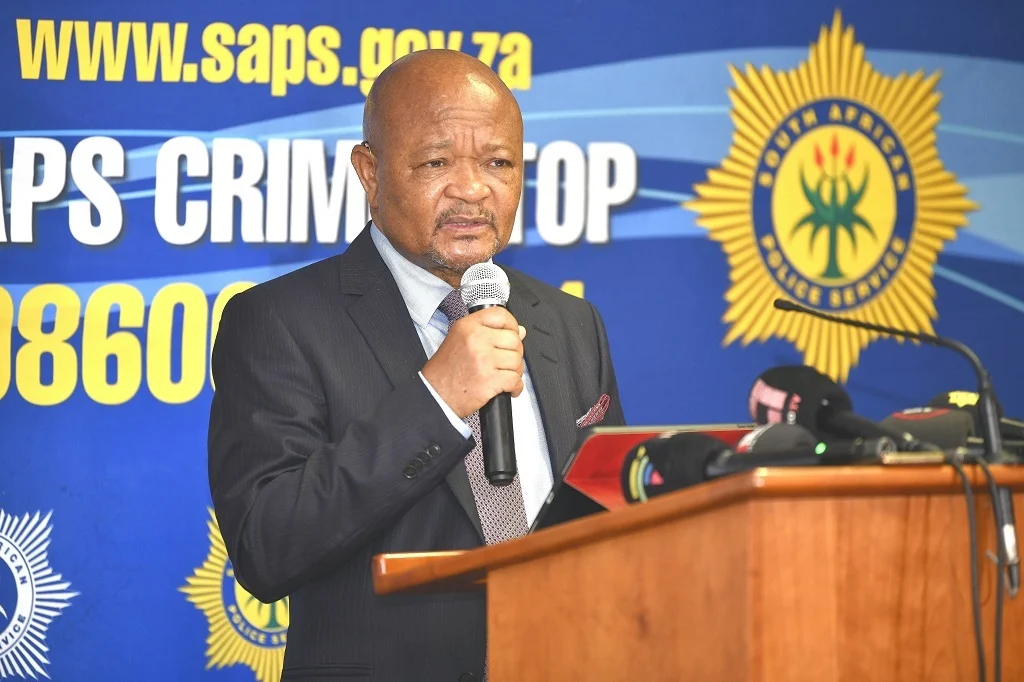
**Pretoria, South Africa** – In a move that has sent ripples through the political landscape, suspended Police Minister Senzo Mchunu is poised to make a dramatic return to his political duties within the African National Congress (ANC). This unexpected U-turn, announced through his spokesperson, Sithembiso Mshengu, comes after Mchunu had voluntarily stepped aside from party work to address serious allegations of corruption and interference with police operations. The decision is set to ignite fresh debate about the ANC’s commitment to its ‘step-aside’ rule and the integrity of its leadership.
Mchunu’s initial decision to step aside stemmed from his appearances before the Parliamentary Ad Hoc Committee and the Madlanga Commission. During these proceedings, he was tasked with justifying his controversial directive to disband the Political Killings Task Team (PKTT). This directive, issued on 31 December 2024, without consulting national police leadership, allegedly aimed to protect politically connected individuals. KwaZulu-Natal (KZN) Police Commissioner Lieutenant-General Nhlanhla Mkhwanazi had accused Mchunu of instructing the disbandment and further claimed the Minister had ties to crime syndicates and controversial businessman Vusumusi ‘Cat’ Matlala.
The allegations painted a grim picture, suggesting Mchunu’s involvement in a web of corruption and undue influence over police matters. The gravity of these accusations led to significant pressure on Mchunu, culminating in his voluntary request to take leave from his roles on the ANC National Executive Committee (NEC) and National Working Committee (NWC) to face the allegations with clarity. He was subsequently placed on special leave from his role as Police Minister, a position he has held since July of last year.
However, Mshengu now confirms that Mchunu believes he is ready to resume his political responsibilities, stating that preparations for his presentations before the Ad Hoc Committee and Madlanga Commission are complete. “It was his initiative to suspend his participation in the structures of the ANC through a letter that he wrote to the ANC Secretary-General. He is now in a position where he believes that he is ready to resume his duties without being pressured by the preparation of statements. And those are the basis,” Mshengu explained, emphasising that Mchunu has never been formally charged with any crime.
This assertion, however, stands in stark contrast to the views of political analysts who question the timing and implications of Mchunu’s potential return. Political analyst Ntsikelelo Breakfast highlighted the immense difficulty Mchunu faces in redeeming his image. “It is going to be very difficult for him to redeem himself. It is impossible because there are a lot of things that Mkhwanazi said, including the relationship with (businessman Cat) Matlala and the underworld mafia, and how he made a decision to disband the PKTT. Some (of the allegations) have been confirmed,” Breakfast stated. He further noted that many witnesses had corroborated receiving money from Matlala, lending credence to Mkhwanazi’s narrative.
Breakfast argued that Mchunu would find it challenging to escape this “web” of allegations and that his return to ANC duties would appear contradictory, especially given his earlier voluntary step-aside. He expressed doubt that the findings of any integrity commission would be in Mchunu’s favour, suggesting that the ANC’s ‘step-aside’ rule, designed to combat graft and restore public trust, might be undermined by such a move.
The ANC’s ‘step-aside’ rule, adopted in 2017, mandates that party members charged with corruption or serious crimes voluntarily step down from leadership positions or face suspension. While Mchunu has not been charged, the allegations against him are severe and directly impact public confidence in law enforcement and political integrity. His decision to return, therefore, tests the very fabric of this internal policy.
Another political analyst, Sandile Swana, offered a more cynical interpretation, suggesting that Mchunu’s move is a strategic attempt to protect his political ambitions rather than a genuine belief in his innocence. “He is not doing this because he sincerely believes he is innocent, but he knows that holding a powerful position inside the ANC is part of a weapon to defend yourself against any legal processes and charges,” Swana contended. He implied that Mchunu might be using his position within the ANC as a shield, rather than acting in the best interests of the nation or the party.
Despite the criticisms, Mchunu has garnered support, as evidenced by a prayer service held in Durban, attended by approximately 32 churches from various districts in KZN. This show of solidarity suggests a segment of the community remains supportive of the suspended Minister, adding another layer of complexity to the unfolding political drama.
Mchunu’s impending return will undoubtedly be met with intense scrutiny, both from within the ANC and from the broader South African public. The implications for the party’s image, its fight against corruption, and the credibility of its leadership are significant. As the political chess game continues, all eyes will be on the ANC’s response to Mchunu’s audacious move and the subsequent impact on the nation’s political landscape.