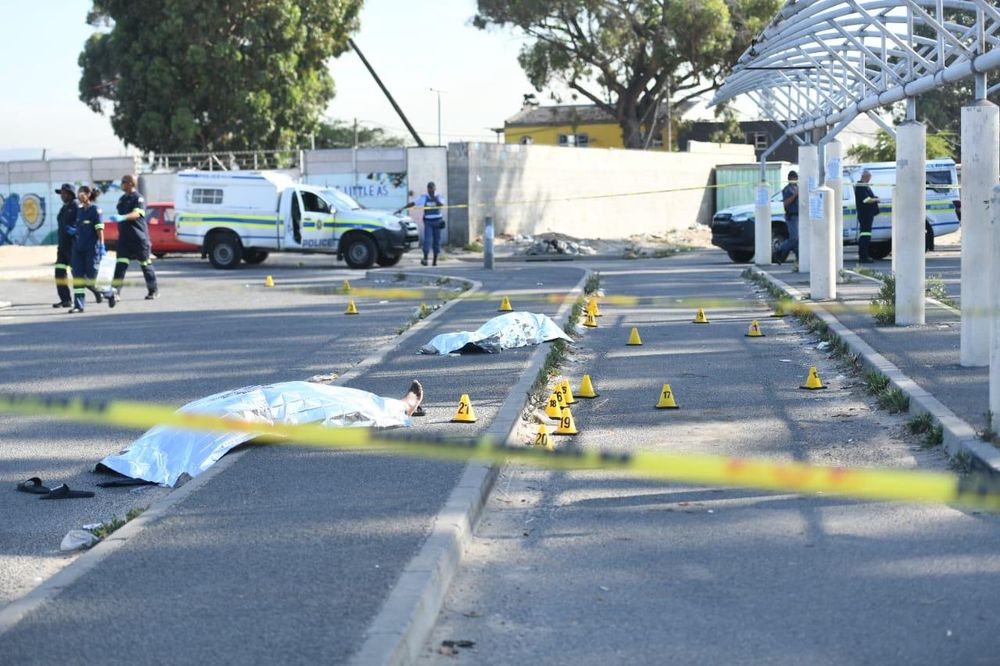
DELFT, WESTERN CAPE – The morning air in Delft is usually thick with the smell of diesel fumes and the rhythmic shouting of taxi marshals, but on Thursday, March 12, 2026, that familiar cacophony was shattered by the staccato of automatic gunfire. At approximately 6.15 am, as hundreds of commuters huddled together at the Voorbrug taxi rank, waiting for their daily transport to work, a white Toyota Quantum slowed to a crawl. In a matter of seconds, the vehicle became a platform for a calculated execution that has left three families shattered and the local transport industry in a state of profound disbelief.
The clinical nature of the attack suggests a level of premeditation that is becoming all too common in the Western Cape’s volatile taxi industry. According to eyewitness accounts and preliminary police reports, the gunmen did not even exit their vehicle. They simply slid open the door of the Quantum and unleashed a hail of bullets into a group of men standing near the loading point for the Wynberg and Claremont routes. When the dust settled and the screams of fleeing commuters began to fade, two men, aged 55 and 58, lay motionless on the pavement. A third victim, a 38-year-old man, was rushed to a nearby medical facility with life-threatening injuries but succumbed shortly after arrival.
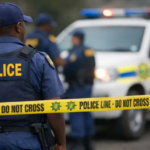
For those who witnessed the carnage, the psychological scars are immediate. One commuter, who asked to remain anonymous for fear of retribution, stood trembling near the yellow police tape hours after the shooting. Her voice was barely a whisper as she recounted how close she came to being another statistic in the city’s rising body count.
She said: "I was on my way to the taxi rank when I heard shots going off. I arrived at the scene a few minutes later. I don’t know what exactly happened; it happened so fast, but when I arrived, I just saw the two bodies lying on the pavement. Imagine if I had left my house a bit earlier, I could’ve walked into those bullets. When is all of this going to end?"
This latest atrocity is not an isolated incident but rather the newest chapter in a bloody saga of territorial disputes and "route wars" that have plagued the region for decades. The complexity of this specific attack lies in the affiliation of the victims. One of the deceased was a prominent member of the Cape Organisation for the Democratic Taxi Association (Codeta), while another was a veteran taxi owner belonging to the Cape Amalgamated Taxi Association (Cata). Historically, these two giants of the industry have been at each other's throats, yet in this instance, both organisations find themselves mourning side-by-side, equally baffled by the motive.
Cata secretary Nkululeko Sityebi, speaking from the scene where the smell of cordite still lingered, expressed the organisation's confusion. He confirmed that their member was an owner operating on the Wynberg/Claremont route and was simply performing his duties at the Voorbrug loading point when he was targeted.
"One of the victims belonged to Cata; he was a taxi owner. We have no idea what happened because Cata not only had fatality but also Codeta as well. We do not know why and cannot pinpoint it to anything because another taxi organisation is involved."
Nceba Enge, the chairperson of Codeta, shared the same sentiments, noting that the lack of a clear motive makes the situation even more precarious. The fact that members from both major associations were gunned down simultaneously suggests a third party may be attempting to destabilise the fragile peace that has existed between Cata and Codeta since their historic peace agreement in June 2025. That agreement, which was supposed to end the violent conflicts over the Mfuleni-Somerset routes, now feels like a distant memory as the bodies continue to pile up.
The South African Police Service (SAPS) has mobilised its top resources in response to the triple murder. Colonel Andrè Traut, a spokesperson for the Western Cape police, confirmed that the investigation has been escalated to the highest level.
Traut reported: "Western Cape police are investigating three counts of murder following a shooting incident at a taxi rank in Delft on Thursday morning, 12 March 2026. Detectives attached to the Provincial Serious and Violent Crime unit have taken over the investigation and are probing three counts of murder. The motive for the attack is believed to be possibly related to the taxi industry."
However, for the residents of Delft and surrounding areas, "possibly related to the taxi industry" is a phrase they have heard far too often. Just four days prior to the Delft shooting, the Nyanga taxi rank was the site of a mass protest. Taxi owners and drivers marched to the local police station, demanding better protection after a string of targeted killings and the torching of several vehicles. The protesters alleged that rogue elements and rival groups were attempting to forcibly take over lucrative routes, using fire and lead as their primary negotiating tools.
The violence has also begun to spill over into the most sacred of spaces: schools. In late February 2026, the community of Atlantis was left reeling when a 14-year-old girl was caught in the crossfire of a taxi-related shooting at a secondary school. A gunman had approached a taxi waiting to load pupils and opened fire, killing both the driver and the young girl. That incident prompted the Democratic Alliance (DA) in the Western Cape to renew its demands for increased policing powers, arguing that the R1-billion extra budget allocated for safety means nothing without fundamental operational reform.
The Delft shooting highlights a terrifying trend where the "taxi wars" are no longer confined to the ranks but are being fought in broad daylight, in the middle of peak-hour traffic, with zero regard for the lives of innocent bystanders. The use of a Toyota Quantum—the very vehicle that symbolises the industry—as a getaway car for assassins adds a cruel irony to the tragedy. It turns a tool of community mobility into a weapon of community destruction.
As the sun set over Delft on Thursday evening, the Voorbrug rank remained eerily quiet. The usual hustle was replaced by a heavy police presence and the lingering grief of those who lost colleagues and friends. The victims, aged 55, 58, and 38, represent a significant loss of experience and leadership within their respective associations. Their deaths leave a void that will likely be filled by younger, perhaps more volatile, operators, further complicating the prospects for long-term peace.
The authorities are now facing immense pressure to produce results. The Provincial Serious and Violent Crime unit is reportedly scouring CCTV footage from the area and interviewing dozens of witnesses who were present during the 6.15 am ambush. Yet, in an industry where "snitching" often carries a death sentence, the wall of silence can be as impenetrable as the armour on a cash-in-transit van.
Police are appealing to anyone with information that could assist the investigation to kindly contact Crime Stop on 08600 10111 or alternatively make use of the MySAPS mobile application. But for the mother who nearly walked into a hail of bullets, and for the families of the three men who never made it home for dinner, the call for information feels like too little, too late.
The Western Cape’s taxi industry stands at a crossroads. While organisations like Cata and Codeta publicly call for peace, the reality on the ground is one of fear, extortion, and sudden, violent death. Until the underlying issues of route permits, illegal operators, and the "protection fee" culture are addressed with more than just police tape and press releases, the asphalt of Cape Town’s taxi ranks will continue to be stained with the blood of its people.
The story of the Delft triple murder is not just a story of three lives lost; it is a story of a transport system held hostage by shadows, where a simple commute to work can end in a "shot in the dark" that leaves an entire province searching for answers that may never come.
The residents of Delft are no strangers to crime, but the brazen nature of this attack has left even the most hardened locals on edge. "We see the police here today, but where will they be tomorrow?" asked one shopkeeper whose store overlooks the rank. "The taxis are our lifeblood, but they are also our curse. We need them to get to work, but we fear them because of the bullets that follow them."
This sentiment is shared by the Western Cape Department of Mobility, which has been actively engaging with both Cata and Codeta to resolve ongoing route disputes. Despite these efforts, consensus remains elusive. In September 2025, a similar dispute sparked a wave of violence that left five people dead, proving that even high-level mediation often fails to stop the bloodshed on the streets.
The economic impact of these shootings is also profound. When ranks close or services are suspended due to violence, thousands of workers are unable to reach their jobs, leading to lost wages and further economic instability in already vulnerable communities. The "taxi industry" is not just a transport sector; it is a multi-billion rand economy that operates largely outside the formal regulatory framework, making it a prime target for organised crime syndicates.
As the investigation into the March 12 shooting continues, the people of the Western Cape are left to wonder when the next Toyota Quantum will pull up, not to load passengers, but to deliver another message in lead. The cycle of violence, retribution, and mourning shows no sign of slowing down, and for now, the only certainty in Delft is that the next morning will bring more diesel fumes, more shouting marshals, and the ever-present fear of the next "shot in the dark."