

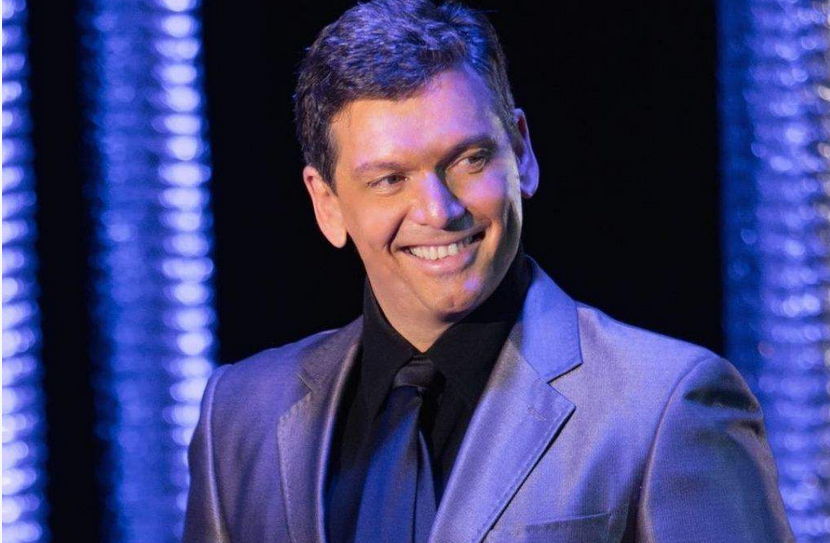
Ian von Memerty was a man who spent his life in the spotlight, a whirlwind of talent who charmed South Africa as a judge on "SA’s Got Talent" and a star of "Strictly Come Dancing." But his final act was his most controversial, a deeply personal decision that has reignited a fierce national debate on the ethics of assisted dying and the right to a "dignified death." This isn't just the end of a career; it's the beginning of a conversation that South Africa has long avoided.
The veteran entertainer passed away at the age of 61, not from the natural progression of a terminal illness in a hospital bed, but through what he termed "self-deliverance." In the weeks leading up to his death, Von Memerty was uncharacteristically open about his intentions, citing a combination of extreme financial stress, the daunting realities of ageing, and the trauma of witnessing his own parents' prolonged and painful deaths. His father's recent passing had particularly affected him, leaving him with questions about the quality of life in one's final years.
"I have seen what the end looks like when you have no control," he wrote in a series of poignant social media posts that were both beautiful and haunting. "I have seen the indignity, the pain, and the slow fading away of the person you once were. I refuse to let that be my story. I choose to go on my own terms, while I still know who I am and while I can still say goodbye. I want to leave while the music is still playing, not when the theatre is empty and dark."
Von Memerty’s decision has polarized the country. For many, he is a hero of the "right to die" movement, a man who had the courage to face his mortality and choose a path of least suffering. For others, particularly within religious and mental health communities, his choice is seen as a tragic surrender, a "suicide" that sets a dangerous precedent for the vulnerable. The debate has spilled over from social media into the halls of Parliament and the pulpits of churches across the nation.
The legalities of his death remain a complex issue. While assisted dying is not explicitly legal in South Africa, the courts have previously grappled with individual cases, such as that of Robin Stransham-Ford, often resulting in conflicting rulings. Von Memerty’s case is unique because he didn't just cite a terminal physical illness; he spoke of the "existential dread" of financial ruin and the fear of becoming a burden to his family.
"His death muddies the waters," said one legal expert. "It moves the conversation from purely medical necessity to the much more subjective realm of 'quality of life' and personal choice. It challenges our definitions of what it means to be 'terminally ill.' Is a life without financial security or physical independence a life worth living? Ian has forced us to ask these uncomfortable questions."
The entertainer's last days were reportedly spent surrounded by his closest family and friends in a setting of his choosing. He used his final platform to advocate for legislative change, arguing that every individual should have the right to decide how their story ends. "It’s not about wanting to die," he clarified in his final interview. "It’s about wanting to live with dignity until the very last second. It's about having the agency to say 'enough'."
The controversy has been further fueled by the mention of financial stress. Von Memerty, despite his successful career, was open about the precarious nature of the entertainment industry in South Africa. The COVID-19 pandemic and the subsequent economic downturn had hit him hard, and he admitted that the thought of an impoverished old age was more terrifying than death itself. This revelation has highlighted the lack of support for aging artists in the country.
Critics argue that by framing his death as "self-deliverance," Von Memerty was glamourizing suicide. "We need to be very careful with the language we use," a mental health advocate shared. "There is a fine line between a dignified death for the terminally ill and giving up because life has become difficult. We must ensure that we are providing support and hope, not just an exit strategy. We don't want people choosing death because they feel they have no other choice."
Regardless of where one stands on the ethical divide, there is no denying the impact Ian von Memerty had on the South African cultural landscape. He was a master storyteller, a brilliant musician, and a mentor to countless young artists. His death leaves a void that will be felt for years to come. He was the man who brought "A Handful of Keys" to the stage, and now, the keys have fallen silent.
As the nation reflects on his life and his final choice, the debate he started shows no signs of slowing down. Ian von Memerty may have left the stage, but his final performance has ensured that the conversation about how we live, and how we die, will continue long after the curtain has fallen. He has left us with a legacy of talent, but also a challenge to our collective conscience.