

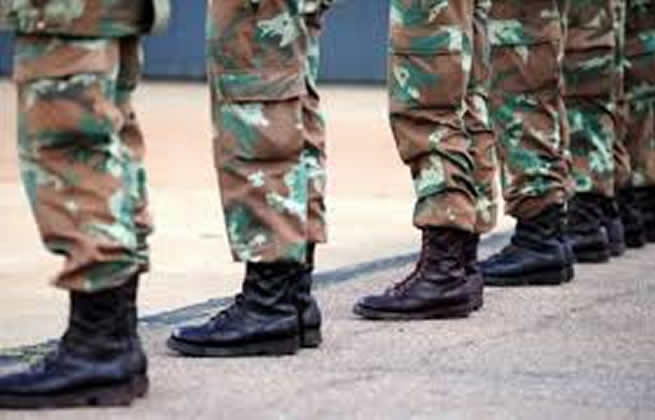
Pretoria, South Africa – In a move that has ignited both hope and fierce debate, President Cyril Ramaphosa has announced the deployment of the South African National Defence Force (SANDF) to assist the police in combating rampant crime across the nation. This significant decision, detailed in the State of the Nation Address, sees soldiers hitting the streets in crime-ridden areas of the Eastern Cape, Western Cape, and Gauteng, specifically targeting illegal mining and gangsterism.
But as the military’s boots hit the ground, questions linger: is this a decisive step towards a safer South Africa, or a desperate measure that risks militarising civilian life?
The deployment comes amidst growing public frustration over escalating crime rates and a perceived inability of the South African Police Service (SAPS) to effectively curb the tide of violence and lawlessness. The President’s announcement signals a recognition of the severe challenges facing the nation’s security apparatus and a willingness to utilise all available state resources to restore order. The focus on illegal mining, a highly lucrative and often violent criminal enterprise, and gangsterism, which terrorises communities, suggests a strategic approach to tackling some of the most entrenched forms of organised crime.
However, the decision to deploy the SANDF in a policing role is not without its critics. Concerns have been raised about the appropriate role of the military in civilian law enforcement, with many arguing that soldiers are trained for warfare, not community policing. The potential for human rights abuses, the lack of specific policing skills among military personnel, and the risk of alienating communities are frequently cited anxieties. Parliamentarians, for instance, have expressed reservations, with some questioning whether soldiers are a long-term solution to crime.
Furthermore, the financial implications of such a deployment are substantial. While specific figures for the current deployment are yet to be fully disclosed, past deployments offer a glimpse into the costs involved. For example, the deployment of 880 soldiers to four Eskom power plants in 2024 cost R146 million over six months.
The deployment in Mozambique for peace support operations is budgeted at R850 million for 2024/25.
These figures highlight the considerable strain such operations place on the national fiscus, particularly for a defence force already facing budget constraints. Indeed, despite presidential assurances of additional funding, South Africa’s defence budget is projected to shrink by R2 billion next year, with the 2025/26 budget sitting at R59 billion, set to drop to R57.6 billion for the 2026/27 cycle.
This raises questions about the sustainability and long-term viability of relying on military deployments for domestic security.
Beyond the immediate deployment, the SANDF also plays a crucial role in maritime security. The South African Navy is tasked with conducting maritime border patrols and combating piracy, particularly in the Mozambique Channel. This involves the deployment of frigates, submarines, and offshore patrol vessels to safeguard South Africa’s maritime space and support the Southern African Development Community’s maritime security strategy.
This dual role underscores the multifaceted challenges facing the SANDF, which is often stretched thin across various operational demands.
As the SANDF embarks on this critical mission, the nation watches with bated breath. Will the presence of soldiers on the streets deter criminals and bring a much-needed sense of security to beleaguered communities? Or will it prove to be a temporary fix, masking deeper systemic issues within the justice and policing sectors? The success of this deployment will undoubtedly shape the future of crime-fighting strategies in South Africa and determine whether the military intervention is a pragmatic necessity or a perilous precedent.