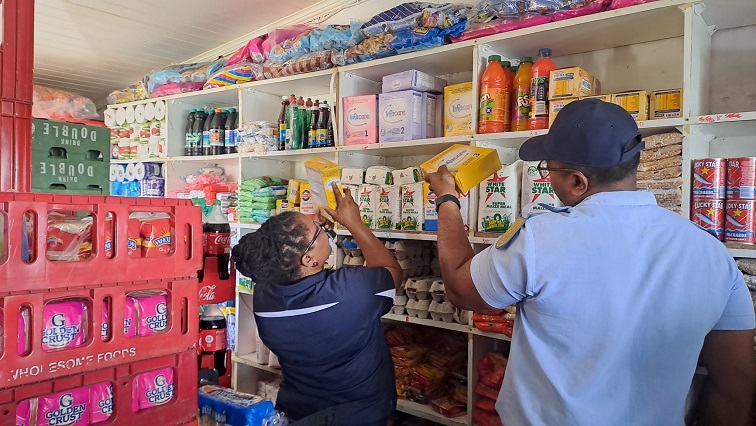
Johannesburg is holding onto an unwanted title: for the seventh month in a row, it is the most expensive of South Africa’s three major metros when it comes to basic groceries.
Fresh data from the Pietermaritzburg Economic Justice and Dignity (PMBEJD) group shows that, at the end of December 2025, Johannesburg (Gauteng) had the priciest household food basket among the big cities, followed by Durban (KwaZulu-Natal) and then Cape Town (Western Cape).
The PMBEJD tracks the cost of a standard basket of food across Gauteng, KZN, the Western Cape and the Northern Cape, providing an early indication of what ordinary households are paying at the tills before the official inflation figures come out.
What the PMBEJD food basket measures
The organisation’s research is based on a basket of 44 basic food items that are most commonly purchased by households in South Africa. The basket is designed to reflect the buying patterns of the majority of the country’s population, particularly low- to middle-income families.
For December 2025, the national average cost of this household food basket was R5,333.45. This was:
- 1.5% cheaper month-on-month than in November 2025; and
- 0.9% cheaper year-on-year than in December 2024.
Of the 44 items in the basket:
- 19 items decreased in price compared to a year ago,
- 23 items increased, and
- 2 items stayed the same.
While more foods were more expensive than cheaper, the PMBEJD notes that most of the increases were limited to low single-digit levels.
Big movers: meat up, staples down
Some items, however, moved sharply.
Notable price increases over the year included:
- Beef – up 21%
- Oranges – up 20%
- Butternut – up 16%
- Beef liver – up 16%
- Gizzards – up 12%
These jumps in meat and certain fresh produce were partly offset by steep double-digit decreases in other key foods:
- Potatoes – down 26%
- Rice – down 22%
- Cabbage – down 17%
- Eggs – down 16%
- Onions – down 12%
- Sugar beans – down 12%
The PMBEJD’s numbers mirror what is happening in the broader economy. Its data reflects “on the ground” pricing ahead of the official inflation releases from Stats SA, and the trends line up.
Stats SA’s latest figures for November 2025 showed that food and non-alcoholic beverages inflation rose to 4.4%, up from 3.9% the previous month. This rise was driven mainly by beef prices, with increases also recorded in other protein sources like chicken, pork and lamb.
An analysis of the red meat industry for December confirmed that this inflationary pressure continued into the festive season, and this is clearly visible in the steep meat price hikes recorded by the PMBEJD.
Remote towns paying the highest prices
Although Johannesburg tops the list among the big metros, it is not actually where the very highest prices are found.
When the PMBEJD expanded its analysis beyond the main cities to look at smaller towns such as Springbok (Northern Cape), Mtubatuba (KZN) and Pietermaritzburg (KZN), it found that people in outlying and remote areas often pay even more for the same basket of goods.
In Springbok, for instance, shoppers are paying over R100 more for the standard food basket than consumers in Johannesburg. The group notes that factors like transport costs and scarcity of supply typically drive these higher prices in far-flung areas.
Even so, when focusing only on the three major metros – which are more populous and more representative of general pricing – Johannesburg in Gauteng remains the most expensive.
Gauteng: Joburg tops the metro list
Using the major metros as proxies for their provinces, the PMBEJD’s data shows that Gauteng followed the national easing trend in December.
- The Gauteng basket was 1.2% cheaper month-on-month and 0.3% cheaper year-on-year.
- The cost of the Johannesburg household food basket fell by R66.08, from R5,604.49 in November 2025 to R5,538.42 in December 2025.
- Compared to December 2024, the Joburg basket decreased by R17.27 from R5,555.68.
Despite this small relief, Joburg still carries the highest price tag overall. Of the 44 food items tracked, 24 are the most expensive in Johannesburg among the major metros. These include everyday staples such as:
- Eggs
- Wors
- Maize
- White and brown bread
Western Cape: Cape Town sees bigger relief
Households in the Western Cape enjoyed a bigger drop in food prices over the same period.
- The Cape Town basket fell by 3.1% month-on-month and 1.1% year-on-year.
- In rand terms, the cost of the Cape Town household food basket dropped by R163.90, from R5,349.17 in November 2025 to R5,185.27 in December 2025.
- Year-on-year, the basket declined by R60.15, from R5,245.41 in December 2024.
Across the 44 food items, 11 are the most expensive in Cape Town, including:
- Sugar
- Cooking oil
- Chicken
- Oranges
So while Cape Town is cheaper overall than Joburg, residents there still pay top-end prices for several important items.
KwaZulu-Natal: Durban flat but still pricey
In KwaZulu-Natal, people living in Durban saw almost no movement in prices between November and December.
- The cost of the Durban household food basket increased by just R0.72, from R5,305.74 in November 2025 to R5,306.47 in December 2025 – effectively flat (0.0%) month-on-month.
- Year-on-year, however, the Durban basket fell by R54.19, down from R5,360.65 in December 2024, a 1% drop.
Durban still has several items that are more expensive than in the other metros. The city recorded the highest prices for nine of the 44 items, including:
- Potatoes
- Beef
- Fish
- Apples
- Margarine
A mixed picture for households
Taken together, the PMBEJD’s December data paints a mixed picture for South African households:
- The overall basket is slightly cheaper than a year ago, offering some relief.
- However, key proteins like beef and other meats are significantly more expensive, putting pressure on families that are already stretched.
- Johannesburg remains the most expensive metro, especially for staples, while remote towns like Springbok are paying even more due to location aand logistics.

With food and non-alcoholic beverages inflation ticking up again, and with meat prices still climbing, the small reductions in staple foods such as rice, potatoes and eggs may not be enough to make families feel that life at the tills is getting any easier.