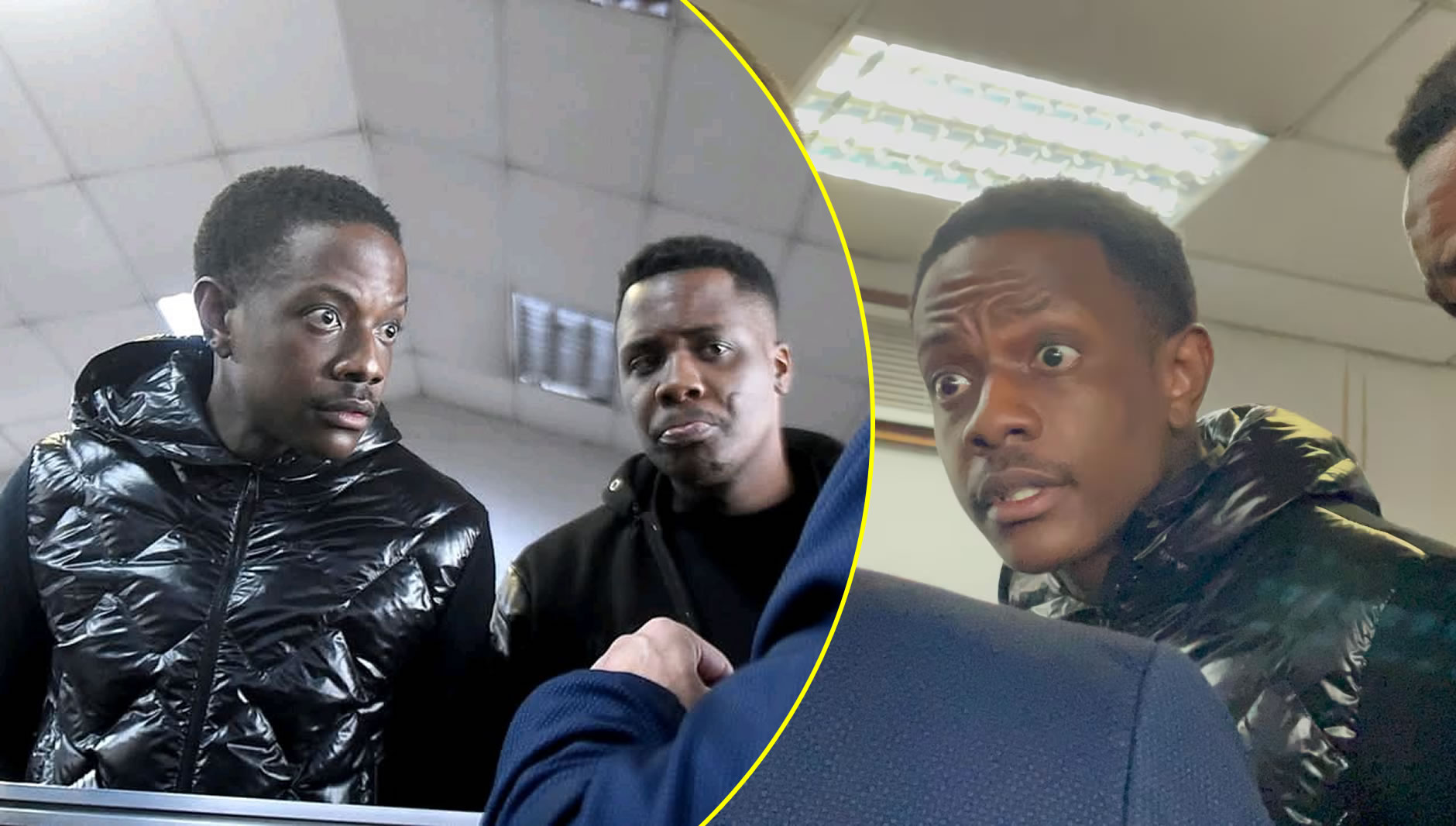
JOHANNESBURG – The youngest son of the late Zimbabwean dictator Robert Mugabe, Bellarmine Chatunga Mugabe, finds himself at the centre of a serious criminal investigation in South Africa, facing a string of seven charges, including the attempted murder of his gardener, Sipho Mahlangu. The 28-year-old, once notorious for flaunting his lavish lifestyle on social media, now faces the grim reality of the South African justice system, a world away from the impunity his family once enjoyed.
The incident that led to Mugabe's arrest unfolded on the evening of Thursday, 19 February 2026, at his opulent residence in the exclusive Johannesburg suburb of Hyde Park, a neighbourhood that is also home to South African President Cyril Ramaphosa. According to the National Prosecuting Authority, an altercation occurred between Mahlangu and the accused inside the house. As the 23-year-old gardener attempted to flee the property, he was allegedly shot in the back, collapsing just outside the gate. In a final act of cruelty, the gate was then closed, and the remote control was allegedly stolen from the critically injured man.
Mahlangu was rushed to a nearby hospital, where he remains in a critical condition under police guard. The shooting has left him fighting for his life, a stark reminder of the brutal violence that can erupt from a world of privilege and power.
Mugabe was arrested alongside his 33-year-old bodyguard, Tobias Tamirepi Matonhodze. The pair appeared briefly in the Alexandra Magistrate's Court on Monday, 23 February, dressed in black and looking composed. They were formally charged with a formidable list of seven offences: attempted murder, possession of a firearm, possession of ammunition, defeating the ends of justice, contravening the Immigration Act, theft, and pointing a firearm. The charge of defeating the ends of justice stems from the fact that the firearm used in the shooting has yet to be recovered by the police, despite a search of the property yielding bullet cartridges.
The prosecution has indicated that it will oppose bail at the next hearing, scheduled for 3 March. The state's case appears to be strong, with a critically injured victim and a litany of serious charges. However, the Mugabe family is no stranger to legal battles and has a history of using its influence to evade justice.
This incident is not an isolated one for the Mugabe family, who have been embroiled in a series of controversies over the years. The family's extravagant lifestyle, funded by the plundered wealth of Zimbabwe, has been a source of public outrage for years. In 2017, Chatunga himself made headlines when he posted a video on Instagram of himself pouring champagne over a $60,000 watch with the caption, “$60,000 on the wrist when your daddy run the whole country ya know!!!”
His older brother, Robert Mugabe Jr., has also had his share of run-ins with the law. In 2023, he was arrested in Zimbabwe for allegedly causing $12,000 worth of damage to property at a party. The following year, he was arrested on a drug charge after police found marijuana in his possession during a traffic stop.
But the most infamous legal scandal involving the Mugabe family is the 2017 assault case against Grace Mugabe, the family matriarch. The former first lady was accused of assaulting a South African model, Gabriella Engels, with an extension cord at a luxury hotel in Sandton. The incident, which occurred while her sons were present, sparked a diplomatic firestorm. The South African government, under then-President Jacob Zuma, controversially granted Grace Mugabe diplomatic immunity, allowing her to flee the country and evade prosecution.
The decision was widely condemned and was later overturned by the High Court in Pretoria, which ruled that the immunity was granted unlawfully and unconstitutionally. An arrest warrant was subsequently issued for Grace Mugabe, but she has never returned to South Africa to face the charges.
The question of diplomatic immunity now looms large over Chatunga's case. However, legal experts believe that he is unlikely to receive the same protection as his mother. Dr Gideon Chitanga, a political analyst and international relations expert, explained the legal nuances of the situation.
“Primarily, there is no grounds for diplomatic immunity. Robert Mugabe is just a former president and he is gone. There are no treaties that really address a situation like this. Secondly, this is a purely criminal act and you cannot invoke the Vienna Convention or any diplomatic immunities under these circumstances.”
Dr Chitanga further clarified that the Mugabe family members residing in South Africa are considered private individuals, not representatives of the Zimbabwean government, and are therefore subject to the laws of the country.
“This is why Grace Mugabe is facing prosecution in South African courts. This is the family of a former president. They might live in South Africa but not as officials of the government of Zimbabwe, but as individuals. The Vienna Convention and any other instruments that cover diplomatic immunity tend to relate to the role of individuals as state actors, representatives of sovereign governments.”
While Chatunga may hold a diplomatic passport, Dr Chitanga believes that it will not shield him from prosecution for such serious criminal allegations.
“Diplomatic passports do provide different levels of immunity to the passport holders. However, in this case, there are serious criminal allegations, so I don't think that there is any room to invoke diplomatic immunity status. The law will have to apply as is, even if you hold some diplomatic status that is protected. Remember the Grace Mugabe case. Her diplomatic status was suspended in South Africa to allow for her to go for trial.”
The only potential avenue for intervention, according to Dr Chitanga, would be a political one, with the Zimbabwean government reaching out to their South African counterparts. However, in strict legal terms, Chatunga Mugabe is facing a perilous situation.
The attorney representing Mugabe and Matonhodze, Sinen Mnguni, has remained tight-lipped about the case, stating that he is still taking instructions from his clients.
“We can't speak too much at this stage, it's only been brought to our attention, we still need to take instructions from our client as the prosecution stated the investigations from the SAPS is still ongoing so we're still waiting for those to be finalised so that we can then of course consult with our client, take instructions and then take the necessary steps in order to deal with our clients matter.”
Mnguni also could not confirm whether his two clients are related, despite Matonhodze having Mugabe listed as his third name.
Facing the weight of seven serious criminal charges in South Africa, Chatunga Mugabe's options are remarkably limited and each carries significant risks and uncertainties. His first and most obvious avenue would be to mount a robust legal defence, challenging the evidence against him and attempting to discredit the prosecution's case. However, with a critically injured victim, police evidence including bullet cartridges recovered at the scene, and the missing firearm that prosecutors argue demonstrates consciousness of guilt, the defence faces an uphill battle.
His legal team, led by attorney Sinen Mnguni, will need to construct a compelling narrative that either disputes his involvement entirely or argues for a lesser charge — a task that becomes increasingly difficult given the severity of the allegations and the apparent strength of the state's case.
The second option, and perhaps the most realistic given the family's history, would be a political intervention from the Zimbabwean government. As Dr Gideon Chitanga explained, whilst the law offers no legitimate grounds for diplomatic immunity or escape, the possibility of political negotiation between the governments of Zimbabwe and South Africa remains theoretically possible.
The Zimbabwean authorities could formally request assistance or intervention from their South African counterparts, potentially leading to a negotiated settlement or reduction in charges. However, this option is fraught with complications. The current Zimbabwean government, led by President Emmerson Mnangagwa who came to power after Robert Mugabe's ousting in 2017, has shown little inclination to shield the Mugabe family from legal consequences.
Additionally, any such intervention would face fierce public opposition in South Africa, where the rule of law has become a cornerstone of post-apartheid democracy. The precedent set by Grace Mugabe's case, where diplomatic immunity was ultimately rejected by the courts, suggests that even high-level political pressure may prove insufficient to save Chatunga from facing trial. In the end, Mugabe's fate may rest not on grand political manoeuvres or diplomatic subterfuge, but on the evidence presented in court and the judgment of the South African judiciary—a sobering reality for a man accustomed to operating above the law.
As the legal battle unfolds, the case of Bellarmine Chatunga Mugabe will be a litmus test for the South African justice system. Will the son of a dictator be held accountable for his alleged crimes, or will he once again slip through the cracks of a system that has, in the past, been swayed by political influence? The world will be watching to see if justice will be served for Sipho Mahlangu, the gardener who was allegedly shot in the back while trying to escape a life of servitude.