

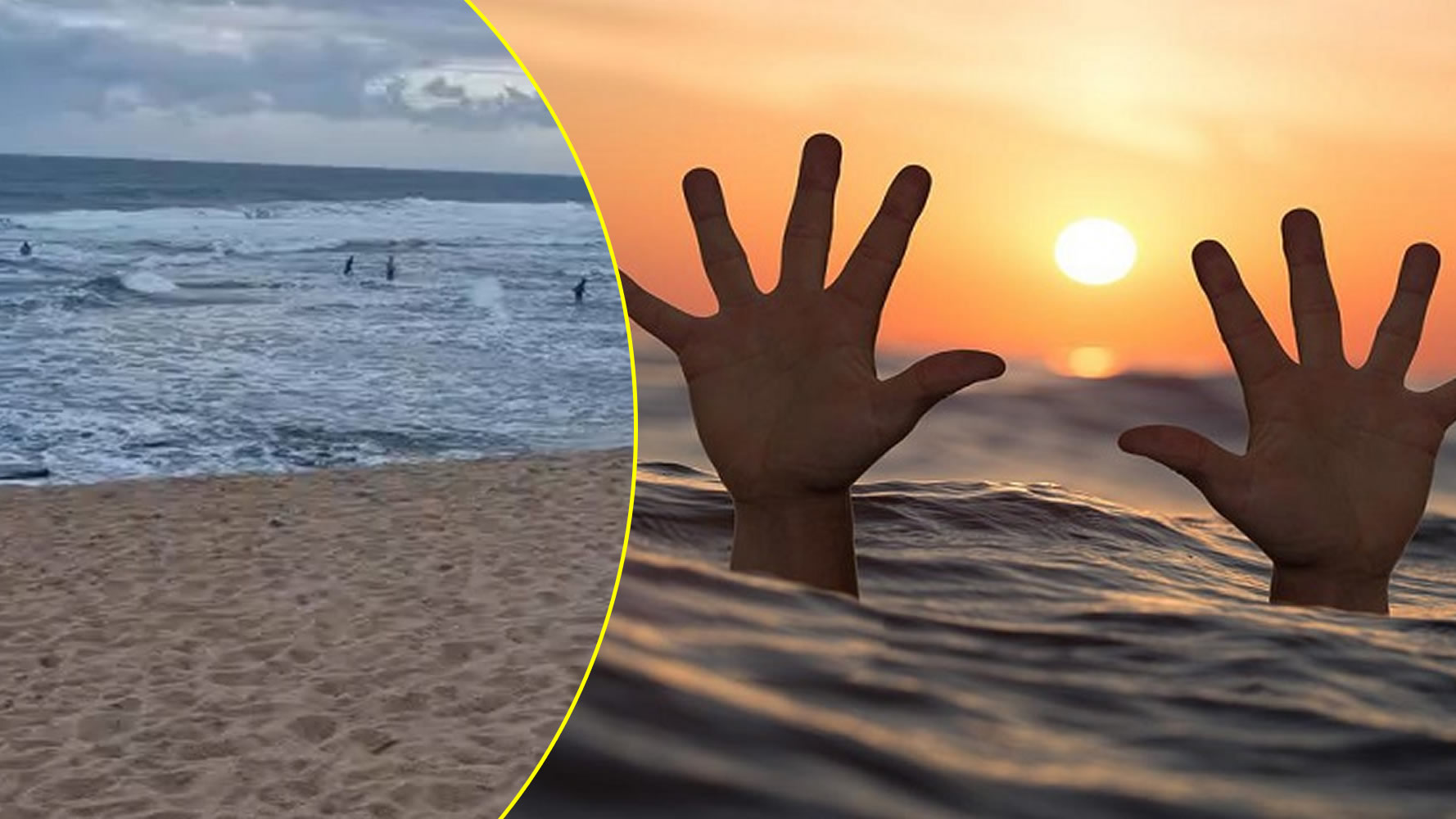
The festive season has been marred by tragedy on KwaZulu-Natal's South Coast, where a mass drowning incident at Pennington Main Beach on New Year's Day has left two young men dead and three others missing. The devastating event, which saw five people swept out to sea by powerful rip currents, has cast a pall over the holiday period and highlighted the extreme dangers currently present along South Africa's coastline.
Emergency services, including the National Sea Rescue Institute (NSRI), IPSS Medical Rescue, and local lifeguards, were called to the scene near the tidal pool on Thursday evening after reports that five bathers had been pulled into the ocean. The initial rescue efforts were frantic, with one person successfully pulled from the water and confirmed to be in a stable condition. However, the search for the remaining four quickly turned into a recovery operation.
The bodies of two young men, both believed to be 21 years old, were recovered shortly after the incident. IPSS Medical Rescue spokesperson Samantha Meyrick confirmed the grim discovery, stating, "One was confirmed dead, his body recovered earlier. A second body washed ashore about 100m from where the bathers entered the water." The remaining two men, also reported to be around 21 years of age, are still missing, prompting a massive, ongoing search effort.
Five beachgoers were washed out to sea on the KwaZulu-Natal South Coast. The incident occurred on Pennington main beach on the evening of Thursday, 1 January 2026 @TheCitizen_News pic.twitter.com/fTgG7uytBz
— Faizel Patel (@FaizelPatel121) January 2, 2026
The Relentless Search for the Missing
As the sun rose on Friday morning, the search operations resumed with renewed urgency. Teams from the SAPS Search and Rescue unit, lifeguards, and the NSRI returned to the beach to scour the coastline and the surf zone. The hope of finding the missing men alive diminishes with every passing hour, but the commitment of the rescue teams remains absolute.
Samantha Meyrick of IPSS Medical Rescue provided an update on the continuous efforts, stating, "Search and rescue lifeguards and the NSRI will return to the beach this morning (Friday) to continue the search." The incident, which occurred in the surf zone, was attributed to the bathers being caught in strong rip currents, according to NSRI spokesperson Craig Lambinon.
The tragedy at Pennington Beach is not an isolated event but rather a stark reminder of the treacherous conditions currently affecting South Africa's coastal regions. The National Sea Rescue Institute has issued an urgent national advisory, placing coastal areas on high alert due to a lethal "super tide".
The Danger of the 'Super Tide'
The current dangerous sea conditions are linked to a full moon spring tide, a natural phenomenon that significantly amplifies the gravitational pull of the sun and moon on the ocean. This spring tide is set to peak on Monday, 5 January, but its effects are already being felt across the shoreline.
The NSRI explained that the alignment of the sun, moon, and Earth creates "Higher Highs" and "Lower Lows" in the tidal cycle. This massive difference between high and low tide intensifies the ocean's power. "The difference between high and low tide is at its maximum right now," the NSRI stated. This, in turn, intensifies rip currents, making them exceptionally powerful and dangerous, "particularly during the outgoing tide in the late afternoon."
The sheer force of this "super tide" has contributed to a wave of drowning incidents across the country over the New Year's period, turning what should have been a day of celebration into a nightmare for multiple families.
A National Tragedy: Other Incidents
The Pennington Beach disaster is one of several fatal and near-fatal incidents reported across the country, underscoring the widespread danger of the current sea conditions.
In the Western Cape, the body of a man was discovered by NSRI teams floating in the surf zone at Gordon's Bay. Further along the coast in Langebaan, the body of a 26-year-old man from Burundi was found by a kite-boarder on Thursday.
Another tragedy unfolded at Jabula Beach in St Lucia, KwaZulu-Natal, where a 15-year-old boy vanished after being swept out to sea. He was part of a group of three people caught in rip currents, with two individuals successfully rescued by the NSRI's JetRIB craft. The search for the missing teenager continues.
The active search operations extend beyond the KZN South Coast. As of Friday morning, emergency teams are also searching for a 22-year-old male from the Eastern Cape at Durban South Beach, and a 33-year-old local man at Shelly Beach.
Amidst the despair, there was a glimmer of hope in Knysna, where lifeguards and NSRI medics successfully restored the pulse of a 13-year-old boy who had suffered a medical emergency whilst swimming at Leisure Isle. The teenager was transported to hospital and remains in a serious but stable condition.
Even on Friday morning, as the search for the Pennington victims continued, a new emergency was reported further north. IPSS Medical Rescue received reports of a swimmer in distress off Thompson's Bay beach in Ballito, prompting a search by IPSS Search and Rescue, KwaDukuza Lifeguards, and NSRI Station 41.
The dangers are not limited to the ocean. In a separate, yet equally tragic incident, police in the Capricorn District of Limpopo are investigating the drowning of a 36-year-old female member of the South African National Defence Force (SANDF). The woman was swept away in her car by heavy flowing water under a bridge in the City of Polokwane on New Year's Day. Police spokesperson Colonel Malesela Ledwaba detailed the incident, saying, "The report received by the police is that this morning at around 04:00, the deceased, together with two other occupants of the car (Renault Triber), were swept by heavy flowing water after the car got stuck under the bridge along Grobler Street." Whilst the other two occupants, including the driver, managed to escape, the deceased did not survive, and her body was found about 2.5 kilometres from the initial scene.
Coastal Safety: The Dos and Don'ts
Given the current lethal conditions, authorities are urging the public to exercise extreme caution and adhere strictly to safety guidelines. Respecting the power of nature is paramount, especially during the peak of the spring tide.
The most crucial rule for all beachgoers is to swim only between the flags at beaches protected by lifeguards. Lifeguards are trained to spot and manage the dangers of rip currents, and swimming outside of their designated areas dramatically increases the risk of drowning.
Beachgoers should also be aware of the specific dangers posed by the spring tide to those not even entering the water. The higher-than-normal high tide can make coastal areas, such as rock pools and hiking paths, unexpectedly hazardous. The NSRI specifically advises people to avoid coastal hiking paths during the late afternoon, as the exceptionally high tide can cut off escape routes, trapping individuals.
For those engaging in activities near the water, such as fishing from rocks or trekking near cliffs, the use of life jackets is strongly recommended. A sudden wave or slip can quickly turn a day out into a life-threatening emergency.
Understanding the nature of rip currents is also vital. A rip current is a strong, narrow current of water flowing outward from the beach through the surf zone. They are the leading cause of drownings on beaches and can pull even the strongest swimmer out to sea. If caught in a rip current, the advice is to remain calm, conserve energy, and float. Do not try to swim directly against the current; instead, swim parallel to the shore until you are out of the current, and then swim back to the beach.
The message from the emergency services is clear: "Respect the power of nature and stay informed." The search for the missing young men at Pennington Beach continues, a sombre reminder that the ocean, whilst beautiful, demands the utmost respect and vigilance from all who venture near its shores.