

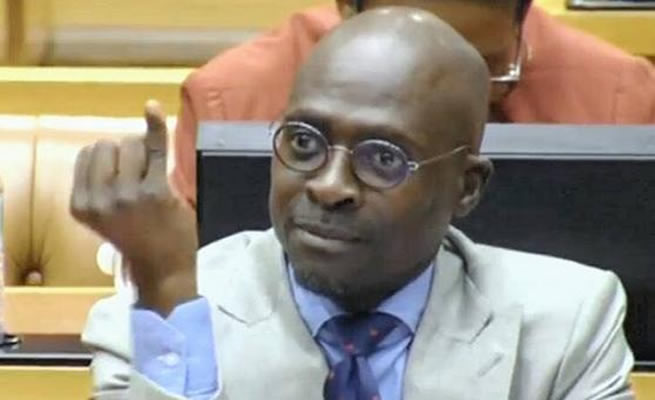
Johannesburg – Former Public Enterprises Minister Malusi Gigaba is expected to hand himself over to the police to face charges related to the ongoing investigation into corruption at Transnet. This development marks a significant step in the National Prosecuting Authority's (NPA) efforts to hold former state officials accountable for their alleged involvement in the capture of state-owned entities.
The charges against Gigaba stem from the wide-ranging Transnet corruption probe, which centres on irregular contracts and payments worth billions of rand that were unlawfully awarded during his tenure as Minister of Public Enterprises.
Gigaba served as Minister of Public Enterprises between 2010 and 2014, a period during which the infamous Gupta family and their associates allegedly wielded considerable influence over the awarding of major Transnet contracts. This included the controversial R54 billion locomotive deal, which has been a focal point of the investigation.
Several former Transnet executives have already appeared in court to face fraud and corruption charges, including ex-Transnet group CEO Brian Molefe and former CFO Anoj Singh. The NPA's pursuit of these individuals underscores its commitment to bringing those responsible for state capture to justice.
The NPA's broader state capture clean-up has resulted in multiple arrests and court appearances involving former executives and board members from other state-owned entities, such as Eskom, in addition to Transnet. This reflects the scale of the corruption that plagued South Africa's state-owned enterprises during the height of state capture.
Gigaba has consistently denied any wrongdoing and has previously dismissed allegations linking him to the Guptas' business dealings as politically motivated. Despite these denials, the NPA appears to have gathered sufficient evidence to warrant laying charges against him.
The latest development signals a further escalation in the NPA's efforts to hold those implicated in state capture accountable. The investigation into Transnet corruption has been ongoing for several years, and the decision to charge Gigaba suggests that investigators are making significant progress in unravelling the complex web of corruption that characterised the entity during his time as Minister.
Further details on the specific charges against Gigaba are expected to be made public once he formally presents himself to the authorities. His appearance in court will undoubtedly attract significant public and media attention, as the case is seen as a key test of the NPA's ability to successfully prosecute high-profile individuals implicated in state capture.
The investigation into Transnet corruption has exposed a pattern of irregular contracts and payments that allegedly benefited the Gupta family and their associates. The alleged influence of the Guptas over the awarding of major Transnet contracts has raised serious questions about the integrity of the procurement processes and the role of government officials in facilitating state capture.
The case against Gigaba is likely to focus on his alleged role in enabling the Guptas to exert undue influence over Transnet's affairs. Prosecutors will likely seek to establish a link between Gigaba's actions as Minister of Public Enterprises and the awarding of corrupt contracts that benefited the Gupta family.
The outcome of the case against Gigaba will have significant implications for the broader state capture clean-up. A successful prosecution would send a strong message that those who abused their positions of power to facilitate corruption will be held accountable. Conversely, a failure to secure a conviction would raise questions about the NPA's ability to successfully prosecute complex state capture cases.
The case also highlights the importance of strengthening governance and oversight mechanisms at state-owned entities to prevent future instances of corruption. The Transnet corruption probe has revealed serious weaknesses in the entity's internal controls and procurement processes, which allowed corrupt activities to flourish.
The NPA's pursuit of Gigaba and other former state officials implicated in state capture is a crucial step in restoring public trust in government institutions and ensuring that those who looted the state are brought to justice. The case is likely to be closely watched by South Africans who are eager to see those responsible for state capture held accountable for their actions.