

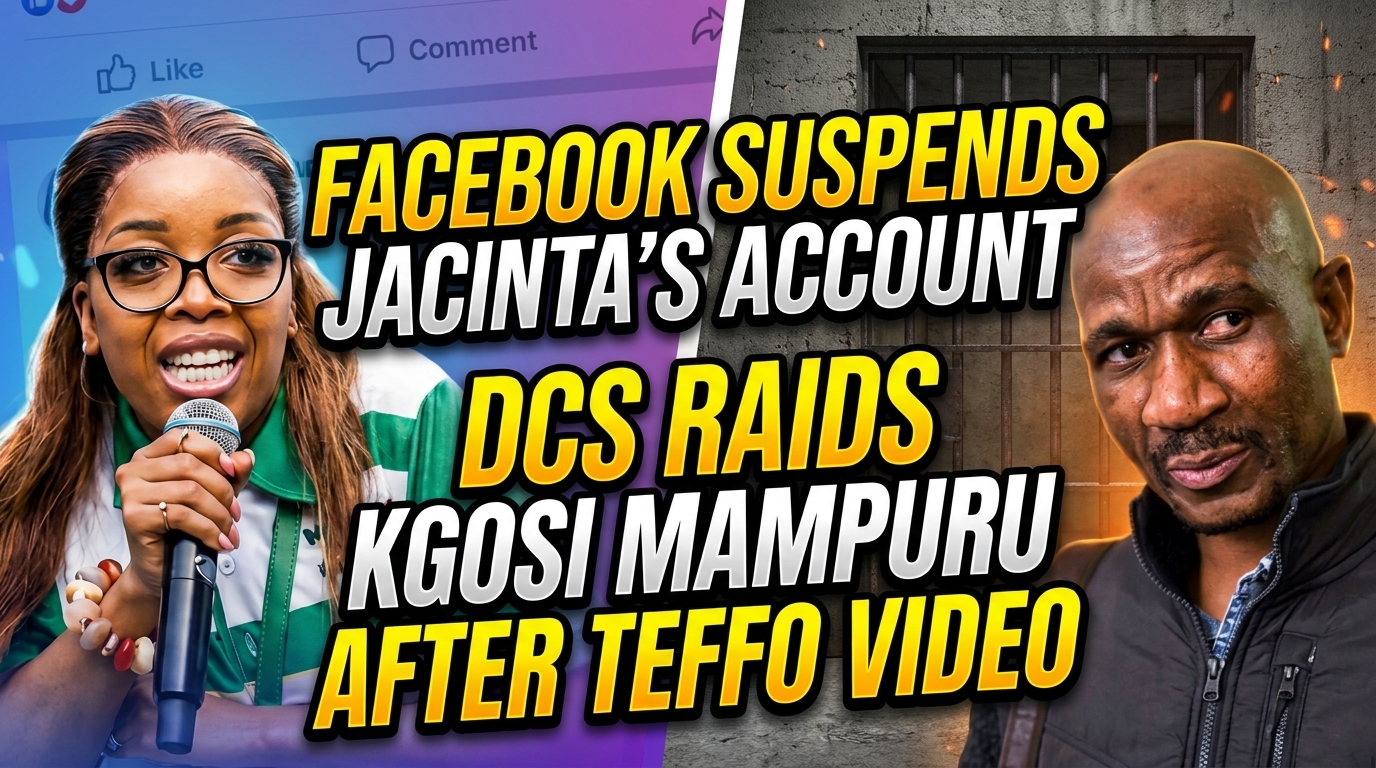
This episode of The John Brown Files brings together three developments drawing attention across South Africa: the suspension of activist Jacinta Ngobese-Zuma’s Facebook account, a contraband raid at Kgosi Mampuru II Correctional Centre, and local election results with 97% of voting districts counted. Together, the stories point to institutions under pressure and a political landscape becoming more divided. The ANC remains the largest party nationally, but is losing its former dominance; meanwhile, authorities are investigating serious prison security failures, and a prominent movement must find another way to communicate with supporters after Facebook removed its leader’s page pending an appeal.
March and March founder Jacinta Ngobese-Zuma was told her Facebook account was suspended on November 6, after Facebook cited its Community Standards on adult sexual solicitation. The notice says the page is no longer visible or usable and gives her 180 days to appeal; Facebook may request more information during its review. The company has not publicly identified the post or activity that triggered its action. The movement says it will use another Facebook page to keep supporters informed while preparing a fuller response. Ngobese-Zuma leads an anti-illegal immigration movement known for demonstrations calling for stricter enforcement and priority for South African citizens.
In Pretoria, the Department of Correctional Services ordered an urgent search at Kgosi Mampuru II after a social-media video showed inmates dancing and playing music in a cell. The footage included disbarred advocate Malesela Teffo and another offender, while a third person appeared to record and encourage them. National Commissioner Makgothi Samuel Thobakgale directed officers to search the unit where the people in the video were housed. The raid uncovered five cellphones, three routers, a laptop, two bank cards, eleven chargers, three USB devices, illicit cigarettes, dagga, 194 Mandrax tablets, two hacksaw blades and sharp objects. The cache alarmed officials.
The department is investigating how prohibited items entered and remained inside the facility, including whether visitors, staff, contractors or security failures were involved. It will also examine the device used to record the clip and whether officials were complicit or negligent. Officials say inmates identified in the footage or linked to contraband may face internal disciplinary proceedings, and their conduct could affect assessments of placement or privileges under applicable procedures. The cache of phones and networking equipment suggests a broader breach than one unauthorized device, while drugs and blades raise additional safety risks. The investigation will determine accountability and consequences.
With 97% of voting districts counted, the ANC leads nationally at about 31% and is ahead in 115 councils, but has an outright majority in just 48. The DA has close to 25% nationally and leads in 27 councils, while the MK Party and Inkatha Freedom Party each lead in 18. The MK Party leads in KwaZulu-Natal, while the DA leads in the Western Cape and Gauteng. These figures point to hung councils and negotiations, rather than single-party rule. Election verification continues, so totals may change; however, the trend is clear: power is fragmented, and coalition talks will shape administrations.
The ANC’s result represents a sharp decline from 2021 and may leave it without an outright majority in all eight major metros, including Johannesburg and Pretoria. The DA’s gains do not guarantee control: smaller parties and independents may decide mayoral and executive arrangements. The MK Party, led by president Jacob Zuma and contesting elections for the first time, has emerged as a force, particularly in KwaZulu-Natal; its prospects in Durban appear dependent on partners. Turnout rose to about 54.5%, with 15.9 million voters out of 29.2 million registered, yet many young people stayed away, reflecting doubts that elections deliver change.