Phala Phala Scandal: Ramaphosa's Future and South Africa's Leadership Vacuum
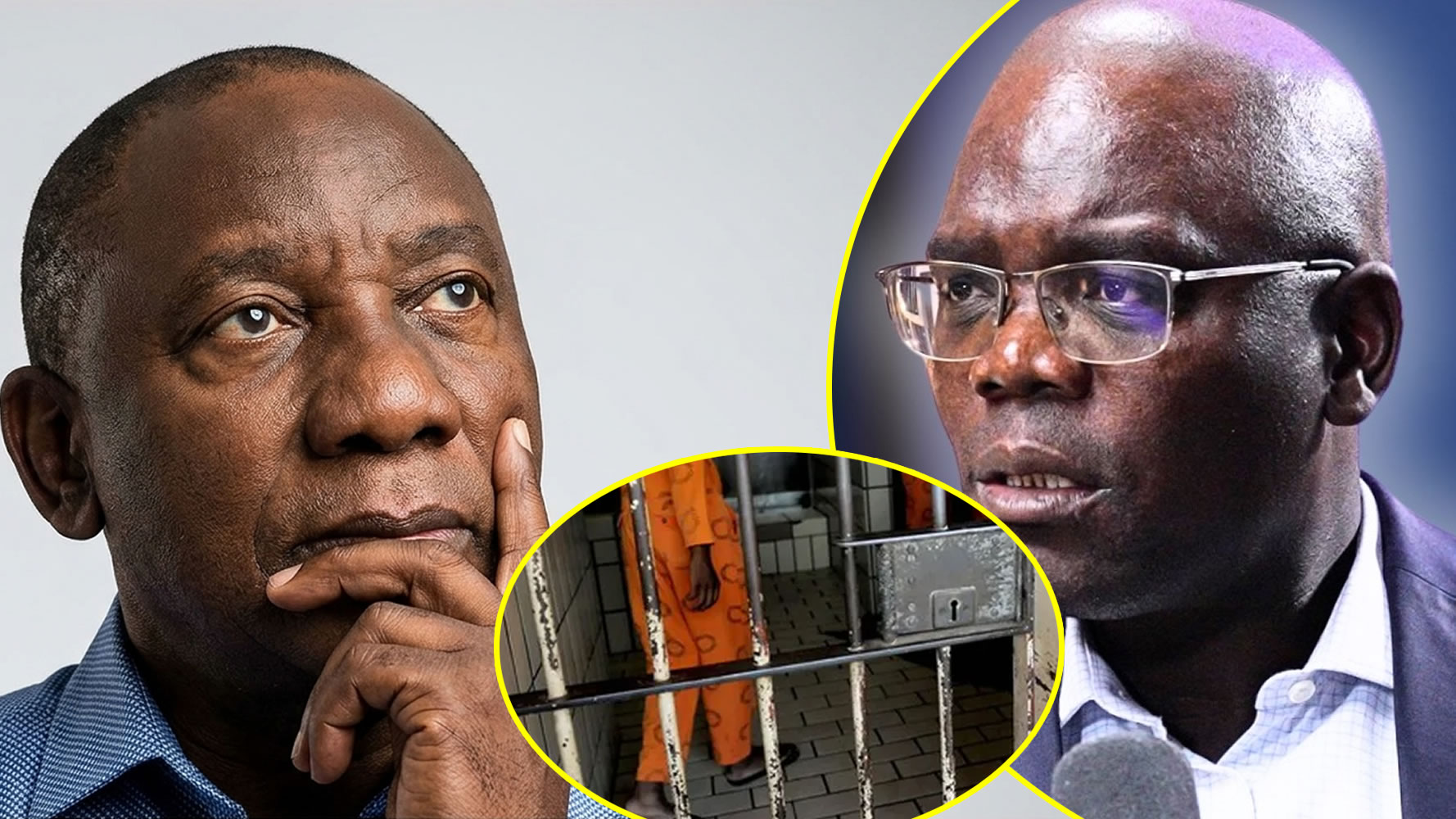
Johannesburg – The shadow of the Phala Phala scandal continues to loom large over South African politics, with a prominent political analyst predicting a grim future for President Cyril Ramaphosa. Prince Mashele, a respected author and political commentator, has boldly asserted that once President Ramaphosa leaves office, he will inevitably face imprisonment, drawing parallels to the fate of former President Jacob Zuma.
Mashele's stark prediction emerged during a recent discussion on the SMWX podcast, hosted by Sizwe Mpofu-Walsh. In a conversation that delved deep into the intricacies of South African power dynamics, Mashele did not mince his words regarding the long-term consequences of the Phala Phala saga.
"I bet my last penny that the Phala Phala money scandal will eventually follow Cyril Ramaphosa into a jail cell once he loses state power," Mashele declared, underscoring his conviction that the legal ramifications of the incident are merely delayed, not dismissed. This statement echoes a sentiment often heard in political circles: that the protective shield of presidential power can only last so long.
The scandal, which first came to light in June 2022 through revelations by former State Security Agency head Arthur Fraser, centres on the theft of a substantial sum of foreign currency from President Ramaphosa's Phala Phala game farm in February 2020. Allegations have since spiralled, including claims of money laundering, a failure to report the theft to relevant authorities, and even the alleged kidnapping of suspects, with state resources purportedly used to track them down.
Initially, the political establishment appeared to rally around the President. Mashele noted that "people close to Ramaphosa believed they could manage the scandal because he was the country's president." However, he quickly countered this perception, suggesting that such confidence was misplaced. The analyst highlighted a critical distinction between political manoeuvring and the inexorable march of criminal justice.
"Government officials cover things up when you are in power. However, this changes when you are no longer the president," Mashele explained, drawing a direct comparison to the post-presidency legal troubles of Jacob Zuma. Zuma, who once wielded immense state control, found himself incarcerated once that power waned. This historical precedent, Mashele implies, serves as a potent warning for Ramaphosa.
While parliamentary processes might be stalled by political tactics, the criminal justice system operates on a different plane. Mashele firmly believes that "while political tricks can stall parliament, a criminal court process cannot be dodged." This perspective suggests that even if President Ramaphosa navigates the immediate political storms, the legal reckoning for Phala Phala remains a potent threat.
The impeachment process itself has been a convoluted affair. In late 2022, an independent panel, led by Chief Justice Sandile Ngcobo, found prima facie evidence that President Ramaphosa might have committed a serious violation of the constitution. Yet, in December 2022, the National Assembly voted against adopting this report, effectively halting impeachment proceedings. This decision, however, was not the final word.
A significant development occurred in May 2026, when the Constitutional Court intervened, ruling that parliament must reopen impeachment proceedings. The court declared the National Assembly's previous decision to block the report as irrational, breathing new life into the political accountability process.
Despite these developments, Mashele maintains that President Ramaphosa will not be impeached by Parliament. "He will not sit in front of an impeachment committee in Parliament. Ramaphosa is exiting, and what he is doing is buying time," Mashele asserted. He elaborated on this strategy, suggesting that the President is acutely aware of the time-consuming nature of such processes.
"He knows that setting up an impeachment committee and process to handle such a case takes a long time. He is now closing all gaps he can while in office," Mashele stated. His analysis suggests that Ramaphosa's current actions are geared towards remaining in power long enough to oversee the local government elections in November 2026 and potentially even until the ANC's elective conference in December 2027, where a successor might be chosen.
Mashele also offered a stark prediction regarding the President's willingness to engage with a thorough impeachment inquiry. "If the impeachment committee calls him sooner than December 2027, he will resign because there are too many skeletons in the closet," he claimed. This implies a strategic retreat rather than a direct confrontation with a process that could expose uncomfortable truths. "Ramaphosa will never subject himself to a process which threatens to unearth the truth," Mashele concluded.
Beyond the immediate political fate of President Ramaphosa, Mashele painted a concerning picture of the broader state of South African governance. He argued that the President's personal entanglement in the Phala Phala scandal has severely compromised his ability to govern effectively. "South Africa is currently operating with a total leadership vacuum because the president has been completely cornered by the Phala Phala scandal," Mashele stated.
This leadership deficit, according to Mashele, has left the country adrift. "South Africa, as we speak, has no leadership. You've got this president who's fighting for another day in office while the country is burning," he lamented. He characterised Ramaphosa not as an active president, but as a "compromised individual" whose focus is diverted from national leadership to personal survival.
The consequences of this perceived leadership vacuum are, in Mashele's view, evident across various sectors. He cited a widespread breakdown of law and order, pointing to issues such as porous border control, the alarming presence of international drug cartels operating within local ports, and the pervasive availability of illicit drugs. Recent reports corroborate these concerns, with over 25,000 individuals intercepted at South African borders in a single month during the 2025/2026 festive season, highlighting significant challenges in border management. Furthermore, intelligence suggests that Mexican criminal organisations are now actively manufacturing methamphetamine in South Africa, utilising major ports like Durban for large-scale cocaine shipments, indicating a deep infiltration by organised crime.
Mashele critically assessed the President's public response to these crises. "When a president has to go on television to project a ‘tough-on-security' image, it is an admission that they have lost control of the state apparatus," he argued. For Mashele, such public displays are not signs of strength but symptoms of a deeper malaise. "This is one of the symptoms of state collapse: a president who addresses the nation projecting himself to be strong on security." He concluded that "Ramaphosa's government has completely lost control of the South African state, so he must now pretend to be a strong man."
The ongoing Phala Phala scandal, therefore, is not merely a personal predicament for President Ramaphosa; it is, in Mashele's analysis, a critical factor contributing to a broader crisis of governance and state control in South Africa. The coming months, with the local government elections and the ANC's elective conference on the horizon, will undoubtedly be pivotal in determining whether Mashele's dire predictions for President Ramaphosa's future, and indeed for the nation, come to pass.