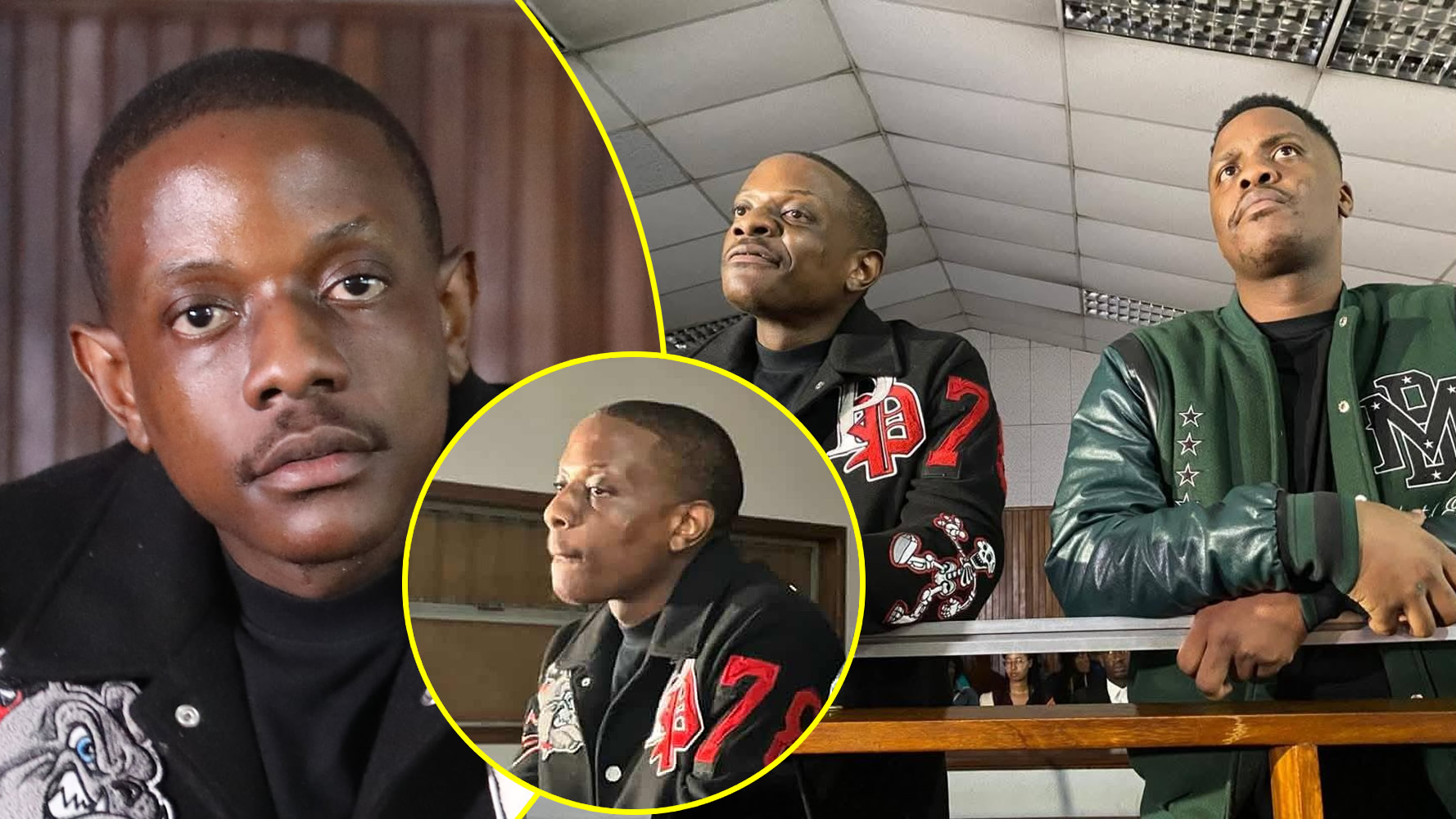
The name Mugabe once commanded a level of fear and respect that stretched across the African continent and echoed in the corridors of power worldwide. For nearly four decades, the late Robert Mugabe ruled Zimbabwe with an iron fist, ensuring his family lived like royalty, seemingly untouchable and above the law. However, the scene at the Alexandra Magistrates Court in Johannesburg this week provided a stark, almost tragic contrast to that era of excess. Bellarmine Chatunga Mugabe, the youngest son of the late leader, sat in a courtroom dock, not as a prince of a dynasty, but as a man fighting for his freedom, facing charges that could see him spend years behind bars.
The fall of the "untouchable" prince has been swift and brutal. Bellarmine, once known for his penchant for pouring R12,000 bottles of Armand de Brignac champagne over his diamond-encrusted watches, is now reportedly begging for mercy. In a dramatic shift of legal strategy, his legal team has abandoned their bid for bail and is instead pursuing a plea agreement with South African prosecutors. This development has left many wondering: how did the son of a man who once owned a country end up in a foreign prison cell, pleading for a deal?
The Hyde Park Shooting: A Night of Chaos
The current legal nightmare for the 28-year-old Bellarmine began on the night of February 18, 2026. According to police reports and court documents, a violent altercation broke out at a luxury residence in the affluent suburb of Hyde Park, Johannesburg. The incident culminated in a shooting that left Bellarmine's own gardener with a bullet wound in his back.
Bellarmine was arrested alongside his 33-year-old cousin, Tobias Tamirepi Matonhodze. The charges levelled against them are grave: attempted murder, possession of an unlicensed firearm and ammunition, pointing a firearm, and defeating the ends of justice. To make matters worse, the firearm used in the incident has not been recovered, leading to further suspicions of a cover-up.
In court, the prosecution painted a picture of a "delinquent" lifestyle that has finally caught up with the young Mugabe. The "no get-out-of-jail card" reality hit home when it was revealed that Bellarmine and his cousin were allegedly in South Africa illegally. This revelation was the final nail in the coffin for their bail application. Their lawyer, Sinenhlanhla Mnguni, admitted that the newly added illegal immigration charges made it nearly impossible to clear the flight risk threshold required for bail.
A Calculated Move or Dwindling Influence?
The decision to drop the bail bid and seek a plea agreement under Section 105A of South Africa's Criminal Procedure Act is a significant tactical retreat. This section allows the defence and prosecution to negotiate a guilty plea in exchange for a specific, often reduced, sentence. For a family that once had the resources to hire the finest legal minds and exert immense political pressure, this move suggests a dwindling of both fortune and influence.
Is the Mugabe fortune finally drying up? For years, rumours have circulated about the family's wealth being tied up in complex offshore accounts or being slowly eroded by legal battles and the loss of state protection. In Zimbabwe, the family's sprawling business empire has faced numerous challenges since the 2017 coup that ousted Robert Mugabe. In South Africa, without the diplomatic immunity they once enjoyed, the family is finding that the law applies to them just as it does to any other resident.
Some analysts believe the plea deal is a calculated move to avoid a long, public trial. A full trial could reveal even more embarrassing family secrets, from the source of their funding to the details of their private lives in Johannesburg. By pleading guilty, Bellarmine may be hoping to secure a shorter sentence and fade from the headlines, rather than becoming the face of a sensationalist legal drama.
A Pattern of Delinquency
This is not Bellarmine's first brush with the law. His history of "delinquent" behaviour is well-documented and spans several countries. In 2025, he was arrested in Zimbabwe following a violent brawl at a gold mining concession in Mazowe—an area historically linked to the Mugabe family's interests. Reports at the time suggested a confrontation with police, further cementing his reputation as a young man who believed he was above the rules.
His older brother, Robert Mugabe Jr., has also faced legal troubles, including a 2023 arrest in Harare for allegedly damaging property at a high-end party. Even their time in Dubai was marred by reports of deportation and rowdy behaviour. For the Mugabe sons, the transition from being the children of a "living god" to ordinary citizens has been fraught with difficulty. They appear to be struggling to navigate a world where their surname no longer acts as a shield against the consequences of their actions.
The Mnangagwa Factor: A Lifeline from Harare?
While Bellarmine languishes in a South African cell, back in Harare, there are signs that the Mugabe family is attempting to mend fences with the man who replaced their father. Bona Mugabe, Bellarmine's sister, was recently appointed as the Deputy Chairperson of the Empowerment Bank Board. This appointment, made by the government of President Emmerson Mnangagwa, is seen by many as a symbolic olive branch.
"Whenever Grace encounters any problem, she phones me and I resolve her issues," Mnangagwa told Barwe. This admission has led to intense speculation that the Mugabe family's change in legal strategy in South Africa may have been influenced by advice from Harare. It is entirely possible that Grace Mugabe has sought the President's help in navigating Bellarmine's legal battle, and the plea deal could be part of a broader, more diplomatic resolution to the crisis.
The Symbolic End of a Dynasty
The legal situation in South Africa is relatively simple to understand, even for those unfamiliar with the country's laws. Bellarmine is accused of a violent crime, he is in the country illegally, and he has no realistic chance of avoiding some form of punishment. The "mercy" he is seeking is not a total exoneration, but a managed exit from a situation that could have been much worse.
For many Zimbabweans, this case is a symbolic end to the Mugabe dynasty. It represents the final crumbling of the pedestal upon which the family once stood. The story of Bellarmine Mugabe is one of power, excess, and the inevitable crash that follows when the protection of a presidency is stripped away. The "untouchable" prince has discovered that in the cold reality of a courtroom, a famous name is no substitute for a valid visa and a clean record.
As the March 17 hearing approaches, where the details of the plea agreement will be presented, the world will be watching. Will Bellarmine Mugabe walk away with a suspended sentence and a deportation order, or will he become the first of his family to serve time in a foreign prison? Regardless of the outcome, the image of the Mugabe son begging for mercy in a South African court will remain a powerful reminder that no empire, however formidable, lasts forever.
Editorial Note on the Mugabe Family Trajectory
Since the events of November 2017, the Mugabe family has undergone a "documentary-like" trajectory. From the heights of the Blue Roof mansion to the depths of legal uncertainty, their journey has been a cautionary tale of political rise and fall. The dwindling resources, the loss of loyalists, and the constant need to negotiate for survival have replaced the days of absolute command.
The appointment of Bona Mugabe to a state board suggests that the family is choosing pragmatism over pride. By aligning themselves with the current administration, they may be hoping to protect what remains of their legacy and their assets. However, for Bellarmine, the path to redemption is much more complicated. His actions have placed him at the mercy of a legal system that, unlike the one his father once controlled, is not easily swayed by political lineage.
In the end, the story of Bellarmine Chatunga Mugabe is not just about a shooting in Hyde Park. It is about the end of an era. It is about the transition of Zimbabwe from the shadow of one man to a new, albeit complex, reality. And for the youngest Mugabe, it is a hard lesson in the fact that when the music stops, everyone must eventually face the music.
|
Feature
|
Details
|
|
Primary Accused
|
Bellarmine Chatunga Mugabe (28)
|
|
Co-Accused
|
Tobias Tamirepi Matonhodze (33)
|
|
Incident Date
|
18 February 2026
|
|
Location
|
Hyde Park, Johannesburg, South Africa
|
|
Victim
|
Mugabe's gardener (shot in the back)
|
|
Charges
|
Attempted murder, gun possession, illegal immigration, defeating justice
|
|
Legal Strategy
|
Abandoned bail, seeking Section 105A plea agreement
|
|
Next Hearing
|
17 March 2026
|
|
Zimbabwean Context
|
Bona Mugabe appointed to EmpowerBank Board (March 2026)
|
|
Political Link
|
Mnangagwa claims reconciliation with the Mugabe family
|
- Section 105A: A provision in South African law that allows for "plea and sentence agreements" between the state and the accused.
-
Alexandra Magistrates Court: The court in Johannesburg where the case is being heard.
-
EmpowerBank: A Zimbabwean financial institution focused on youth empowerment, where Bona Mugabe now serves as Deputy Chairperson.
-
Hyde Park: An upscale residential suburb in Johannesburg where the incident occurred.