In a deeply disturbing incident that has ignited outrage and renewed calls for accountability, a Grade 11 pupil in Soweto was allegedly subjected to a brutal lashing of 92 strokes with a plastic pipe by her teacher. Her transgression? Writing an essay that exceeded the prescribed word count. This shocking event at Tetelo Secondary School in Protea North has not only left the teenage girl traumatised and physically injured but has also cast a harsh spotlight on the persistent, illegal practice of corporal punishment within South African educational institutions.
The incident, which reportedly occurred on Friday, February 20, 2026, saw the young girl, whose identity is being protected to preserve her dignity, enduring a horrifying ordeal. Tasked with writing a 150-word essay, she instead produced a 308-word piece. The teacher, whose name has not been officially released but is understood to be at the centre of the controversy, allegedly deemed this an act of defiance, threatening to administer 158 lashes – one for each word over the limit. The actual punishment, however, was 92 blows to her hands.
Eyewitness accounts from classmates paint a harrowing picture. They reportedly counted each stroke as the teacher delivered the blows. In a display of profound solidarity and courage, some male pupils in the class even offered to take ten lashes each to spare their classmate further pain. The teacher, shockingly, accepted their offer and proceeded to beat them with the same pipe. This detail underscores the pervasive fear and the desperate measures pupils are driven to in environments where such abuse is tolerated.
The physical toll on the victim was immediate and severe. A relative, who spoke to Sowetan, described finding the girl's left hand swollen, grey in colour, and wrapped in a bandage. "When I asked her what had happened, she told me the teacher had beaten her on both hands with a pipe," the relative recounted. The following morning, the family sought medical attention at a local clinic, which then advised them to go to a hospital. There, doctors discovered blood clots in her hand, necessitating medical intervention to dissolve them. The psychological impact has been equally devastating; the girl is now so traumatised that she refuses to return to school.
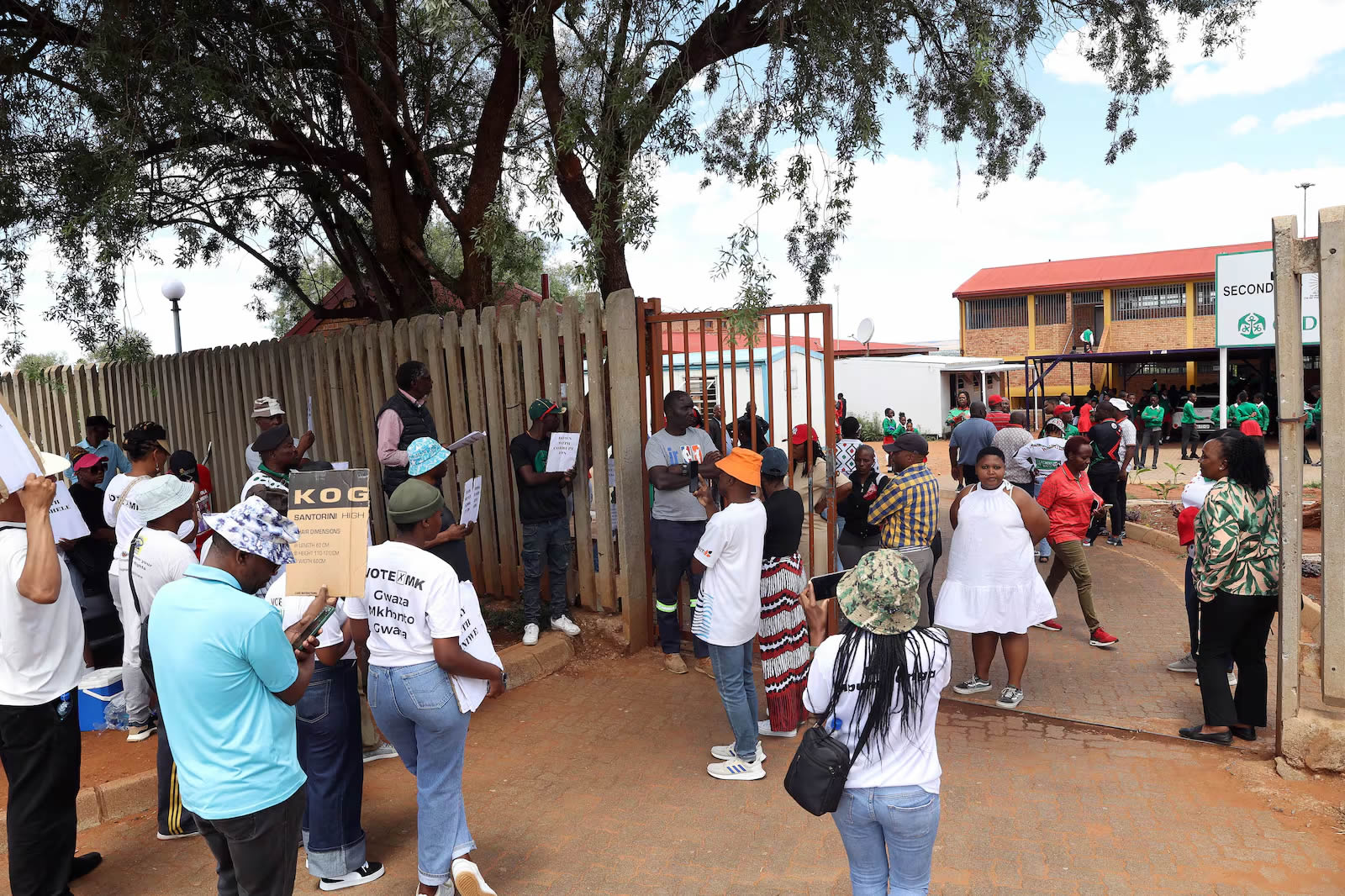
News of the incident quickly spread, igniting a furious response from the community. On Wednesday, February 25, 2026, angry parents, members of the school governing body (SGB), and the civic organisation Each One Teach One Foundation, led a protest march to Tetelo Secondary School. Their demands were clear: the immediate removal of the implicated teacher and accountability from the school's leadership. Placards bearing messages such as "Away with Xiniwe," referring to the acting principal, and chants of "Away with corporal punishment" echoed through the school gates. The community also raised broader concerns about poor management and a lack of resources at the school, suggesting a systemic failure contributing to such incidents.
Adding a contentious layer to the unfolding drama, members of the South African Democratic Teachers’ Union (Sadtu) were observed at the school gate, seemingly in solidarity with the principal and the accused teacher. This stance drew criticism, particularly from the Each One Teach One Foundation, whose chair, Phumlani Xulu, condemned the incident in no uncertain terms. "This is a critical stage in [the pupil’s] education. She now faces the risk of missing school because of trauma. We want the department to relocate her to a safer school where she will receive counselling and proper support," Xulu stated, highlighting the long-term consequences of such abuse. He further asserted, "This is not discipline — this is a hate crime."
Julia Moloi, the SGB chair, corroborated the pupil's fear of returning to school and expressed deep concern over the situation. "Our concern is that the child is missing school while the educator continues teaching. The learners in her class are also terrified," Moloi explained, underscoring the chilling effect the incident has had on the entire student body. She confirmed that the punishment was indeed a direct consequence of the pupil exceeding the essay's word limit and acknowledged that other pupils had bravely volunteered to receive lashes on her behalf.
The Gauteng Department of Education (GDE) has acknowledged the severity of the situation. Steve Mabona, spokesperson for the GDE, confirmed that officials were dispatched to the school to investigate the allegations and seek an "amicable solution." "The outcome will determine the action to be taken," Mabona stated, adding that the department "strongly condemned the disruption of schools and urged stakeholders to use available structures to raise concerns." He assured the public that the GDE would "continue to monitor the situation and intervene accordingly." However, the community's frustration was palpable, particularly after reports emerged that the teacher, despite the gravity of the allegations, had allegedly returned to school and continued teaching as normal, even after being "chased away" by foundation members on Monday.
In a significant development, a case of assault with intent to cause grievous bodily harm has been opened against the teacher at Protea Glen police station. Gauteng police spokesperson Capt Tintswalo Sibeko confirmed the case, stating, "The docket has been transferred to the Moroka family violence, child protection and sexual offences [unit] for further investigation. No arrest has been made yet, and an investigation is under way." An investigator has reportedly been assigned and is expected to gather statements from school staff and pupils who witnessed the assault. This legal action offers a glimmer of hope for justice in a system often criticised for its slow response to such abuses.
This incident at Tetelo Secondary School is not an isolated occurrence but rather a stark reminder of a deeply entrenched problem within South African education. Corporal punishment was officially abolished in schools across South Africa with the promulgation of the South African Schools Act in 1996, and further reinforced by the Constitutional Court in 1997. More recently, the Basic Education Laws Amendment (BELA) Bill, which was passed by Parliament in 2023 and is awaiting presidential assent, explicitly bans corporal punishment in all schools, reiterating the nation's commitment to protecting children from such practices. Despite these clear legal prohibitions, the practice persists, often under the guise of maintaining discipline.
Research indicates a concerning trend. According to Statistics South Africa, over a million children are subjected to corporal punishment in schools annually. A 2025 report highlighted a 35.4% increase in reported cases of school-based violence, encompassing not only bullying but also corporal punishment and abuse of power by educators. These figures paint a grim picture of a system struggling to uphold the rights and safety of its most vulnerable members. The persistence of corporal punishment is often attributed to various factors, including cultural norms that historically accepted physical discipline and a lack of effective alternative disciplinary methods for teachers.
Recent incidents further underscore the pervasive nature of this issue. Just days before the Tetelo Secondary School incident, Ridgevale Primary School in Johannesburg found itself embroiled in allegations of learner abuse and corporal punishment. In October 2025, it was reported that 36 teachers were struck from the South African Council for Educators (SACE) register for serious offences, with corporal punishment featuring in 257 assault cases. However, critics often argue that the sanctions imposed by SACE are frequently too lenient, with some cases resulting in fines and suspended removals from the teaching roll, rather than outright bans. This perceived leniency may inadvertently contribute to the continued prevalence of the practice, as it fails to act as a sufficient deterrent.
The involvement of Sadtu members in seemingly protecting the accused teacher at Tetelo Secondary School has also raised serious questions about the role of teacher unions in upholding child protection policies. Tseliso Ledimo, Sadtu’s provincial secretary, claimed to be unaware of the alleged assault and the presence of union members during the march, stating that such matters often occur at a branch level and are not always reported upwards. He committed to investigating the matter further. This response, however, does little to assuage public concern about the union's apparent stance on an issue that directly contravenes national law and basic human rights.
The incident at Tetelo Secondary School serves as a powerful and painful reminder that the battle against corporal punishment in South African schools is far from over. While legal frameworks are firmly in place, their effective implementation and enforcement remain a significant challenge. The trauma inflicted upon the young girl, coupled with the broader implications for school safety and teacher accountability, demands a comprehensive and urgent response from educational authorities, law enforcement, and civil society. Only through concerted efforts can South Africa truly eradicate this brutal practice and ensure that schools are safe havens for learning, not places of fear and abuse.