


Bafana Bafana had just made history. South Africa had beaten South Korea to secure a place in the FIFA World Cup knockout stages for the first time, and the dressing room was alive with celebration — singing, cheering, the kind of joy that players dream about from the day they first lace up boots.
But in one photograph that has since become inseparable from the story of Jayden Adams, the 25-year-old midfielder sits alone at the back of the room. His teammates are celebrating around him, yet he is completely still, staring somewhere far away.
While the team celebrated their win, Jayden sat quietly.
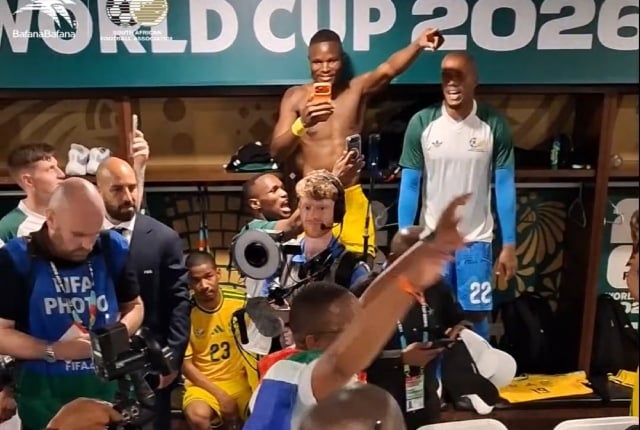
PHOTO: TikTok/@BafanaBafana
Those close to Adams have described the image as haunting now, a moment that captured what the public did not fully understand at the time: he was carrying grief that did not pause for football, not even on the world’s biggest stage.
Eight days before that match, his grandmother Marianna Adams had died in Stellenbosch. Adams was on the other side of the world, representing South Africa, and could not come home for her funeral. The day after the historic win over South Korea, he played again — against Czechia — holding himself together long enough to help Bafana secure a 1-1 draw.
“My legs were playing, but my heart was in heaven with her,” he said afterwards.
Jayden Adams
His partner, Aqueelah Adendorf, later said losing his grandmother — whom she described as his rock — and missing the funeral took an enormous emotional toll. Within weeks, that toll would become part of a far bigger tragedy.
Barely two weeks after South Africa were knocked out of the World Cup, Adams was found dead at an apartment in Schotsche Kloof in Cape Town. The loss devastated the football fraternity and a town that had watched him grow up from a backyard footballer into a national star.
Those close to him said his grief did not start with his grandmother. Relatives and friends spoke about the lasting pain he carried after losing his close friend and teammate Oshwin Andries, who was stabbed to death three years ago at the age of 19. Adams once wrote about that heartbreak on Instagram.
“When friendship leaves us through death, we feel cheated in life,” Jayden wrote.
Life doesn’t play fair so I vow to win the game for both of us.
To many who knew him, that vow — made in the shadow of grief — now reads like a line from a life that ended too soon.
As the days after his death unfolded, reports emerged about what happened in his final hours. According to Rapport, Adams and Adendorf argued earlier that Saturday after transaction notifications from their bank appeared on her phone following a night out. She believed he was spending too much, and it was reportedly a recurring issue in their relationship.
Friends who were with Adams that night described him as emotionally distressed. Then, early on the morning of 11 July, his father Juanito received a phone call that relatives later described as a desperate plea for help.
At around 8am Adams reportedly phoned Juanito. “Dad, I can’t take it anymore,” he said, adding he was “going to kill himself”.
It was a cry for help, like an emotional breakdown.
Relative
Juanito rushed from Stellenbosch to the apartment. There, he found his son’s body hanging in the bathroom. In the aftermath, he described a family struggling to absorb a loss that felt impossible.
“The family is struggling to process it,” Juanito later said. “It won’t be easy to carry on. People say it will become easier, but it won’t.”
Long before the World Cup lights and club trophies, Jayden was a child in Idas Valley, Stellenbosch, kicking a ball around his backyard. His parents, Juanito and Candice, spoke about his early life in a documentary, *Ones to Watch*, produced by his management agency Forwardzone in 2024 to showcase his talent.
“We were always playing in the backyard,” Juanito said. “I was always pushing him. He had friends four years older than him and he was always playing with them.”
You could see he could play.
Juanito Adams
Yet the path was not effortless. Juanito recalled that Adams was not always eager to wake early for practice, but that everything changed once he stepped onto a pitch.
“All the effort my wife and I put in – it wasn’t easy and it’s still not easy. I’m very, very proud of Jayden,” Juanito said.
Candice described her son as quiet and grounded. “Jayden was a very quiet person,” she said, calling him “protective, caring and humble”. She said she always reminded him before games: “Just give your best and enjoy the game”.
In the documentary, Adams spoke warmly about his parents and their constant support.
“They were there every single day, encouraging me and giving me advice to go to training.”
Family remained central even as his career moved him away from home. He described a routine of prayer and connection before games.
“Before I go out to warm up, I pray and I video-call my girl to see my daughter first and my parents,” he said.
Being separated from his family, especially his daughter Allaia-Jayda, then five, was one of the hardest parts of the life he chose.
“I think that’s a difficult challenge for me as a young player, to be away from my family a lot, especially my daughter, but that’s football. I want to be at the highest level so you need to do these things.”
He had a dream beyond South Africa.
“My goal is to play in Europe. I would like to play for Liverpool. That’s my team, so that’s my long-term goal.”
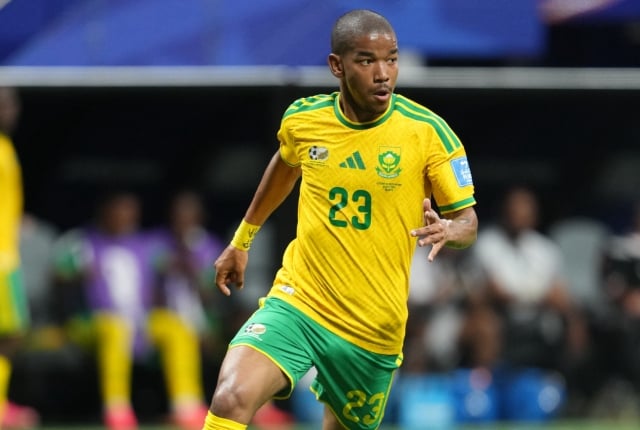
Those who worked with him believed that future was possible. He rose through the Stellenbosch FC academy, becoming its first graduate to sign a professional contract and making 109 appearances. In January 2025, he moved to Mamelodi Sundowns, where he won the Premiership and played a pivotal role in the club’s 2026 CAF Champions League triumph.
On the international stage, he earned a Bafana Bafana call-up, helped South Africa reach the 2023 Afcon semi-finals, and then played at the World Cup — the stage he had worked for since childhood.
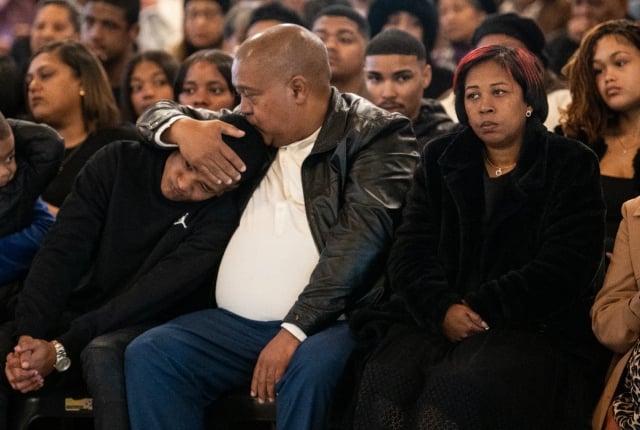
His hometown gathered in grief at a memorial service on 16 July at Stellenbosch Town Hall, where hundreds came to say goodbye. The hall was packed with mourners dressed in black, broken by flashes of yellow and green from Sundowns and Bafana jerseys.
Stellenbosch mayor Jeremy Fasser said Adams’ legacy was bigger than football.
“He was exceptionally talented, but above all, he was humble,” he said. “Every time he stepped onto the field, he carried the hopes and dreams of young boys and girls who saw in him someone who came from where they come from.”
Bafana captain Ronwen Williams delivered an emotional tribute, describing Adams as so soft-spoken that teammates sometimes forgot he was in the room.
“But his smile and his laughter could light up any room,” he added.
Sundowns senior coach Steve Komphela praised the qualities that made Adams distinct.
“His composure, his silence, the quality of his touch, his neatness on and off the field . . .
“Jayden had the ability to remain unseen until damage had been caused – someone whose brilliance often went unnoticed until he changed the course of a game.”
Outside the hall, those who grew up with him continued sharing stories. Siphamandla Barumane, who played football with Adams as a boy, said his influence stretched far beyond the pitch.
“Footballers like Jayden played a big role in motivating the youth of Stellenbosch.”
Tributes arrived from across the world. Yet some of the most painful words came from Adendorf, the mother of his child and his partner, who had celebrated his World Cup dream weeks earlier.
“I’ll always be your biggest supporter, loudest cheerleader and safest place,” she wrote.
After his death, her message shifted to grief.
“There are no words to describe the pain I’m feeling. Rest in peace, my love. Thank you for every memory, every laugh, every hug and moment we shared. I’ll miss you every single day.”
If you or someone you know is struggling, you can contact SADAG on 0800 567 567 or SMS 31393 for help.