

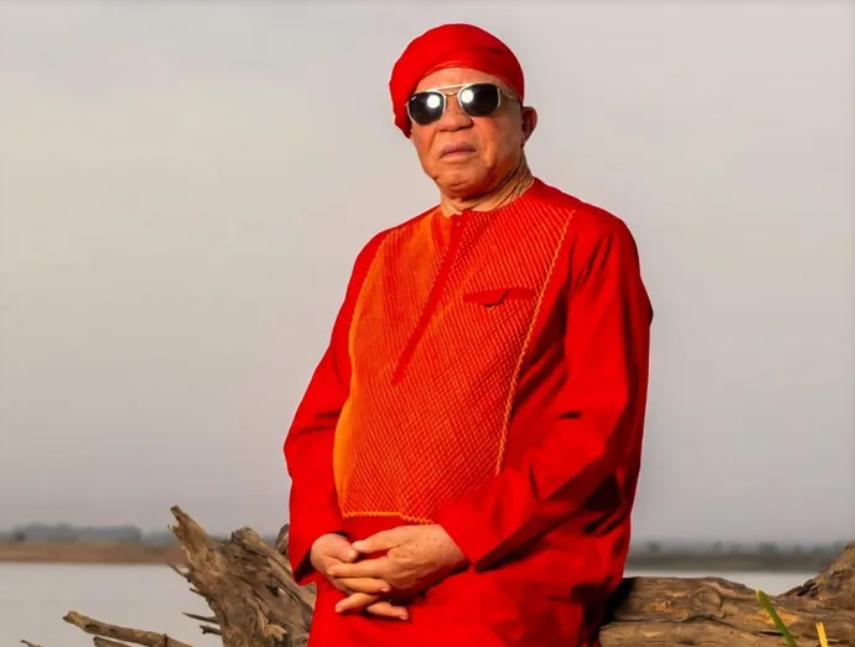
Malian music legend Salif Keita has cancelled his upcoming commercial concerts in South Africa, saying he cannot perform in a country where African migrants are being attacked.
The 76-year-old singer and songwriter made the “painful decision” after a series of anti-migrant protests in South Africa. His manager, Carolina Vallejo of One World Records, confirmed the cancellation.
Keita did not give the dates or venues of the performances that have been called off. He also made it clear that the decision was not a permanent rejection of South Africa or its people.
“ To be clear — I am not closing the door on South Africa. I am closing the door on violence,” Keita said in a statement posted on Facebook.
His message was directed at the violence and hostility faced by African migrants, many of whom come to South Africa looking for work, safety and a better life for their families.
“I cannot ignore the reports of xenophobic violence against our African brothers and sisters,” Keita said.
“I Am Closing The Door On Violence”
Keita said the reports had forced him to reconsider performing commercial shows in South Africa at a time when tensions around migration have intensified.
“When I see migrants being attacked, I don't see 'politics.' I see people searching for work, safety, and dignity. That does not match the South Africa I know — the South Africa that stood firm with Mali, and the South Africa that Nelson Mandela built.”
The reference to Mandela carried particular meaning for the veteran artist. Keita described South Africa as a country that had historically stood with other African nations and had represented the values of dignity, solidarity and freedom.
His decision has now placed the country’s anti-migrant protests under a wider international spotlight. The demonstrations have already affected foreign nationals living and working in South Africa. Keita’s cancellation adds a prominent African cultural voice to the growing response from people outside the country.
The artist’s statement did not identify one organisation as responsible for every incident. Instead, he referred to reports of attacks against African migrants and said he could not ignore what he was seeing and hearing.
His position was direct: he would not use his music to normalise violence, but he had not abandoned his connection to South Africa.
A Career Spanning More Than 50 Years
Keita has spent more than five decades building an international career from Mali. He is one of Africa’s most recognised musicians and has performed for audiences around the world.
Although he still tours, his performances have become less frequent because of medical reasons. That makes every planned concert a significant event for fans who have followed his music across generations.
His decision to cancel the South African shows therefore carries a personal and professional cost. Keita was not simply postponing a performance because of scheduling problems. He was withdrawing from commercial appearances because of a matter he described as a question of human dignity.
The cancellation also means that fans who had planned to see him perform will now have to wait for clarity from the organisers about refunds, replacement dates or possible future shows. The dates and venues were not specified when the cancellation was announced.
Keita’s manager confirmed the decision to the Agence France-Presse news agency, while the artist shared his own explanation with the public. He said he wanted people to understand that his objection was not directed at South Africans as a whole.
It was directed at violence.
The Protests And Migrant Departures
South Africa has faced a series of marches against illegal immigration, with some protests becoming violent. The demonstrations have been driven by anger over undocumented migration, unemployment, pressure on public services and allegations that foreign nationals are taking opportunities from South Africans.
Government has repeatedly said migration must be handled through the law and that attacks on foreign nationals will not be tolerated. Police have arrested people in connection with violence and unlawful activity during some protests, while officials have urged residents not to take the law into their own hands.
The protests have affected migrants from several African countries. Many have closed businesses, left their homes or sought help from their governments to return home.
More than 160,000 people have left South Africa since late May, according to a tally based on figures released by African governments that organised repatriations. The departures included around 1,500 Nigerians.
The numbers point to the scale of the fear and uncertainty affecting migrants. They also show why Keita’s decision has attracted attention beyond the music industry.
For many migrants, the debate is not an abstract political argument. It concerns whether they can safely open a shop, travel to work, send their children to school or remain in a neighbourhood without becoming targets.
Keita’s statement focused on that human reality. He said he saw people searching for work, safety and dignity rather than political labels.
No Permanent Break With South Africa
Despite cancelling the upcoming shows, Keita said he had not permanently closed the door on South Africa. His message left open the possibility of returning to perform in the country under different circumstances.
“To be clear — I am not closing the door on South Africa. I am closing the door on violence,” Keita's post said.
He also said he would still be willing to perform in a township. That detail showed that his bond with South African audiences remained intact, even as he objected to the conditions surrounding the planned commercial shows.
The artist’s decision has created a difficult moment for the local entertainment industry. South Africa has long been a major destination for international African performers, with artists from across the continent building strong audiences in the country.
Keita’s music has also crossed national and language borders. His appeal is rooted in a shared African musical heritage, making his decision especially significant to fans who view him as part of the continent’s cultural family.
His cancellation is unlikely to settle the political argument over migration. Supporters of stricter immigration controls continue to demand action against undocumented foreign nationals and businesses that employ them. Human-rights groups and migrant communities, meanwhile, continue to call for protection against intimidation and violence.
The controversy has now reached the concert stage. Keita has used his platform to make clear that cultural ties cannot be separated from the treatment of people.
For the singer, performing in South Africa is not only about music. It is also about the values associated with the country’s history and its relationship with the rest of Africa.
“When I see migrants being attacked, I don't see 'politics.' I see people searching for work, safety, and dignity. That does not match the South Africa I know — the South Africa that stood firm with Mali, and the South Africa that Nelson Mandela built.”
The cancelled shows will leave disappointed fans, but Keita’s wider message has already travelled far beyond the venues where he was expected to perform. He has rejected violence while leaving the possibility of a return open.
For now, the Malian star has chosen not to take the stage in South Africa. He wants the country to understand that his decision is not a rejection of its people, but a protest against what migrants are experiencing on its streets.