

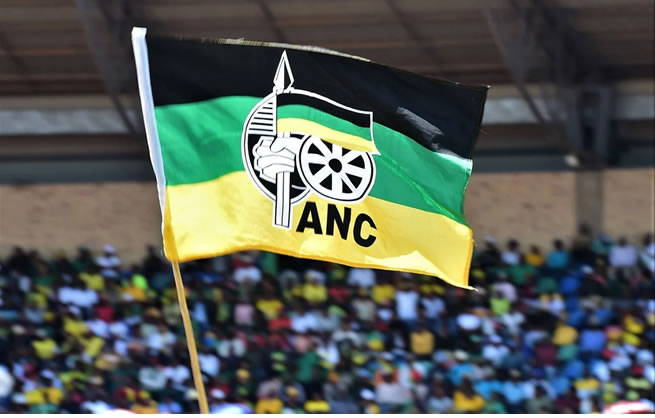
The ANC is heading for a bruising result in South Africa’s major cities, with early returns from the 4 November local government elections pointing to a sharp contraction in the party’s urban support.
The early figures suggested that the ANC would fall short of a majority in every metropolitan municipality and finish behind the Democratic Alliance in most of the country’s major metros.
The count was still under way and the final outcome could change. The Independent Electoral Commission was expected to announce the official results on Sunday, 8 November.
However, the results available by Thursday pointed to a fragmented political landscape in which parties would need to negotiate coalition agreements to govern many of the country’s biggest cities.
The ANC’s first deputy secretary-general, Nomvula Mokonyane, said the party did not regard the result as the end of its political relevance.
“We do not see ourselves as a party that would disappear … this gives us an opportunity to repackage,” Mokonyane said at the IEC results centre.
The early result raised the prospect of difficult coalition negotiations after years of unstable arrangements in cities such as Johannesburg and Tshwane.
ANC vote share declines
With 36% of the votes counted by midday on Thursday, the ANC had about 32% of the national vote, narrowly ahead of the DA on 27%, according to the early results reported by Reuters.
If that figure holds, the ANC would be down by about 14 percentage points from its 2021 local election result. The 2021 result was already the party’s worst performance since it came to power in 1994.
The ANC’s national tally was also projected to represent a loss of about 10 percentage points compared with its support in the 2024 general election, falling from about 40% to approximately 30%.
The count remained incomplete, and the IEC warned through its live results process that figures would continue to change as voting districts and wards were declared.
The early returns nevertheless showed voters moving away from the ANC in major urban centres, where the party has faced criticism over service delivery, electricity, water, crime and municipal administration.
Louw Nel, a senior political analyst at Oxford Economics Africa, described the early result as a serious setback for the governing party.
“Early results suggest a chastening day for the ANC,” Nel said.
He said the ANC was not expected to win a majority in any of the eight metros, while the DA was projected to finish first in at least five of them.
Tasneem Essop, another political analyst, said the party could not ignore the regional differences reflected in the vote.
“Voters are moving away from the ANC in large numbers … and we cannot ignore the regional dynamics of the votes,” Essop said.
Gauteng shifts towards DA
The sharpest change was visible in Gauteng, where the DA moved into a strong position in the three major metros.
In Ekurhuleni, the DA was leading with about 41% of counted votes. ActionSA was in second place on 18.1%, while the ANC had 16.8%.
The ANC won 38.2% in Ekurhuleni in 2021.
The ANC was also running third in Johannesburg among the votes counted at the time of the early projection. The party won 33.6% in the city in 2021.
In Tshwane, ActionSA was in second place with almost 25%, according to Nel. The party’s support had increased from the 8.6% it received in the capital in 2021.
Tshwane mayor Nasiphi Moya’s time in office had raised ActionSA’s profile in the capital, while the party’s founder, Herman Mashaba, had built support in Gauteng townships.
Nel said ActionSA could become a kingmaker in all three Gauteng metros, alongside the DA and an ANC that was losing support.
“The DA finds itself in a strong negotiating position in Gauteng,” Nel said.
The results placed the DA in line to lead coalition negotiations in Johannesburg, Tshwane and Ekurhuleni. ActionSA could play a decisive role in determining which parties control the councils.
A DA victory in Johannesburg would be particularly significant because of the city’s economic importance and its history of unstable coalition governments.
The ANC’s top seven officials reportedly met on Wednesday night to discuss the results and the way forward. The party’s national coalitions task team, led by secretary-general Fikile Mbalula, was also expected to meet.
KwaZulu-Natal reshaped by MK Party
KwaZulu-Natal produced a different political shift, with former president Jacob Zuma’s uMkhonto weSizwe Party emerging as the leading force in the province.
By Thursday afternoon, MK was leading with 33.2% of the provincial vote. The ANC was on 24.8%, followed by the Inkatha Freedom Party on 22.7%.
In the eThekwini metro, MK led with 39.4%. The ANC was on 23.5% and the DA on 23.2%.
The figures placed MK in a strong position to seek control of eThekwini, South Africa’s largest metro outside Gauteng and a major industrial and economic hub.
In Msunduzi, which includes Pietermaritzburg, MK had secured more than 50% and was sweeping wards in the municipality.
In Endumeni, MK was leading the poll and had pushed the ANC into fourth place.
MK was also performing strongly in other important municipalities, including uMhlathuze and Alfred Duma.
The results positioned the party to enter high-stakes coalition talks across KwaZulu-Natal and potentially seek to lead governments in strategic municipalities.
The provincial shift followed years of competition between the ANC, the IFP and other parties. MK’s performance introduced a new force into the province’s municipal politics.
DA expected to retain Cape Town
Cape Town was the one metro where the DA was expected to govern without a coalition.
The CSIR predicted that the DA would win more than 58% of the vote in the city. Early official figures also put the DA at about 60% among the votes counted at the time of the projection.
The DA has governed Cape Town for years and entered the 2026 local elections with a strong base in the Western Cape.
The city’s result contrasted with the fragmented outcomes expected in Johannesburg, Tshwane, Ekurhuleni, eThekwini and other metros.
The CSIR’s model uses samples from official early results to predict the remaining vote. The model is updated as more voting districts are declared.
Nelson Mandela Bay and Buffalo City
The Eastern Cape was also expected to deliver mixed results for the ANC.
In Nelson Mandela Bay, the CSIR projected the DA in first place with 39%, ahead of the ANC on 27.3%.
The two parties were almost tied in 2021, when the DA won 39.9% and the ANC 39.4%. The projection therefore represented a major decline for the ANC in the metro.
In Buffalo City, however, the ANC was projected to remain ahead of the DA.
The CSIR placed the ANC on 39.9%, more than double the DA’s projected 18.2%. The ANC’s result was still a sharp fall from the 59.3% it received in Buffalo City in 2021.
The United Democratic Movement was projected to take third place with 9.9%, ahead of the EFF on 7.2% and the South African Communist Party on 5.1%.
In Mangaung, the CSIR projected the ANC at 37.3%, ahead of the DA on 30.2% and the EFF on 8.4%.
The projection would represent a major decline from 2021, when the ANC held a slim outright majority after winning 50.6% of the vote.
ANC retains strongholds but loses control
The ANC was still expected to lead in parts of Limpopo and the Eastern Cape, which have long been among the party’s strongest provinces.
But the early projections suggested that support was declining even in some of the party’s remaining strongholds.
The national result would therefore affect more than the control of individual councils. It could influence the ANC’s internal leadership debates and its strategy ahead of the 2029 national elections.
The party has governed South Africa since 1994, but its support has declined steadily in recent elections.
Municipal elections have been particularly difficult because voters assess the party’s performance through daily services such as water, electricity, refuse removal, roads, housing and local administration.
The 2026 results showed that dissatisfaction with municipal performance was translating into support for the DA, MK, ActionSA and other opposition parties.
Nel said the projected turnout of about 52% was significant because it suggested that dissatisfied ANC voters had not simply stayed away from the election.
Instead, many appeared to have voted for alternative parties.
Coalition negotiations ahead
Once the IEC announces the official results, parties will begin negotiating coalitions in councils where no party has won an outright majority.
Those talks will determine who becomes mayor, who controls mayoral committees and which parties hold key portfolio positions.
The negotiations will also determine how municipal budgets are adopted and how councils function over the next five years.
In Johannesburg and Tshwane, coalition governments have repeatedly collapsed because parties disagreed over leadership, budgets and policy.
The new results could produce another period of negotiations unless parties agree to more durable arrangements.
The ANC and DA already govern nationally through a coalition arrangement, but they remain divided over issues including racial redress, economic policy and the role of the state.
Analysts have suggested that the same parties could face pressure to work together in some municipalities, although ActionSA and other parties could complicate those negotiations.
In KwaZulu-Natal, MK’s strength could lead to a different set of alliances involving the IFP, ANC and DA.
The final results will determine which parties have the numbers to form councils and which parties are forced into opposition.
What happens next
The IEC is expected to release the official results on Sunday after all voting districts and wards have been declared.
Until then, the early figures remain projections and partial results rather than a final national outcome.
The IEC’s official results dashboard will continue to update the national and municipal standings as counting progresses.
The parties will then have to negotiate coalitions in the metros and municipalities where no single party has enough support to govern alone.
For the ANC, the immediate challenge will be to prevent its reduced vote share from becoming a loss of influence in the country’s major economic centres.
The metros control large municipal budgets, procurement systems and administrative structures. Losing outright control would reduce the ANC’s access to those institutions and force it to share power with former rivals.
For the DA, the early count created an opportunity to expand beyond Cape Town and challenge the ANC in Gauteng and the Eastern Cape.
For MK, the KwaZulu-Natal result opened the way to a major role in governing the province’s strategic municipalities.
The final vote will determine whether those projections become council majorities, coalition agreements or further rounds of unstable municipal government.