

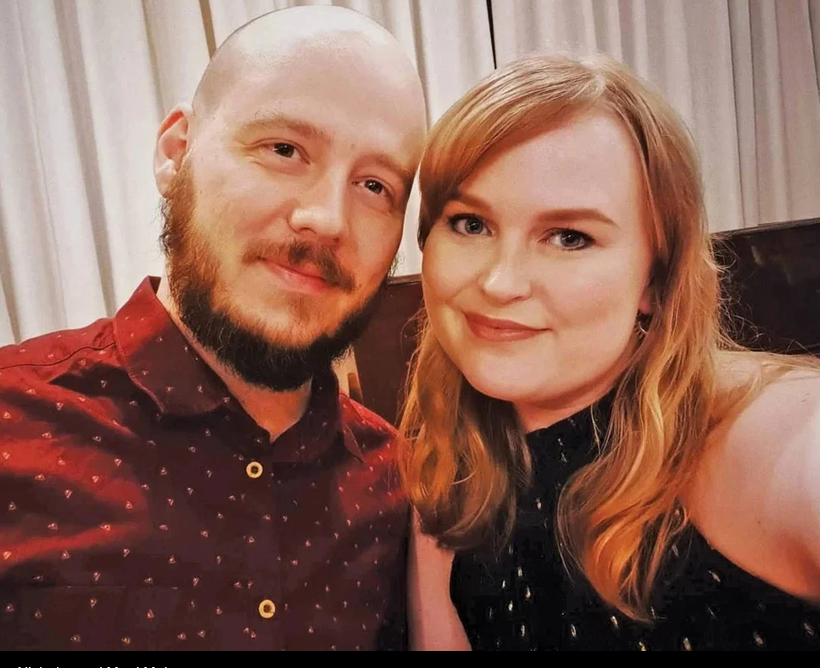
Four years after Nicholas and Matri Molver went to sleep in their Musgrave flat and never woke up, the man who fumigated the neighbouring apartment is due to appear in court on two counts of culpable homicide.
Ershard Khan, the owner of Kazedin Fumigators, was served with a summons at the end of August and is expected to appear in the Durban Regional Court on 7 October.
The case relates to the deaths of Nicholas, 35, and Matri, 34, who died in September 2022 after the neighbouring flat was fumigated with a highly toxic substance.
Khan now faces two allegations of culpable homicide. The charges have not been tested in court and he remains entitled to the full legal process.
For Nicholas’s mother, Dr Zoë Molver, the court appearance is the result of a four-year campaign to keep the case alive after the deaths of her son and daughter-in-law.
“I cannot bring my children back, but I could give meaning to their deaths. I had to change the story of how they died,” Molver said.
She refused to accept that the deaths would become another unresolved case and compiled a 125-page dossier documenting the family’s efforts to obtain answers.
The dossier recorded calls, WhatsApp messages, meetings and emails as Molver and her family followed up with investigators, laboratories and other people involved in the matter.
A Night That Ended In Tragedy
The couple had spent the evening at home after eating dinner. According to Molver, each had a glass of wine and they were probably working on their computers or watching something before they began feeling ill and went to bed.
A cup of coffee and a pair of glasses were reportedly left on the table.
“They died horribly in the prime of their lives. They had eaten dinner and each had a glass of wine. They were probably working on their computers or watching something – there was a cup of coffee and a pair of glasses on the table – before they started feeling ill and went to bed,” Molver said.
The couple’s deaths were later linked to suspected exposure to fumes from the neighbouring apartment, which had been fumigated.
The substance reported in connection with the fumigation was aluminium phosphide, a highly regulated and extremely toxic compound used to kill rodents in agricultural settings such as grain silos.
Toxicologist Dr Gerhard Verdoorn has said the substance is prohibited for household use and may only be purchased under licence for agricultural purposes.
The exact circumstances surrounding the fumigation, the way the substance was used and how it entered the couple’s flat will be central to the court case and the evidence against Khan.
At this stage, the allegations remain before court and no finding has been made that the accused caused the deaths.
Molver said the neighbouring flat was filled with poison pellets and dust.
“My children had no chance. The entire [neighbouring] flat [that was fumigated] was full of poison pellets and dust. Just two pellets of this poison would, for example, rid an average garden of all its moles,” she said.
The description has placed renewed attention on the risks of using agricultural chemicals in residential buildings and on the controls governing access to highly dangerous pesticides.
Family Fought Through Scientific Delays
Molver, a retired academic, used her background to conduct research and identify ways of supporting the investigation.
One of the most important decisions, she said, was to arrange private histology testing.
Two weeks after her children died, a detective allegedly warned that official test results could take up to 10 years because state laboratories were facing a major backlog.
The private laboratory returned its results within five days.
For the family, the decision was not about replacing the work of the police or state laboratories. It was about obtaining information while the investigation continued and preventing the case from being lost in a system already under pressure.
Molver also worked with private investigator Muntumuhle Mbhele, a former Hawks officer who assisted the family and the investigating officers.
She said the case had shown her how difficult it can be for families to pursue justice when scientific evidence is complex and investigations depend on laboratories with limited resources.
“I now understand why cases like these take so long to reach court, and why some never do,” she said.
“The mountain you have to climb is almost impossibly high, and many people have no choice but to give up.
“Think of the single mothers of children who die from poison they get from products sold at spaza shops. They do not have the resources I have to try to get justice.”
Family Refused To Let Case Disappear
Molver said some friends had urged the family to move on and suggested that justice would be difficult to achieve.
“Friends, with the best of intentions, told us to move on and said we would not get justice because nothing works in South Africa. I know that, but my children are dead. They died needlessly because of the reckless actions of strangers,” she said.
The family did not accept that the absence of an immediate court case meant the investigation should end.
Nicholas’s brothers, Luke and Matthew, Matri’s parents, Reverend Hennie and Paula van den Heever, friends and other supporters helped Molver compile the dossier and follow the investigation.
The case is not the first time the Molver family has had to wait years for a matter involving Nicholas to reach court.
Molver and Luke previously pursued justice after Nicholas was seriously injured in a motor vehicle accident. A University of KwaZulu-Natal student was found guilty of reckless driving in 2025, more than two years after Nicholas’s death and six years after the accident in which his leg was crushed and his arm broken.
“We had literally already had a trial run,” Molver said.
That experience shaped the family’s approach to the fumigation case and strengthened its determination to continue pressing for answers.
Court Case Could Test Regulation
Khan’s appearance in the Durban Regional Court is expected to bring the matter into a new phase.
The state will have to present its case and explain the basis for the two culpable-homicide charges.
The evidence may include toxicology and histology results, information about the chemical allegedly used, the fumigation process, the condition of the neighbouring apartment and the circumstances in which the couple became ill.
The court may also have to consider whether the substance was legally obtained, whether it was approved for use in a residential setting and whether residents were warned or evacuated before the fumigation took place.
Those questions will be answered through evidence rather than through the family’s allegations or public debate.
The case could also raise wider questions about the regulation of fumigation businesses and the use of pesticides in buildings where people live.
Molver hopes the proceedings will help establish stronger safeguards for toxic substances.
She said no legal outcome could restore Nicholas or Matri, but the case could help prevent another family from experiencing a similar loss.
“You can never replace your children, but I have two other sons and a daughter-in-law to live for. And I can help ensure that Nicholas and Matri get justice,” she said.
A Long Road To Court
The summons comes after years in which the family had to manage grief while pursuing technical evidence and pressing for progress in the investigation.
The delay has highlighted the difficulties involved in cases where the cause of death depends on specialised testing and where responsibility may involve several people, contractors and regulatory decisions.
For the Molver family, the upcoming court appearance is not the end of the fight. It is the first formal opportunity for the allegations surrounding the fumigation to be tested before a court.
Khan is expected to answer to the charges on 7 October.
Until then, the deaths of Nicholas and Matri remain at the centre of a case that has brought together a grieving family, private investigators, scientific experts and questions about the use of one of the country’s most dangerous pest-control substances.
The family’s hope is that the court process will establish what happened in the neighbouring flat, how the toxic exposure occurred and whether the deaths could have been prevented.
For Molver, that search for answers is now tied to a promise she made after losing her children: that their deaths would not be forgotten.