
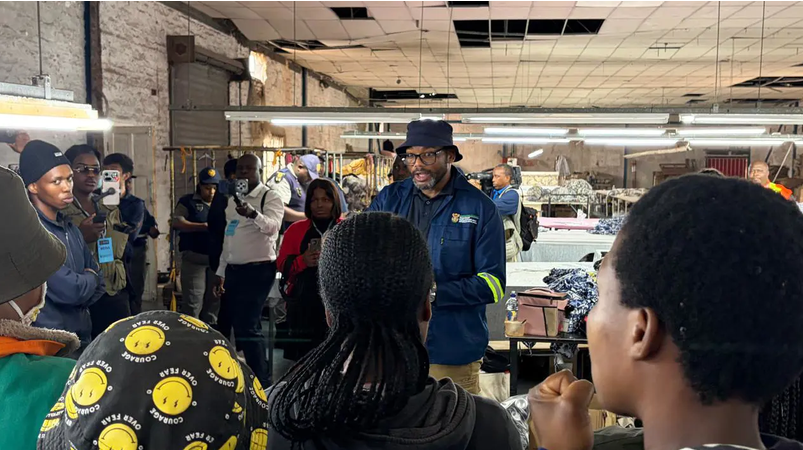
HAMMARSDALE – In a dramatic scene that unfolded west of Durban on Friday, August 7, 2026, a joint task force of labour inspectors, immigration officials, and police descended on a complex of clothing factories in Hammarsdale. While the operation resulted in the arrest of dozens of undocumented migrants and the immediate closure of a Chinese-owned facility, the most shocking revelation came from the local workers themselves.


Instead of mourning the loss of their livelihoods, many employees expressed a sense of profound relief. Ayanda Ngema, a seamstress at the shut-down factory, told Eyewitness News that the conditions inside were so horrific that she would rather face unemployment than return to her workstation.
“We have been abused so much here that we won't cry if the factory is closed forever,” Ngema said. “There is nothing to cry over. If we were to speak about what we suffered here, it would take the entire day.”
The Hammarsdale Crackdown
The raid was led by the Department of Employment and Labour, supported by the South African Police Service (SAPS) and the Department of Home Affairs. Authorities had received multiple tips regarding severe violations of labour laws and the employment of undocumented foreign nationals.
As the convoy of official vehicles entered the industrial complex, the scale of the operation became clear. At least 28 foreign nationals were arrested after they were found to be working without valid permits. The factory at the centre of the storm, which is Chinese-owned, was immediately served with a prohibition notice.
Deputy Minister of Employment and Labour, Jomo Sibiya, who oversaw the operation, confirmed that the facility was being closed due to numerous Occupational Health and Safety (OHS) violations. The department has implemented a "no work, no pay" policy for the duration of the closure, meaning the owners are not legally required to pay staff while the factory remains shuttered for safety reasons.
A Culture of Exploitation
For the authorities, the raid was about compliance. For the workers, it was an escape from what they described as a daily nightmare. The testimony of Ayanda Ngema and her colleagues has shed light on a dark corner of the KwaZulu-Natal textile industry, where exploitation is allegedly used to keep production costs low.
Workers described a workplace where basic human rights were ignored. Allegations included verbal abuse, restricted access to toilets, and being forced to work excessive hours without overtime pay. The physical environment was reportedly just as dangerous, with blocked fire exits, exposed electrical wiring, and a lack of proper ventilation.
“The Labour Department said the factory can only re-open once it has remedied the occupational, health and safety issues that it’s currently violating,” a department official stated. However, for workers like Ngema, the "remedies" may come too late to fix the psychological toll of the abuse.
The Human Cost of "No Work, No Pay"
The closure of the factory has created a complex situation for the local community. While the workers celebrate the end of their abuse, they are now facing a period of total financial uncertainty. Because the factory was closed due to the employer's violations, many workers are now going without a salary for the foreseeable future.
This "no work, no pay" status is a bitter pill to swallow in an economy already struggling with high unemployment. Yet, the sentiment on the ground remains defiant. Many seamstresses and floor workers stated that no amount of money was worth the "slavery" they experienced behind the factory’s closed doors.
Community leaders in Hammarsdale have called on the government to provide support to the displaced workers while also ensuring that the owners are held fully accountable for the conditions they created. There are growing fears that without strict enforcement, the owners may simply move their operations elsewhere to continue the cycle of exploitation.
A Warning to the Industry
The Hammarsdale raid is part of a broader, nationwide effort to clean up the manufacturing sector. In recent months, joint operations have targeted similar industrial hubs in Newcastle and parts of Gauteng, uncovering widespread non-compliance.
Deputy Minister Sibiya warned that the government would not tolerate "sweatshop" conditions on South African soil. He emphasized that investors, regardless of their country of origin, must respect the laws of the Republic and the dignity of its workers.
“We are not against investment, but we are against the exploitation of our people,” Sibiya said during the raid. “If you want to do business in South Africa, you must follow the rules. You cannot treat human beings like machines.”
The Road Ahead
As the 28 arrested foreign nationals begin their legal proceedings and potential deportation, the focus remains on the local workers left behind. The Department of Employment and Labour has promised to monitor the situation closely, but the factory remains a ghost town for now.
For Ayanda Ngema and her colleagues, the silence of the sewing machines is a welcome change. They are now waiting to see if the owners will invest the necessary capital to make the workplace safe, or if this closure marks the final chapter for the Hammarsdale facility.
For now, the message from the workers is clear: their dignity is not for sale. As one worker put it while leaving the complex on Friday, "We are free today. Tomorrow we will worry about the money, but today we are finally free."