

The Department of Home Affairs has withdrawn a controversial directive governing the intake of asylum applications after refugee reception offices were overwhelmed within days of its implementation.
The department said the decision followed serious concerns about the safety of officials, operational capacity and public order.
The withdrawal was confirmed on Friday, 9 October, after the Director-General withdrew the directive issued on 28 September.
The directive had been circulated to refugee reception offices after the Constitutional Court’s judgment in the Scalabrini Centre of Cape Town matter.
Home Affairs stressed that withdrawing the directive did not overturn, suspend or set aside the Constitutional Court’s ruling.
The judgment remains binding on the department.
The change instead affects the way the department attempted to implement the ruling operationally.
The department said the directive was intended to facilitate compliance with the court order, but that its immediate implementation produced consequences that had not been anticipated.
“However, the attempt to practically implement the judgement immediately led to serious consequences that could not have been foreseen in the Court order,” the department said.
These consequences included refugee reception offices becoming overwhelmed, threats to the safety of Home Affairs officials and growing concerns about public safety and order.
“This includes, amongst others, the fact that RRO operations were overwhelmed within a matter of days since the directive was issued, Home Affairs officials were placed at risk, and that serious threats to public safety and order had emerged,” the department said.
The decision represents a significant reversal only days after the directive was introduced.
The department now has to develop a new operational plan that complies with the Constitutional Court judgment without placing unsustainable pressure on refugee reception centres.
The judgment was delivered on 7 July 2026 in the Scalabrini Centre of Cape Town matter.
The Constitutional Court confirmed an earlier Western Cape High Court order declaring sections of the Refugees Act and related regulations unconstitutional and invalid.
The case concerned procedural barriers that could prevent asylum seekers from accessing South Africa’s asylum system before the merits of their claims had been considered.
The court’s summary stated that procedural non-compliance could not automatically bar an asylum application without an assessment of the merits of the person’s protection claim.
The judgment is linked to the principle of non-refoulement, which generally prevents a state from returning a person to a place where they may face persecution or serious harm before their claim for protection has been properly assessed.
In practical terms, the ruling means that technical failures such as irregular entry or missed administrative deadlines cannot by themselves prevent a person from entering the formal asylum process.
It does not mean that every person who applies for asylum will be granted refugee status.
It also does not automatically grant permanent residence, citizenship or other long-term immigration rights.
The department’s withdrawn directive was an attempt to give immediate operational effect to that legal position.
But the number of people seeking access to refugee reception offices created pressure that Home Affairs said it had not been able to manage safely.
The department said operations were overwhelmed within days of the instruction being issued.
Long queues formed outside refugee reception centres, while misinformation circulated about the meaning of the Constitutional Court’s judgment.
Some people claimed that the ruling created a blanket amnesty for undocumented foreign nationals.
That interpretation has been rejected by the government.
An asylum application is a request for protection. It still has to be assessed under the law, and an application does not guarantee recognition as a refugee or permission to remain permanently in South Africa.
The department’s decision came amid growing public tension around the judgment and access to Home Affairs offices.
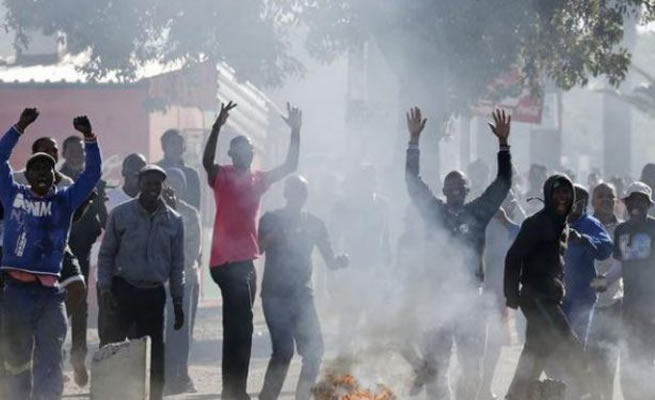
Protests in Soweto and Durban on Thursday included reports of vehicles being set alight, shops being targeted and foreign nationals being forced out of businesses.
The unrest was linked by protesters to anger over the asylum ruling, although the government has warned that misinformation about the judgment was contributing to the tensions.
The withdrawal of the directive is therefore likely to be closely watched by asylum seekers, refugee-rights organisations, immigration lawyers and communities concerned about migration and access to public services.
Home Affairs has also rejected allegations that the directive was politically motivated.
The department said the Director-General’s office issued the instruction as a purely operational measure to give effect to the court order.
It said neither the Minister of Home Affairs nor any other political office-bearer was involved in issuing the directive.
“The directive was originally issued to all Refugee Reception Offices (ROs) as a purely operational attempt to support the implementation of the Court’s order without reference to, or the knowledge of, the Minister of Home Affairs or any other political office-bearer,” the department said.
Home Affairs said claims of political interference were unfounded, particularly because the department had opposed the Constitutional Court case that resulted in the ruling.
“Claims that it was a politically-motivated decision are therefore categorically untrue, as the directive emanated from a Constitutional Court case that the Department had opposed,” it said.
The department’s position is that the directive was an administrative response to a binding judgment, rather than a political decision to change immigration policy.
Its withdrawal does not remove the legal obligation to comply with the court order.
That creates a difficult task for officials.
Home Affairs must allow people with potential asylum claims to access the formal determination process, but it must also create a system that can deal with applications in an orderly and secure manner.
The department said it would now reassess the most appropriate way to implement the judgment in light of the problems that emerged.
“With these new facts now at hand, the Department will embark on a fresh process to determine the most appropriate operational approach to ensure compliance with the Constitutional Court’s order,” it said.
That process could involve new procedures for registering applicants, managing queues, verifying identities, scheduling appointments and protecting staff and members of the public at refugee reception offices.
Any new approach will also need to ensure that administrative systems do not recreate the barriers that the court found constitutionally problematic.
The department said it remained committed to respecting the judiciary and upholding the rule of law.
It also said it was committed to finding an operationally sustainable method of implementing the judgment without compromising the functioning of refugee reception offices.
The balance will not be simple.
If access is too restricted, asylum seekers may again be blocked from having their claims assessed.
If access is opened without adequate capacity, offices may face long queues, confusion, security risks and an inability to provide services efficiently.
The Court’s judgment requires the department to comply with the law, but it does not prescribe every administrative detail of how refugee reception offices should operate.
That leaves Home Affairs with responsibility for designing a lawful and workable system.
The department’s withdrawal also means that people who relied on the original directive may face uncertainty about how and where to lodge applications while the new plan is developed.
Home Affairs has not provided a detailed timetable for the replacement approach in the supplied statement.
It is also not yet clear whether existing queues, appointments or applications made during the short period when the directive was in force will be handled under separate arrangements.
Those practical questions will be important for applicants and officials alike.
Refugee-rights groups are likely to scrutinise the new process to ensure that withdrawal of the directive does not become an indirect way of limiting access to asylum.
The government, meanwhile, faces pressure to address public-order concerns and prevent Home Affairs offices from becoming unsafe or unmanageable.
The controversy has also exposed the consequences of communicating complex court judgments without clear public guidance.
The Constitutional Court ruling did not grant an automatic right to remain in South Africa, but confusion about the judgment contributed to long queues and protests.
Home Affairs and other government departments will need to provide clear information about what the ruling requires and what it does not change.
For now, the immediate directive has been withdrawn, but the court order remains fully in force.
Home Affairs must return with a new operational plan that allows asylum claims to be received and assessed while protecting officials, applicants and the wider public.
The department’s next steps will determine whether the withdrawal resolves the immediate crisis or simply delays a larger dispute over how South Africa manages asylum applications after the Constitutional Court judgment.