

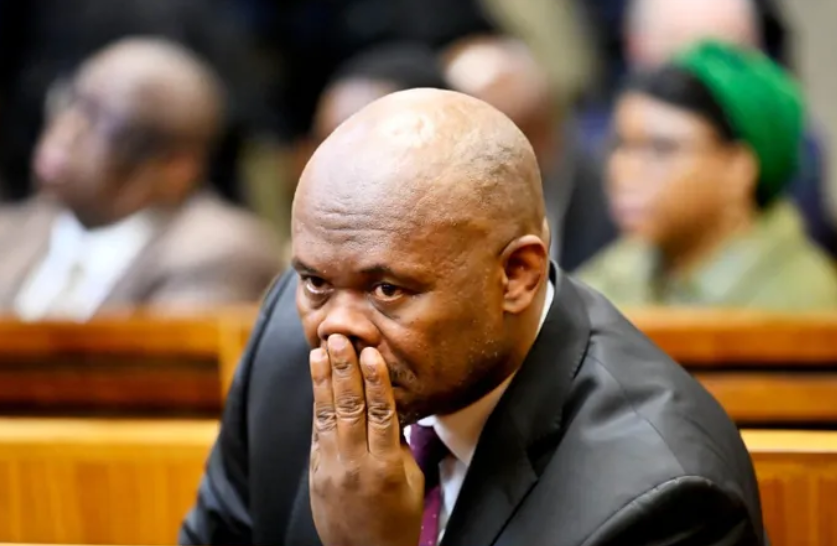
The wife of suspended deputy national police commissioner Lieutenant-General Shadrack Sibiya has alleged that the father of a 16-year-old girl linked to one of the charges against him was pressured by people identified as “Khumalo and Mkhwanazi”.
Sizakele Dlamini made the claim in an affidavit supporting Sibiya’s application for bail. She said an assistant pastor, whom she referred to as an “apostle”, told her that the girl’s father, identified in the court papers as Mr M, wanted to withdraw the matter after seeing Sibiya crying in the dock.
Dlamini said she suspected the approach could be a set-up and told the apostle that he should continue with the case. However, the affidavit does not make clear who Dlamini meant when referring to “Khumalo and Mkhwanazi”.
The claims emerged during Sibiya’s bail proceedings. Sibiya, 59, was arrested on 21 September 2026 following an investigation by the Commission Recommendations Task Team, which is examining matters arising from the Madlanga Commission.
He denies all the allegations against him. The state opposes his release on bail and maintains that it has a strong case.
Alleged pressure on Mr M
Dlamini said the apostle told her that Mr M was being approached by people he referred to as “these guys”. According to her affidavit, the people allegedly told Mr M that he could “give the guy to them”.
She said the apostle indicated that Mr M was the only person in a position to do so and that he wanted to speak to the grandmother who had opened the case about having the matter set aside as a family matter.
Dlamini said the apostle later told her that Mr M was being placed under pressure by people identified as “Khumalo and Mkhwanazi”. It was not immediately clear from the affidavit who those names referred to or what roles the people allegedly involved played.
She said the apostle believed Mr M had become fearful and felt that he had “gone too far”.
Dlamini said she and her family told the apostle that they did not want to meet Mr M or become involved in any attempt to withdraw the charges.
“We also cautioned the apostle to be careful in his dealings with Mr M as we were concerned that he might be playing games with him,” Dlamini said in the affidavit.
She said the apostle agreed that this was a concern.
The allegations in the affidavit have not been independently tested in court. No person identified as “Khumalo” or “Mkhwanazi” has been named in the available material as a suspect or accused of a crime.
Identity of the apostle questioned in court
During the proceedings, Magistrate Hleziphi Mkhasibe asked Sibiya’s legal team to identify the apostle referred to in the affidavit.
Sibiya’s lawyers said he was an assistant pastor at ECG Church and that the Sibiya family had known him for about six months. Dlamini said the apostle had provided Sibiya with spiritual guidance and counselling on several occasions.
According to Dlamini, the apostle contacted her after receiving information from Mr M about the case.
She said that on 23 September 2026 she spoke to the apostle during a telephone call with the family’s cousin, Victor Munamudi. Dlamini said her son, Ofentse, recorded their portion of the conversation.
The following day, 24 September, the apostle visited the family home for a prayer session. Dlamini said relatives and several neighbours attended the visit, which she also recorded on her device.
She alleged that the apostle again said Mr M wanted to come to the family home and withdraw the charges.
WhatsApp messages described as threatening
Dlamini said she received four WhatsApp messages from Mr M on 2 October 2026. According to her affidavit, the messages included a lengthy text, two images that appeared to be screenshots of WhatsApp conversations and a forwarded voice note lasting approximately 25 minutes.
She said the message was addressed to her as “Mama” and that Mr M expressed concern about how Sibiya was allegedly portraying her in court.
Dlamini said Mr M claimed to have recordings, photographs, location reports and other documentation relating to meetings he had witnessed. He allegedly said he could provide the material to investigators or legal authorities if necessary.
Dlamini said the message was later edited and included a statement saying: “I am not saying these things to threaten anyone.”
She said she nevertheless understood the messages to be threatening and intimidating. Dlamini said she did not respond and instead blocked Mr M’s number.
She argued that the contact had been initiated by Mr M and that this was inconsistent with any suggestion that Sibiya or his family had attempted to pressure or influence him.
Dispute over Mr M’s alleged role
Dlamini also disputed the state’s characterisation of Mr M as someone who worked for Sibiya.
“To the best of my knowledge, Mr M was never employed by the applicant as a bodyguard or in any other capacity,” she said.
Dlamini said she had always known Mr M only as a friend of Sibiya. She described suggestions that he had been Sibiya’s protector or bodyguard as false and defamatory.
She acknowledged that she had no direct knowledge of Mr M’s employment or business activities. Her understanding, she said, was based largely on his social media presence.
Charges facing Sibiya
The state alleges that Sibiya raped an 18-year-old woman at a Sandton hotel on 15 May after she was allegedly given alcohol and lost consciousness.
He is also accused of sexually grooming a 16-year-old girl through WhatsApp between July and August. The state alleges that the charges include possessing and sharing sexually explicit images of her.
Prosecutors have identified the girl’s father as Mr M and allege that he is an associate of Sibiya. Sibiya denies that claim.
Sibiya also faces allegations that he trafficked three people for sexual exploitation. He has denied the allegations.
The prosecution maintains that it has a strong case and is opposing bail. The matter has been postponed to 13 October, when the court is expected to continue dealing with the bail application.