

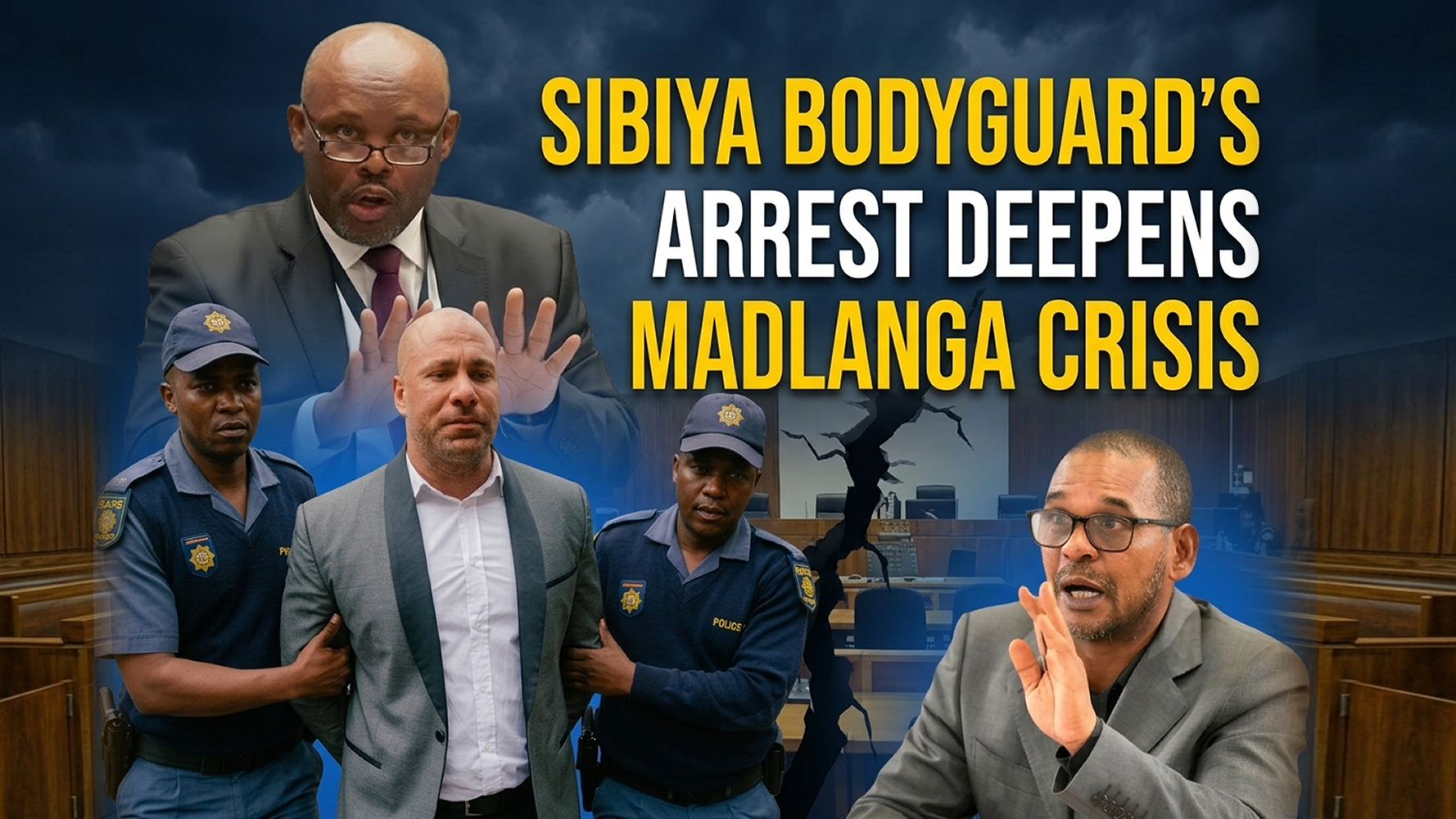
The Madlanga Commission, investigating deep-seated criminality, political interference, and corruption within South Africa's criminal justice system, recently witnessed a dramatic incident: the arrest of Stuart James Scharnick. Scharnick, known as the close protector of suspended Deputy National Police Commissioner Shadrack Sibiya and an ally of National Coloured Congress MP Fadiel Adams, was apprehended following a criminal complaint lodged by Sowetan journalist Herman Moloi. The confrontation occurred on Thursday, August 20th, at the Bridgette Mabandla Justice College in Pretoria, where the commission's hearings are underway.
Moloi reported that Scharnick confronted him inside the commission venue during a tea adjournment, accusing the journalist of filming him without permission and referencing a video he believed Moloi had posted online. The exchange reportedly escalated, with Scharnick making threatening gestures and inviting Moloi "outside" to continue the conversation. This intimidation led Moloi to open a case, resulting in Scharnick's arrest at the commission venue by police, who had also been looking for him at his home.
Scharnick's arrest is particularly significant given his controversial background, which has already been a focus of the commission's evidence. He has been described as having a substantial criminal record, including allegations of 34 criminal charges and 18 convictions, with some police reports suggesting the manipulation of criminal records to conceal cases like motor-vehicle theft and carjacking. While Fadiel Adams, during his testimony, defended Scharnick and disputed these claims, highlighting a 2019 theft conviction that was later expunged, these past allegations add considerable weight to the attention Scharnick garnered.
The incident highlights a growing crisis within the Madlanga Commission, where the boundaries between formal inquiry and external pressures are becoming increasingly blurred. The commission, which livestreams its hearings, relies heavily on journalists to provide context and report on events both inside and outside the witness box. The commission's spokesperson, Jeremy Michaels, condemned the intimidation, emphasizing the media's crucial role in informing the public and indicating a review of attendance rules to ensure the safety and freedom of journalists.
This confrontation is deeply intertwined with the commission's broader mandate, which includes examining serious allegations against General Sibiya regarding the dismantling of organised-crime investigations, entanglement with criminal networks, and the handling of political-killing investigations. The arrest of Sibiya's alleged bodyguard in such a public and contentious setting brings these complex, often distant, disputes into a visible, human confrontation. It raises profound questions about influence, intimidation, and the integrity of the judicial process itself. The incident underscores the ongoing challenge for the commission to maintain control and ensure the safety of all participants while continuing its vital work of uncovering truths about power, crime, and political protection in South Africa.